Updated July 12, 2026 at 12:16 a.m. ET.
MANILA, Philippines – As the Philippines marks the 10th anniversary of an arbitration ruling it won against China in the disputed South China Sea this weekend, analysts told Radio Free Asia that Manila should counter Beijing’s continued aggression in the disputed area through diplomatic means, while Philippine military officials called for deterrence with the help of allies.
The 2016 ruling at the Permanent Court of Arbitration in the Hague established that China’s Nine Dash Line – which encircles the South China Sea to claim it as Chinese territory – has no basis in international law.
Manila celebrates the anniversary of the ruling on July 12 each year, calling it “West Philippine Sea Victory Day,” after what it calls the region of the sea that lies within its exclusive economic zone, or EEZ.
“The Department of National Defense joins the Filipino community in celebrating the 10th Anniversary of the 2016 Arbitral Award, a landmark ruling that affirmed the Philippines’ rights and entitlements in its Exclusive Economic Zone,” Defense Secretary Gilberto Teodoro said in a statement Saturday.
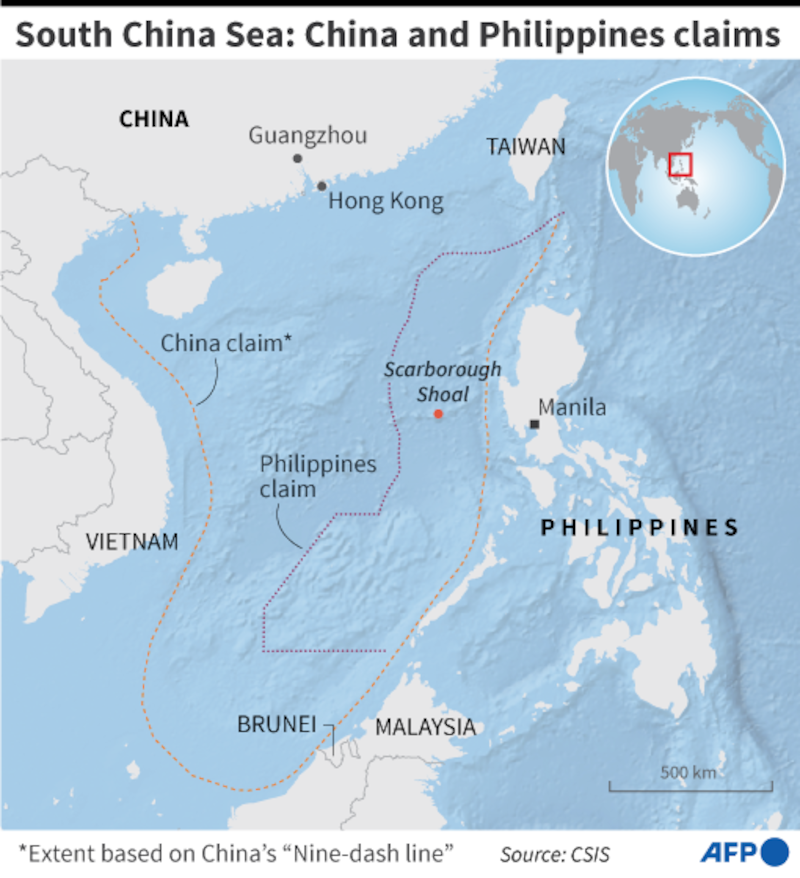
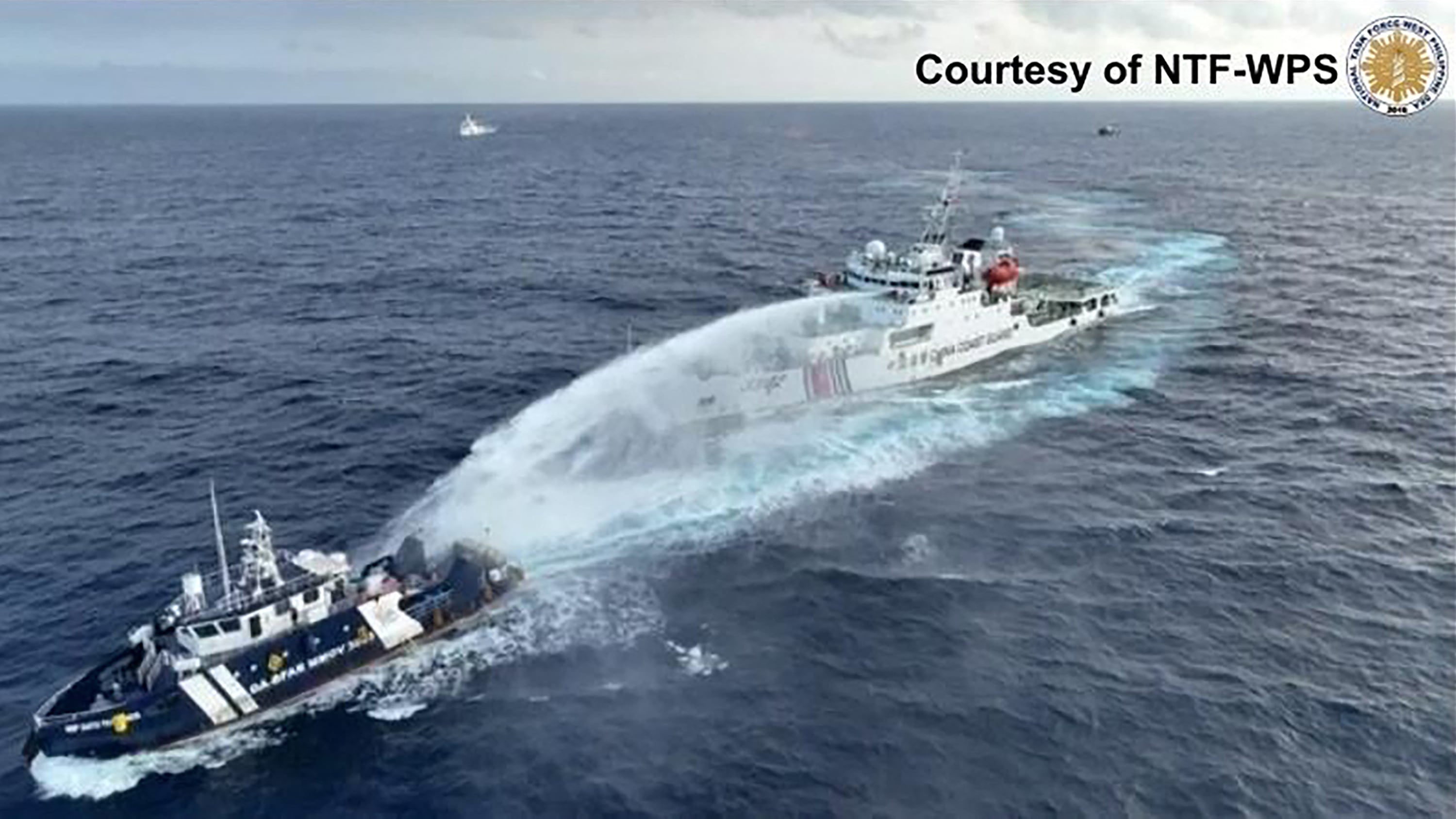
China continues to reject the outcome of the ruling, and has spent the last 10 years stepping up its island-building activities in the mineral-rich sea region. It actively controls areas within the Philippines’ EEZ including Scarborough Shoal.
But it has no answer to the ruling, Rafaela David, co-convenor of the civilian-led Atin Ito Coalition, a group that advocates for Philippine sovereignty, told RFA.
“Missiles cannot substitute for legal arguments, and military intimidation cannot rewrite international law,” she said, alluding to China’s test of a submarine-launched ballistic missile earlier this week. “No act of coercion can erase this historic victory. We will continue to stand firm, defend the West Philippine Sea, and safeguard the rights and future of generations of Filipinos.”
Though the ongoing dispute has seen heated moments – such as China firing water cannons and pointing potentially blinding laser guns at Filipino forces – the Philippines should continue to employ peaceful methods to sway public opinion to its cause, Francis Rico Domingo, a political analyst at the state-run University of the Philippines, told RFA.
“The Philippines needs to continue pushing back against China using diplomatic means,” he said. “This involves filing diplomatic protests as often as possible and exposing China’s illegal activities to the public and the United Nations.”
Expanded deterrence
The court’s ruling in 2016 cements the Philippines’ legal foundation in the perennially disputed sea, Military chief General Romeo Brawner Jr. said Friday at a forum that gathered security experts in Manila, but he argued that more collaboration with “like-minded forces” led by the U.S. in deterrence efforts.
To that end, he called for improvement in Manila’s deterrence capabilities. He said that while advanced military equipment is needed there must be “national resolve to stand firm in defense of what is rightfully” Philippine territory.
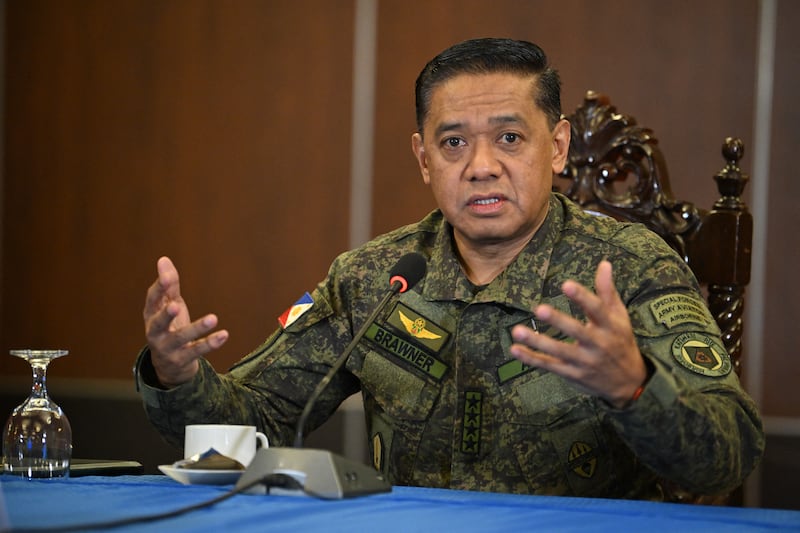
“Our objective has never been to provoke conflict,” he told the forum. “Our objective is to prevent conflict by making it clear that the Philippines has both the resolve and the capability to protect its sovereign rights in accordance with international law.”
Brawner said the security environment in the disputed area continues to evolve.
“We continue to face illegal, coercive, aggressive and deceptive tactics,” Brawner said, adding that these activities “seek to alter the status quo while remaining below the threshold of armed conflict.”
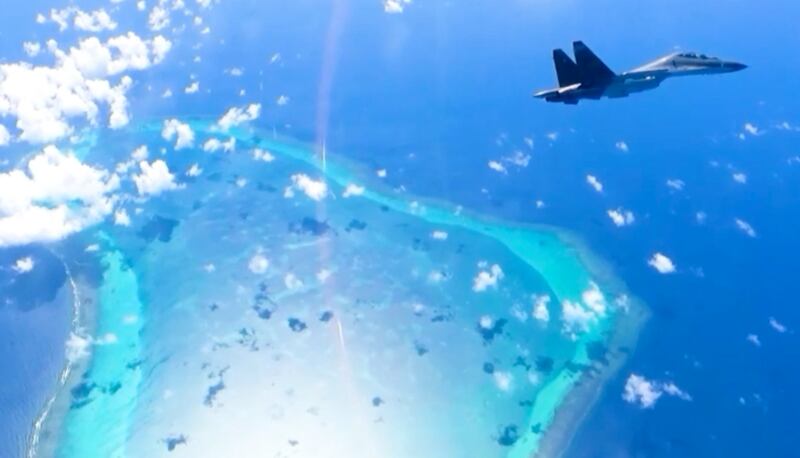
Brawner said that the Philippine military’s “assertive transparency” strategy – thoroughly documenting Chinese aggressive actions and provocations and revealing them to the world – must continue.
“Through our policy of assertive transparency, we document unlawful incidents, verify the facts and make them known to the Filipino people and to the international community,” he said. “We do this not to escalate tensions. We do it because truth matters. Transparency strengthens accountability. It reinforces the rules based on international order and it denies those who employ coercive actions the ability to shape the narrative through deception.”
Shift in Focus
Though the military may be equipped for deterrence in the disputed sea, the public might not be used to it in this role, Domingo said.
Two years ago the Philippine military shifted from its role as an internal force meant to quell insurgencies and keep the peace domestically to the Comprehensive Archipelagic Defense Concept, or CADC, focused on defense from external threats and protecting territorial sovereignty.
The concept “has been frequently mentioned, but the public is not aware of what the strategy is and how it really works,” Domingo said. Because China rejects the arbitration ruling, Manila must “permanently engage other countries to strengthen its capacity to defend itself from external aggression.”
But Domingo said that the Philippines also needed to engage Beijing diplomatically, and had to publicly acknowledge that every tension must be deescalated.
For the CADC to be effective, the Philippines must review outdated military and defense concepts “to add the importance of protecting our sovereign rights, territorial integrity and sovereignty,” Teodoro said at the forum on Friday.
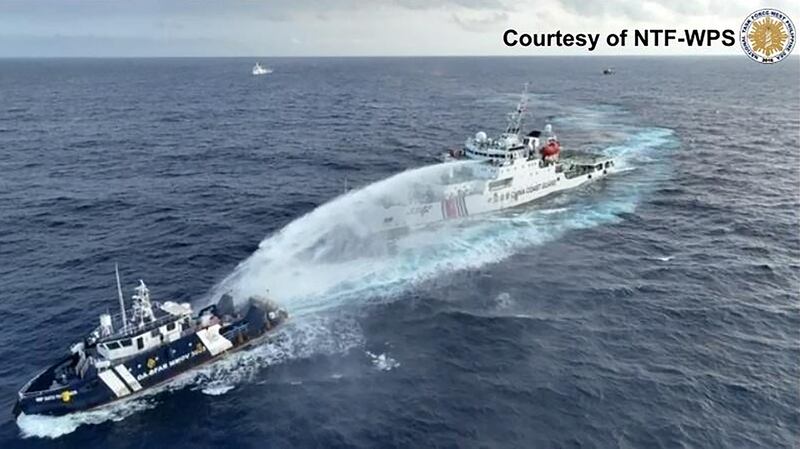
Teodoro said adjustments in the posture are under review because currently the Philippines’ is still focused on “land-based, post-invasion defense” that was still a product of post-World War II strategy.
He called for a bump on the country’s defense budget, and noted that even Indonesia, which has a separate territorial dispute with China, looks to increase its defense spending to acquire new hardware.
“I would like to see a visible economic dividend from the West Philippine Sea that we all worked for, if unilaterally or in convergence with those who have truly helped us,” he said.
Popular support
In Teodoro’s Saturday statement, he noted that 86% of Filipinos were in support of Manila working with other countries to defend its territorial sovereignty.
“We will seek not only to increase public knowledge of the West Philippine Sea, but also to ensure that this knowledge strengthens our national resolve and resilience,” he said, vowing to “resist and combat” any attempts to deny the country its rights in its EEZ, “For these are not only ours to protect, but also those of future generations of Filipinos.”
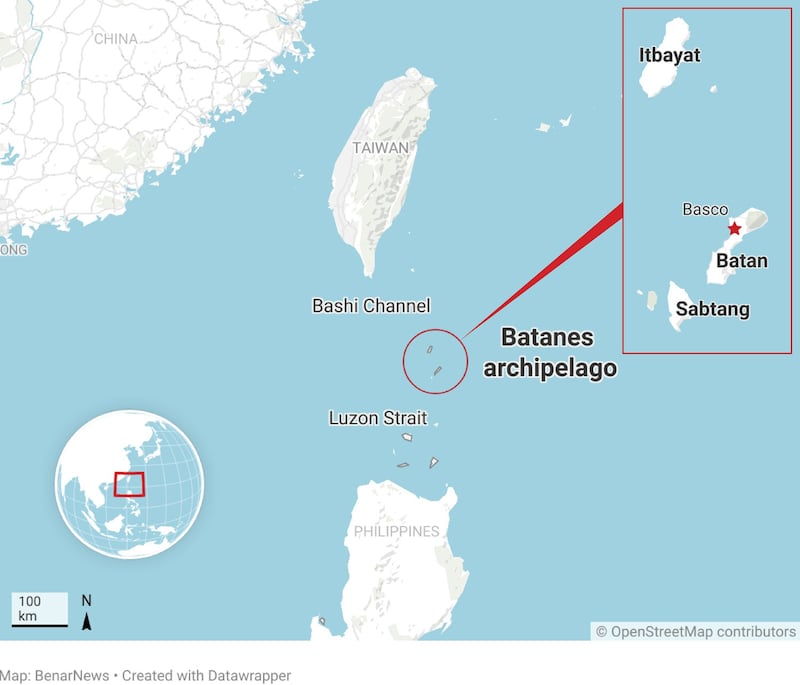
The 10th anniversary of the landmark 2016 court ruling comes weeks after scholars affiliated with the Chinese government said at an academic symposium that the Philippines does not have legal sovereignty over the Batanes, a group of islands that lie north of the Philippines’ largest island of Luzon which have been administered continuously by the Philippines or its predecessor states since the 18th century.
The academics argued that the Batanes are “a natural geographical extension of Taiwan,” which China considers a renegade province.
Edited by Eugene Whong.
Update adds comments from Rafaela David.