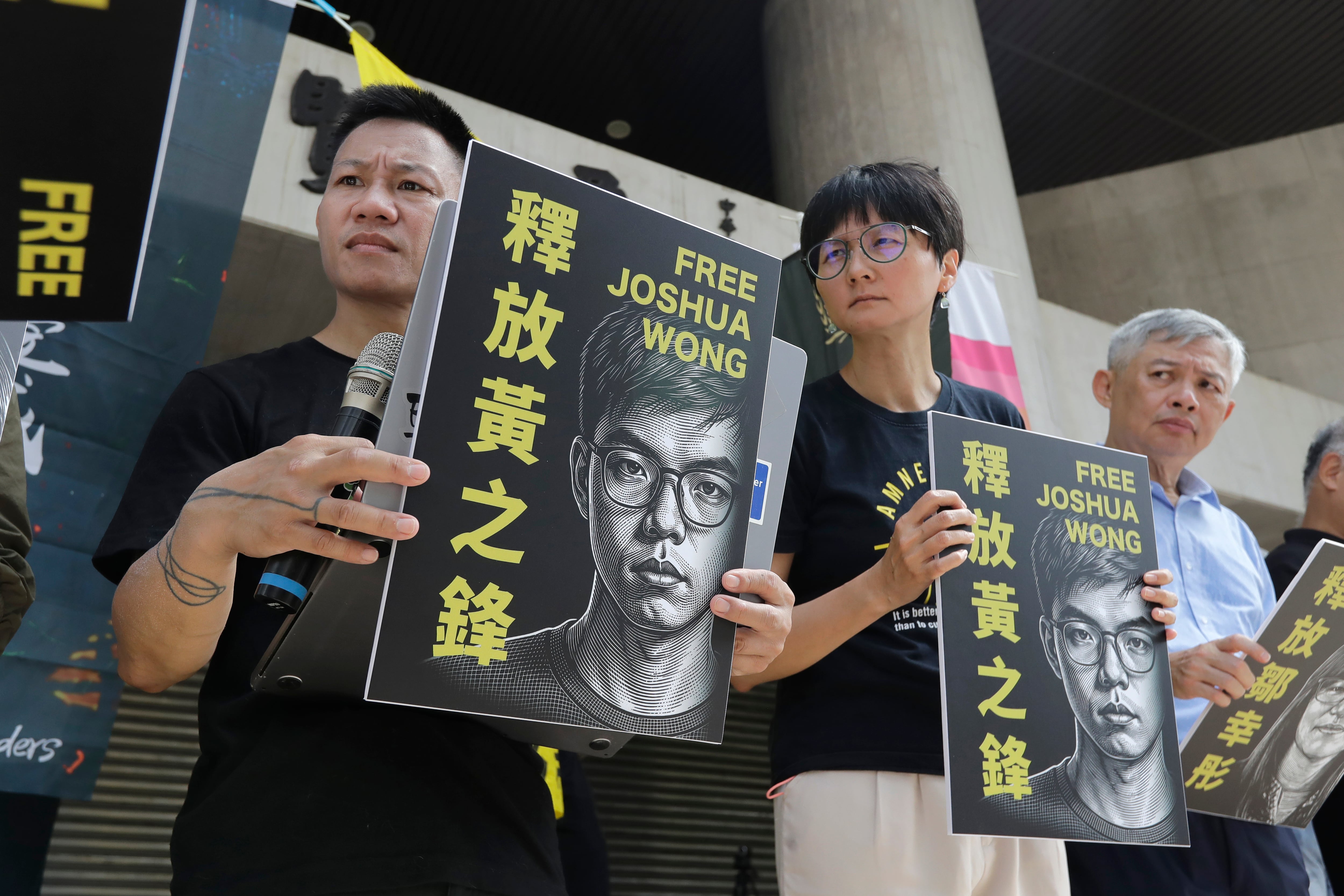
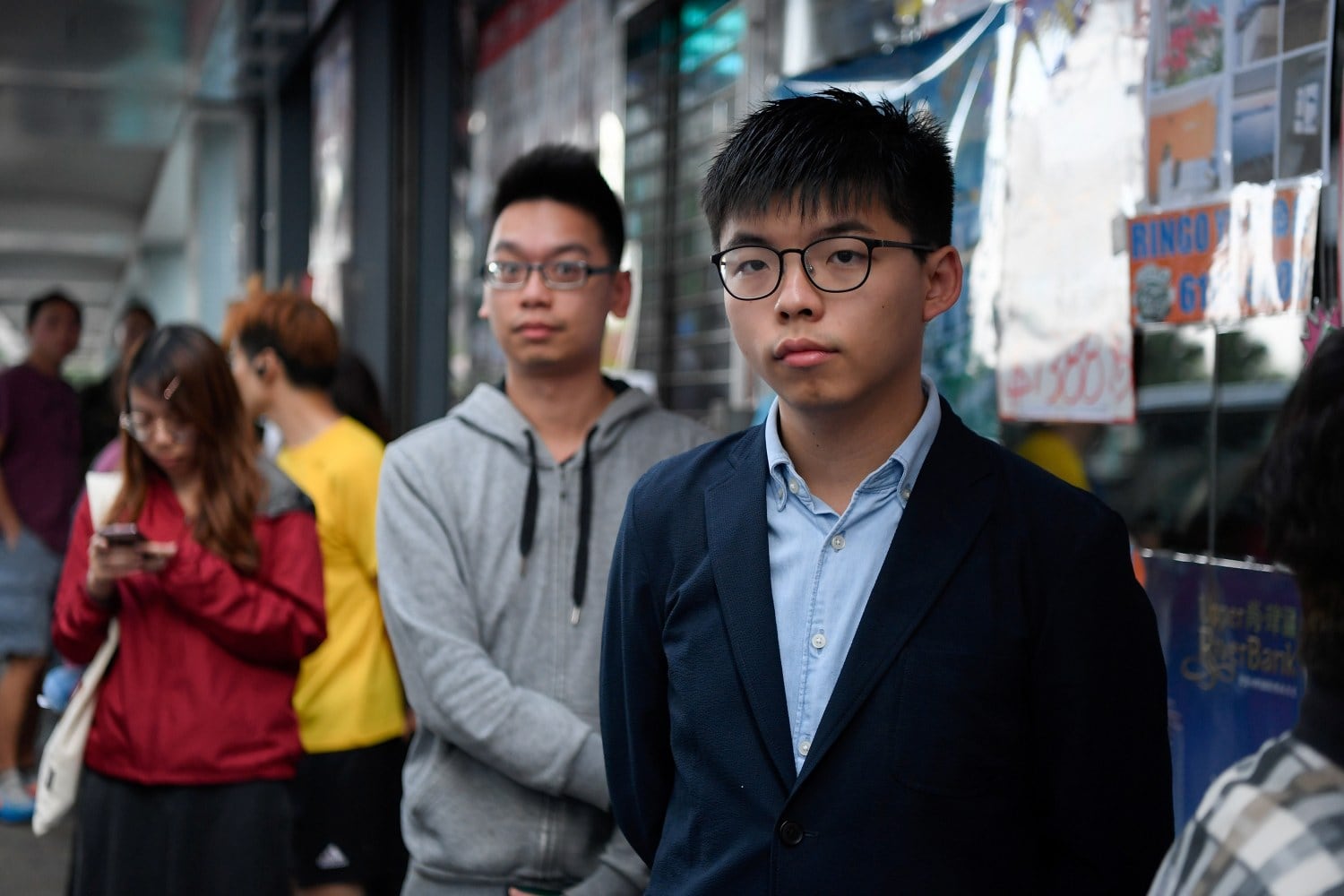
After a Hong Kong court sentenced pro-democracy activist Joshua Wong to 10 years in prison Thursday for foreign collusion, international lawmakers, activists, and rights organizations condemned the decision saying it violates human rights.
Wong, 30, is one of the most internationally recognizable faces of the now-quashed democracy movement in the city. He was among 45 Hong Kong opposition politicians and pro-democracy activists who were convicted with “conspiracy to commit subversion” under the city’s draconian 2020 National Security Law for taking part in a democratic primary in the summer of 2020. Wong in September pleaded guilty to “conspiracy to endanger national security with foreign or external forces.”
On Thursday, Judge Tam Yiu-ho of the Hong Kong High Court ruled that the case constituted a “serious offense” under the security law, which carries a starting sentence of 13 years. It was later reduced to 10 years in light of his guilty plea.
Wong had already been serving a four-year-and-eight-month sentence for the subversion charge and had been due for release in January, but under the current decision, he will not be released until 2036, when he is 40 years old.
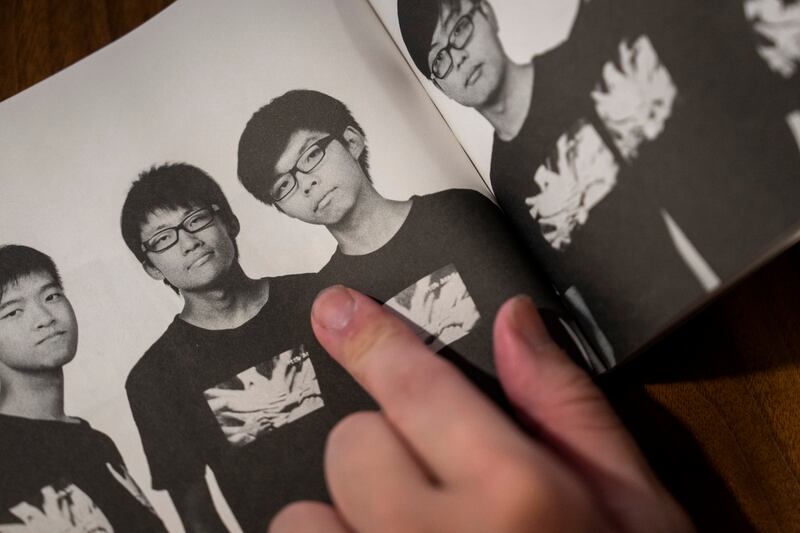
The sentence was “utterly shameless,” Chinese democracy activist Wang Dan, who was a student leader in the 1989 Tiananmen Square protests and who now lives in exile in the United States, said in a statement.
“For a regime that claims to be powerful to pursue and persecute a young student in this manner only highlights its insecurity and brutality,” said Wang. “Joshua Wong campaigned and advocated for Hong Kong’s freedom. If that is considered a crime, then the real criminals are the authorities who forced a young person onto the streets in the first place.”
International condemnation
Joshua Wong’s pro-democracy activities are not criminal, Phil Robertson, Director of the Bangkok-based rights group the Asia Human Rights and Labour Advocates, said in a statement.
“It’s supremely ironic that China, one of the biggest practitioners of transnational repression in the world, has now sentenced Joshua Wong to 10 years in prison for daring to seek international solidarity to resist that repression,” Robertson said. “Holding meetings with international activists and foreign government officials, talking to the global media, and mounting petition drives are the day to day work of human rights activists, and shouldn’t be criminalized.”
Wong is a hero and the charges against him have no standing, U.S. representative John Moolenaar, Chair of the House Select Committee on China, said in a statement.
“Joshua only pleaded guilty to the baseless charge of foreign collusion because of the CCP’s systematic erosion of Hong Kong’s judicial independence,” he said, using the abbreviation for the Chinese Communist Party. “In return, the CCP has effectively sentenced him under its repressive National Security Law.”
Moolenaar said the sentencing showed China’s “complete disregard” for universal rights.
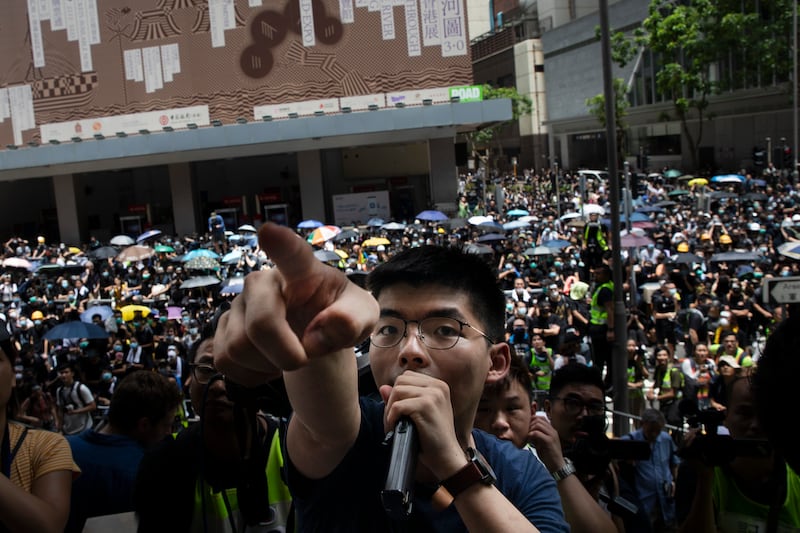
“Joshua and Hong Kong need the international community’s support now more than ever,” he said. “He should be immediately released and reunited with his family.”
Taiwan’s Mainland Affairs Council, or MAC, issued a statement after the sentencing, strongly condemning Hong Kong authorities for continuing to infringe upon the basic human rights under the guise of national security.
The MAC statement said the Hong Kong government’s renewed heavy sentencing under the National Security Law is a continued political prosecution of pro-democracy figures, including Wong, who has been detained for more than 2,000 days since 2020.
The statement called on Beijing and Hong Kong authorities to stop using national security as a pretext to suppress pro-democracy activists and to immediately release those detained for exercising their basic rights.
“Domestic support” for “overseas operations”
The charges allege that between July 1 and November 23, 2020, Wong conspired with Nathan Law, another prominent pro-democracy figure who was in exile overseas, and others to request foreign governments or organizations to impose sanctions, blockades, or other actions deemed hostile by the authorities on China and Hong Kong.
The judge held that after the Hong Kong National Security Law came into effect, Nathan Law continued to push for sanctions overseas, while Wong shared related content through foreign media and social media platforms, attracting the attention of foreign governments and providing support from Hong Kong for overseas initiatives. The judge rejected the defense’s claim that Wong’s role was limited, believing that Wong and Law collaborated and that their roles were equally important.
The defense previously argued that the severity of this case was far less than other national security cases; Wong was only 23 years old when he committed the crime and has been deprived of his freedom for nearly six years, while the prosecution only brought charges after many years. The defense suggested a sentence of about four and a half years and hoped that the court would allow Wong the opportunity to take care of his parents in the future, but this was not accepted by the court.
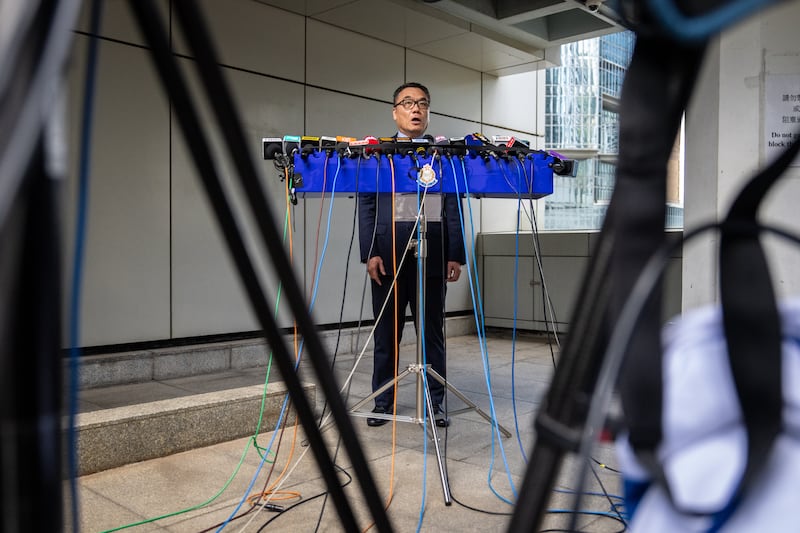
The sentence reflected the seriousness of the case, Hong Kong Police National Security Department Chief Superintendent Steve Li Kwai-Wah said to reporters outside the court. He called on Nathan Law to return to Hong Kong and surrender.
Hong Kong and Beijing have consistently stated that their law enforcement actions are based on evidence and law, and are unrelated to the defendant’s political stance, asserting that the Hong Kong National Security Law is necessary to restore stability in Hong Kong.
Undermining freedom
Wang said that Wong’s harsh sentencing reveals that China cares little about human rights.
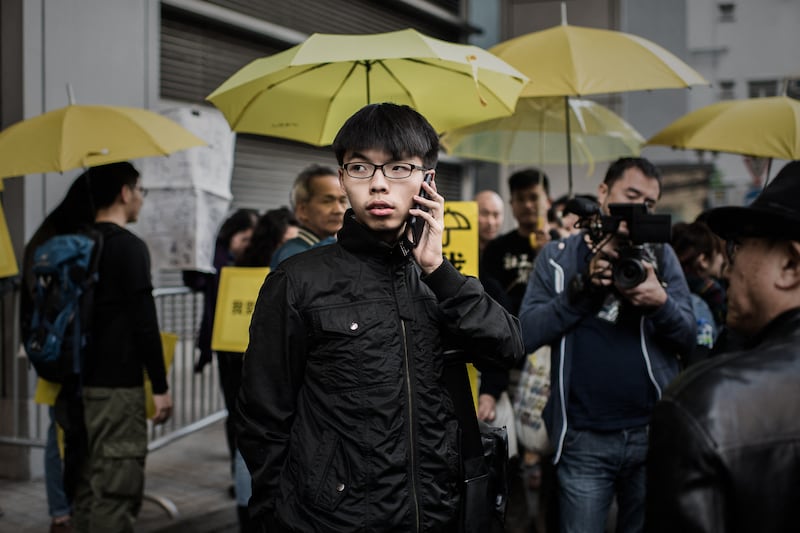
“This decision once again tears away the CCP’s mask, proving that it is a regime determined to be an enemy of universal values and the ideals of freedom,” he said. “Ten years – a person’s youth – spent entirely behind bars; Joshua Wong has paid such a high price. He is a hero of our times and the pride of Hong Kong. I hope everyone remembers him, follows his situation, speaks out on his behalf, and prays for him.”
Edited by Eugene Whong.