
With Taiwan hoping for swift delivery of a US$14 billion weapons sale approved by the U.S. Congress in January, a U.S. official said last week in a Senate hearing that foreign military sales are on pause to protect munitions stockpiles as conflict in Iran continues.
U.S. weapons sales have been an integral part of Taiwan’s security since Washington ended diplomatic recognition of Taipei in favor of Beijing in 1979.
Despite the loss of recognition, through arms sales and other agreements, Washington is still a de-facto military protector of the democratic island, an arrangement that remains one of the most unusual in international relations.
How did the U.S. become Taiwan’s main arms supplier?
The relationship dates back to the Chinese Civil War.
After communist forces established the People’s Republic of China in 1949, the government of the Republic of China retreated to Taiwan. For many years afterwards, Washington recognized Taipei rather than Beijing as China’s legitimate government.
During the Cold War, Taiwan became an important U.S. partner in Asia.
The two sides signed a mutual defence treaty in the 1950s, and the United States maintained military support and stationed forces on the island.

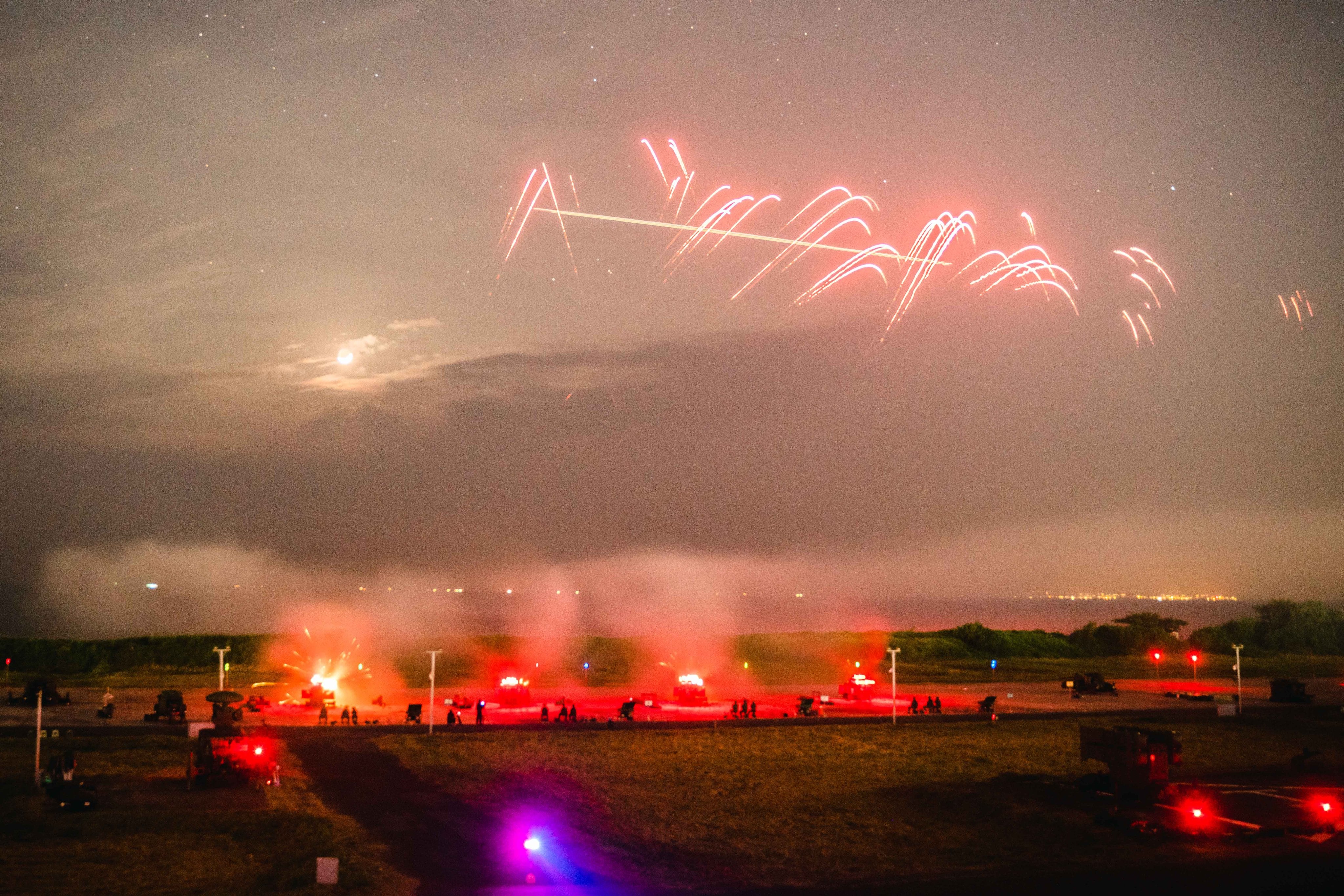

The relationship changed dramatically in the 1970s as Washington sought closer ties with Beijing. In 1979, the United States recognized the People’s Republic of China as the sole legal government of China and ended official diplomatic relations with Taiwan.
But it did not cut ties completely.
Instead, the U.S. Congress passed the Taiwan Relations Act, creating a framework that allowed Washington to maintain unofficial relations and continue providing defensive support to Taiwan.
The law remains the main legal basis for U.S.-Taiwan security relations today. It says the United States will provide Taiwan with weapons of a defensive character and maintain the capacity to resist force or coercion against the island, but also does not explicitly guarantee that American troops would defend Taiwan during a conflict.
What is the current framework?
China’s official policy on Taiwan is called the One China Principle, which says that the People’s Republic of China is the sole legal government of China, and that Taiwan is an inalienable part of Chinese territory.
Beijing has said that the island must eventually be reunified with the mainland, by force if necessary. Taiwan rejects Beijing’s claims and operates as a self-governed democracy with its own government, military and economy.
Current U.S. policy toward Taiwan is often described as resting on three pillars.
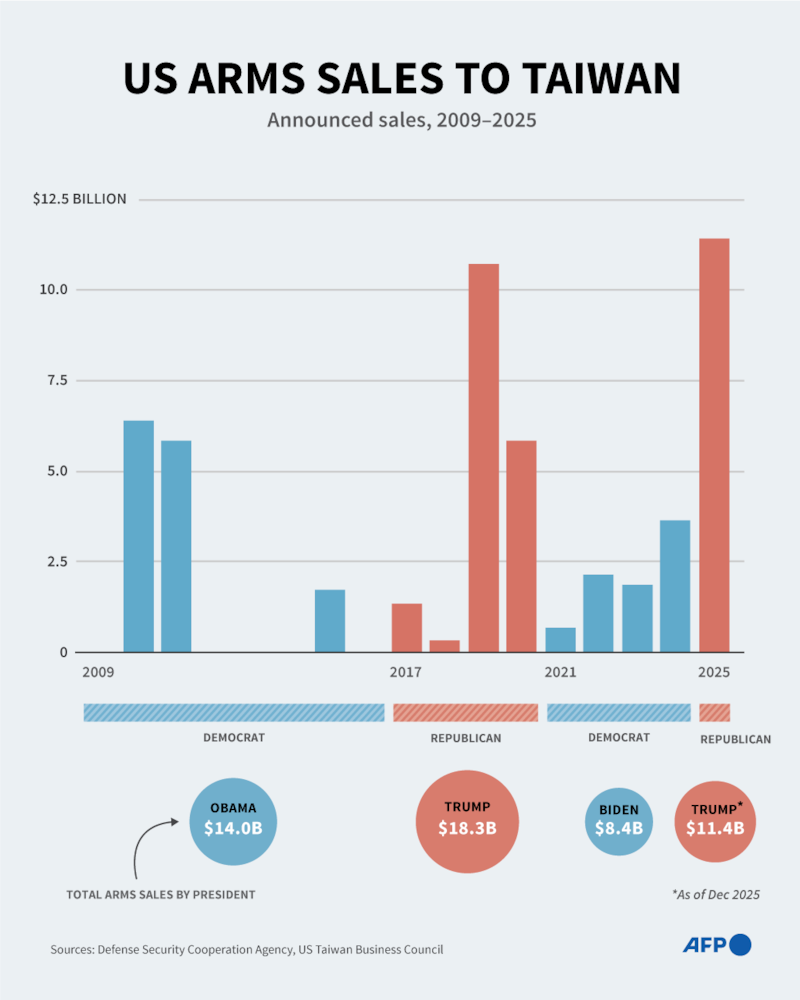
The first is the Taiwan Relations Act, which governs unofficial relations and arms sales.
The second is the Three U.S.-China Joint Communiqués, a series of agreements through which Washington recognized Beijing diplomatically and acknowledged the Chinese position that there is one China.
The third is the Six Assurances, introduced during the Reagan administration in the 1980s. Among them was a pledge that Washington would not consult Beijing before approving arms sales to Taiwan.
Together these policies created what many people refer to as the “status quo.”
In practical terms, Taiwan governs itself and maintains its own political system, military and economy. The United States maintains unofficial ties with Taiwan while recognising Beijing diplomatically and following its own One China Policy, which “acknowledges” but falls short of accepting Beijing’s stance on Taiwan.
What major weapons has Taiwan bought?
U.S. arms sales to Taiwan have continued under both Democratic and Republican administrations.
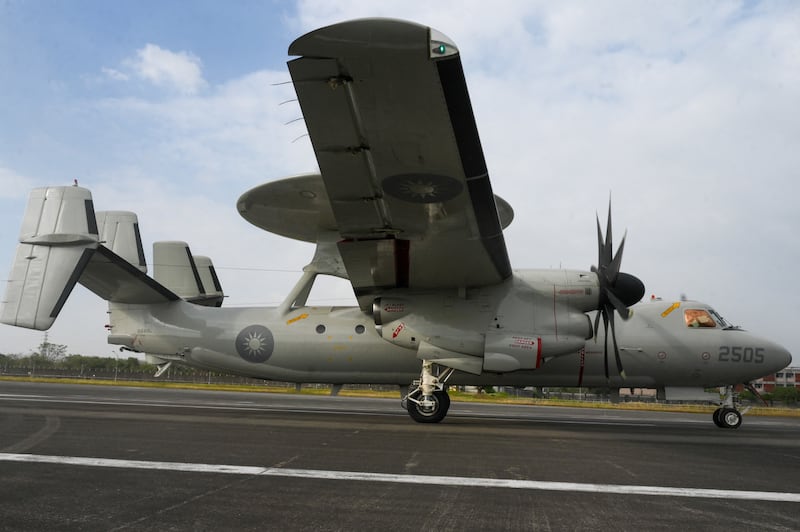
Major deals over the years have included fighter aircraft, missile defence systems, anti-ship missiles, tanks, surveillance equipment and naval systems.
One of the most significant sales came in 1992, when the George H.W.
Bush administration approved the sale of 150 F-16 fighter jets to Taiwan.
In 2010, the Obama administration approved a package worth about US$6.4 billion that included Patriot missile defence systems, Black Hawk helicopters and other equipment.
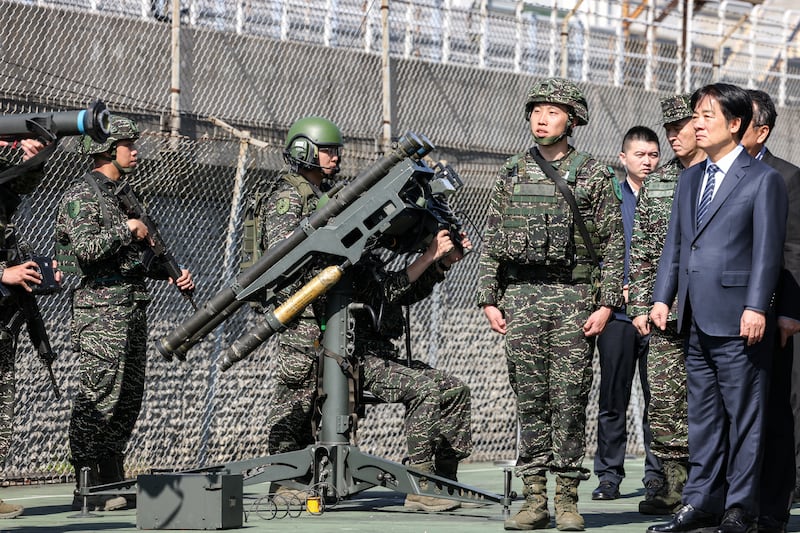
In 2019, the Trump administration approved a proposed US$8 billion sale of 66 F-16V fighter jets. The following year, Washington approved several packages including Harpoon coastal defence systems, rocket artillery and sensors.
More recent approvals have included spare parts, munitions and mobile weapons systems intended to improve Taiwan’s ability to survive and respond during a crisis.
What is the situation today?
As tensions across the Taiwan Strait have increased, Taipei has sought to strengthen its ability to defend itself and deter conflict.
Taiwan has not only asked for more weapons. Officials have also pushed for faster delivery of systems already approved by Washington, arguing that delays could affect the island’s defence preparedness.
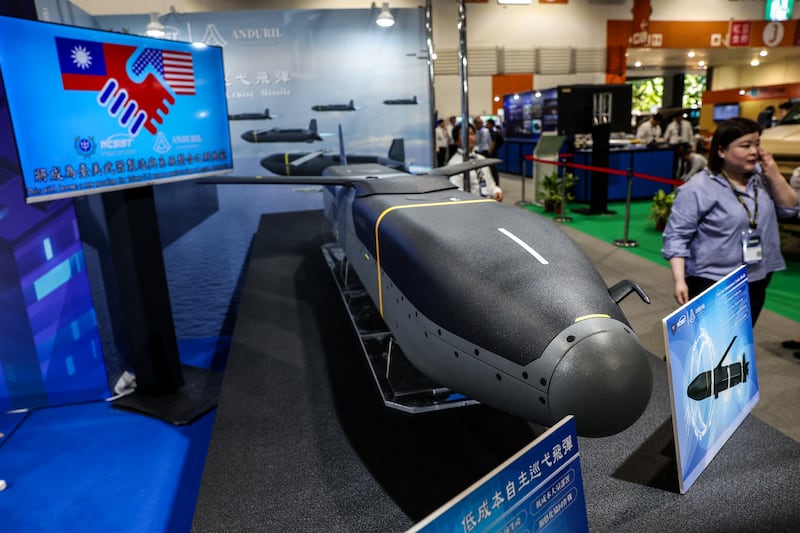
Taiwan has also increasingly prioritised smaller and more mobile systems that are harder to destroy, a strategy often described as “asymmetric warfare.” Rather than matching China weapon-for-weapon, the idea is to make any potential military operation more difficult and costly.
Meanwhile, Beijing strongly opposes U.S. arms sales to Taiwan, arguing that they violate China’s sovereignty and encourage separatism.
China regularly protests such sales and has at times announced sanctions against U.S. defence companies involved in Taiwan-related transactions.
It has also responded to some Taiwan-related developments with military drills around the island, which Beijing describes as warnings against “separatist” activity and foreign interference.
For Washington and Taipei, the argument is different. They say arms sales are intended to help Taiwan defend itself and preserve stability by reducing the risk that Beijing might believe it could use force successfully.
Why does this matter for regional security?
The Taiwan Strait is one of Asia’s most sensitive security flashpoints.
A conflict there could draw in the United States, affect Japan and other U.S. allies, disrupt major sea lanes and shake global technology supply chains, particularly because Taiwan plays a central role in advanced semiconductor production.
For Southeast Asia and the wider Indo-Pacific, the concern is not only whether Taiwan can defend itself, but whether tensions could escalate into a broader regional crisis.
That is why even individual arms packages receive close attention. They may not change the overall relationship, but they can signal how Washington, Taipei and Beijing are positioning themselves.
Why are people talking about this now?
Questions about U.S. support for Taiwan resurfaced after reports suggested that the weapons package that Congress agreed to in January could face delays.
The reports emerged as Washington was reviewing military requirements elsewhere, raising questions about whether broader geopolitical priorities could affect support for Taiwan.
U.S. President Donald Trump also said after talks with Chinese President Xi Jinping that he had not decided whether to approve the package. He later said he expected to speak with Taiwanese President Lai Ching-te, but media reports said no concrete plans had yet been made for a call between the two leaders.
U.S. officials also said the reports should not be interpreted as a shift in long-standing policy and stressed that decisions on future sales remained under review.
Edited by Eugene Whong.