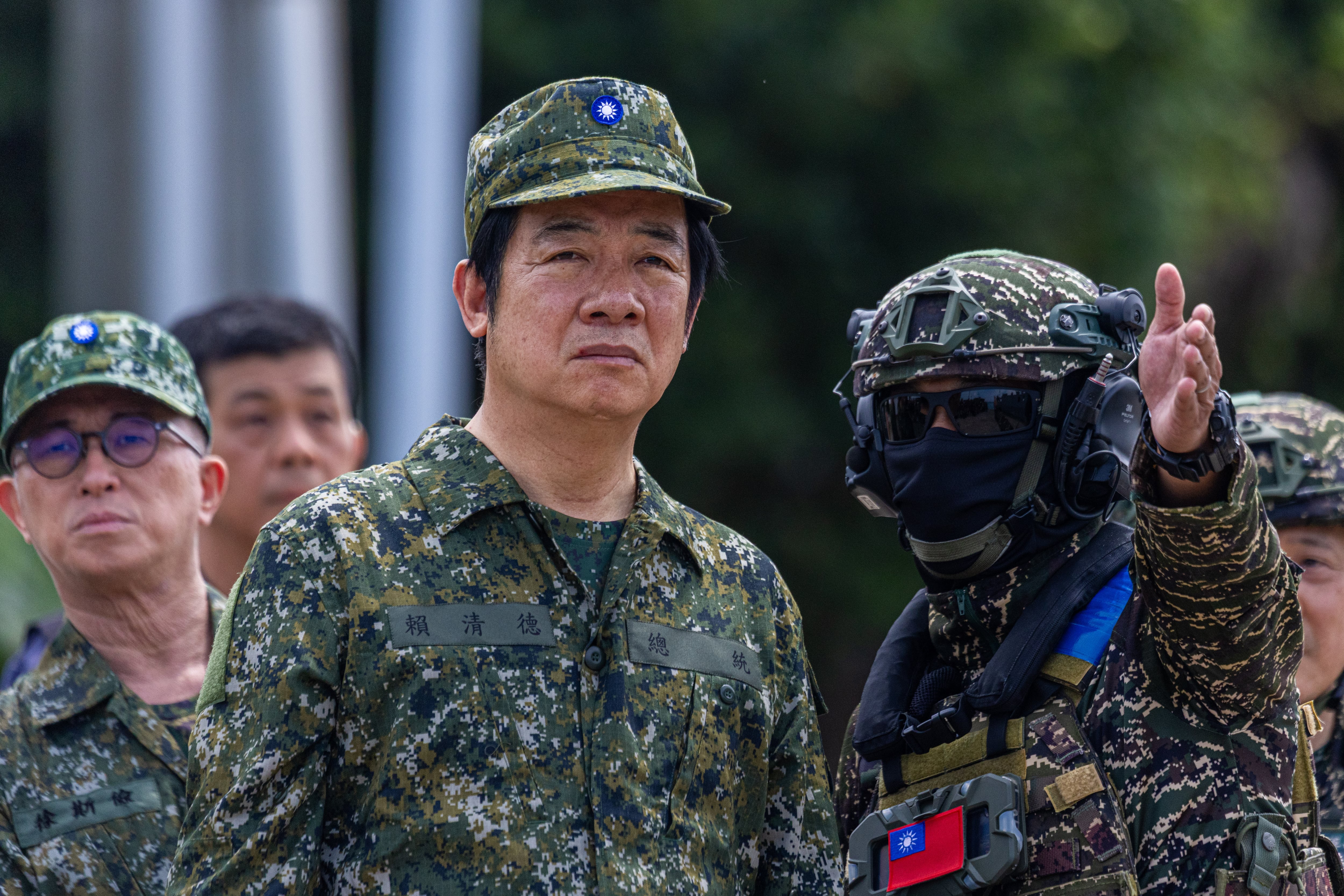
China is likely to use artificial intelligence to influence Taiwan’s Nov. 28 local elections, analysts told Radio Free Asia.
Taiwan’s ruling Democratic Progressive Party, or DPP, warned this month that Beijing could use AI to target groups of voters, impersonate Taiwanese social media users and circulate fabricated recordings or scandals shortly before election day.
The warning comes as Taipei steps up its defenses against AI interference in the election regardless of whether it originates inside or outside of the democratic island, which China considers to be its territory.
Taiwan’s government rejects Beijing’s sovereignty claim and says the island’s future can be decided only by its people.
Researchers say influence operators can use AI to produce content more quickly, manage networks of fake accounts and tailor messages to individual voters.
“I do think that AI will be more involved in the November local elections,” Sze-Fung Lee, an independent researcher specializing in Chinese hybrid warfare, told RFA. “The use of AI has been observed repeatedly in previous elections, and I believe we will continue to see it in the form of deepfakes for defamation campaigns, coordinated inauthentic behavior, and more sophisticated microtargeting.”
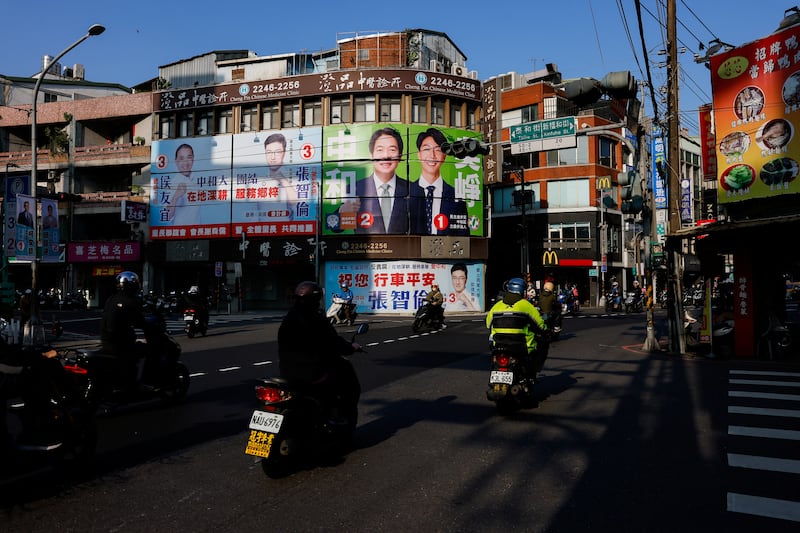
China has a long history of interfering in Taiwan’s elections, and it will likely use AI as it continues its efforts, William Yang, a Northeast Asia analyst at the Belgium-based International Crisis Group, told RFA.
“I do think Taiwan has legitimate reason to worry about Chinese election interference assisted by advanced AI technology,” Yang said. “Now with the assistance of advanced AI technology, these efforts will certainly be on the rise, especially when it coincides with key election cycles.”
Beijing has repeatedly denied interfering in Taiwan’s elections. It accuses the DPP of promoting separatism and using tensions with China for political purposes.
Electoral context
The DPP’s warning comes as the party faces a difficult local election. The opposition Kuomintang, or KMT, won 14 mayoral and county chief posts in 2022, compared with five for the DPP, and has secured a majority of those positions in the past two local election cycles.
Yang said the KMT was currently projected to win more counties, although the DPP could seriously challenge it in several races.
“The DPP will certainly be closely monitoring and tracking signs of disinformation that is trying to undermine its electoral prospects and find clues that might suggest its connection to China,” he said.
The KMT supports greater engagement with Beijing but rejects descriptions of itself as pro-China. The DPP, meanwhile, supports closer relationships with countries like the United States and Japan.
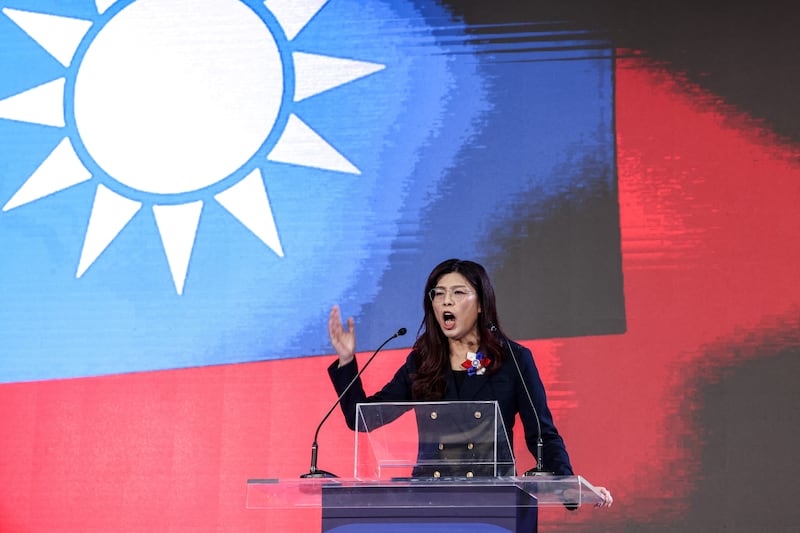
In a statement issued in February about reports of Chinese preparations to influence the local elections, the KMT said it opposed interference by external actors.
Despite the major differences the two parties have in cross-straits relations, Taiwan’s local elections are generally driven more by domestic issues. In 2022, the DPP emphasized national security and resistance to Beijing but suffered its worst local election result in years, prompting then-President Tsai Ing-wen to resign as party chair.
2024 influence?
In its warning, the DPP said AI-generated material that circulated around Taiwan’s 2024 presidential election included videos promoting “The Secret History of Tsai Ing-wen,” – an electronic book containing allegations about the former president – and a suspected fake recording of Terry Gou, a businessman and former presidential hopeful.
Research by Taiwan-based civil society group Doublethink Lab found that generative AI was used during the 2024 election to conduct large-scale spam campaigns and help inauthentic accounts vary their posts and schedules.
In previous elections, manipulation campaigns relied more on direct amplification of Chinese state media and prominent Weibo users, but in 2024, most of the interference came from unofficial social media accounts, Doublethink Lab found.
However, attributing such activity to China can be difficult, the report said. The presence of AI-generated material does not establish who created it, and researchers must examine account networks, posting behavior and connections with state-backed media or other known actors.
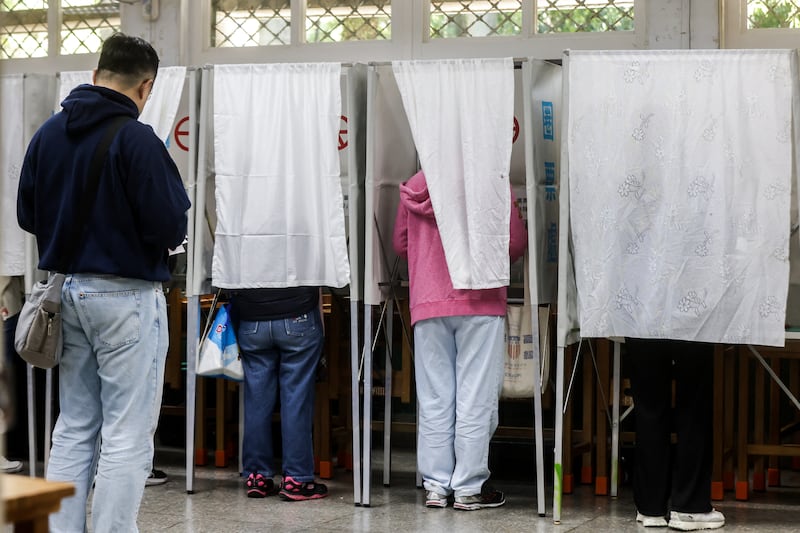
AI could make attribution harder by allowing operators to imitate Taiwanese expressions, discuss local issues and vary their online behavior.
A February report by the Netherlands-based Leiden Asia Centre said AI could make disinformation cheaper and easier to produce at scale. It found, however, that manipulation in Taiwan drew much of its power from existing political polarization, social grievances and social media platforms that reward emotionally charged content.
The report indicated that AI could amplify existing political divisions rather than create new ones.
Shoring up defenses
Taiwan’s Central Election Commission is establishing a specialized task force and an online platform through which candidates can report suspected deepfakes. The commission plans to assess reported material and refer confirmed cases to online platforms for action.
Such a system could help authorities respond to fabricated recordings attributed to identifiable candidates. Coordinated networks may be harder to address when individual accounts post political opinions or misleading claims that are not demonstrably false.
Content circulating through closed online communities, including those found on the popular LINE messenger app, also presents a challenge because it is less visible to election officials, researchers and fact-checkers.
The election preparations come amid broader concerns about Chinese cyber activity. Taiwan’s National Security Bureau said critical infrastructure faced an average of 2.63 million Chinese cyberattacks a day in 2025, an increase of 6% from 2024 and 113% from 2023.
Some of the attacks coincided with Chinese military exercises or politically significant events in Taiwan, the bureau said.
The cyberattack figures do not demonstrate AI-enabled election interference, but Lee said they supported the government’s broader assessment of sustained Chinese pressure.
“I do not think the government is being overly sensitive,” she said. “There is hard data showing the frequency of cyberattacks and cognitive warfare targeting Taiwan every day, as well as evidence of Chinese electoral interference in Taiwan’s 2024 presidential election.”
Edited by Eugene Whong.