Read a version of this story in Lao.
After ponds at a Chinese-financed rare-earth mining operation burst and potentially contaminated two rivers in northern Laos, villagers living downstream told Radio Free Asia they don’t think the water is safe.
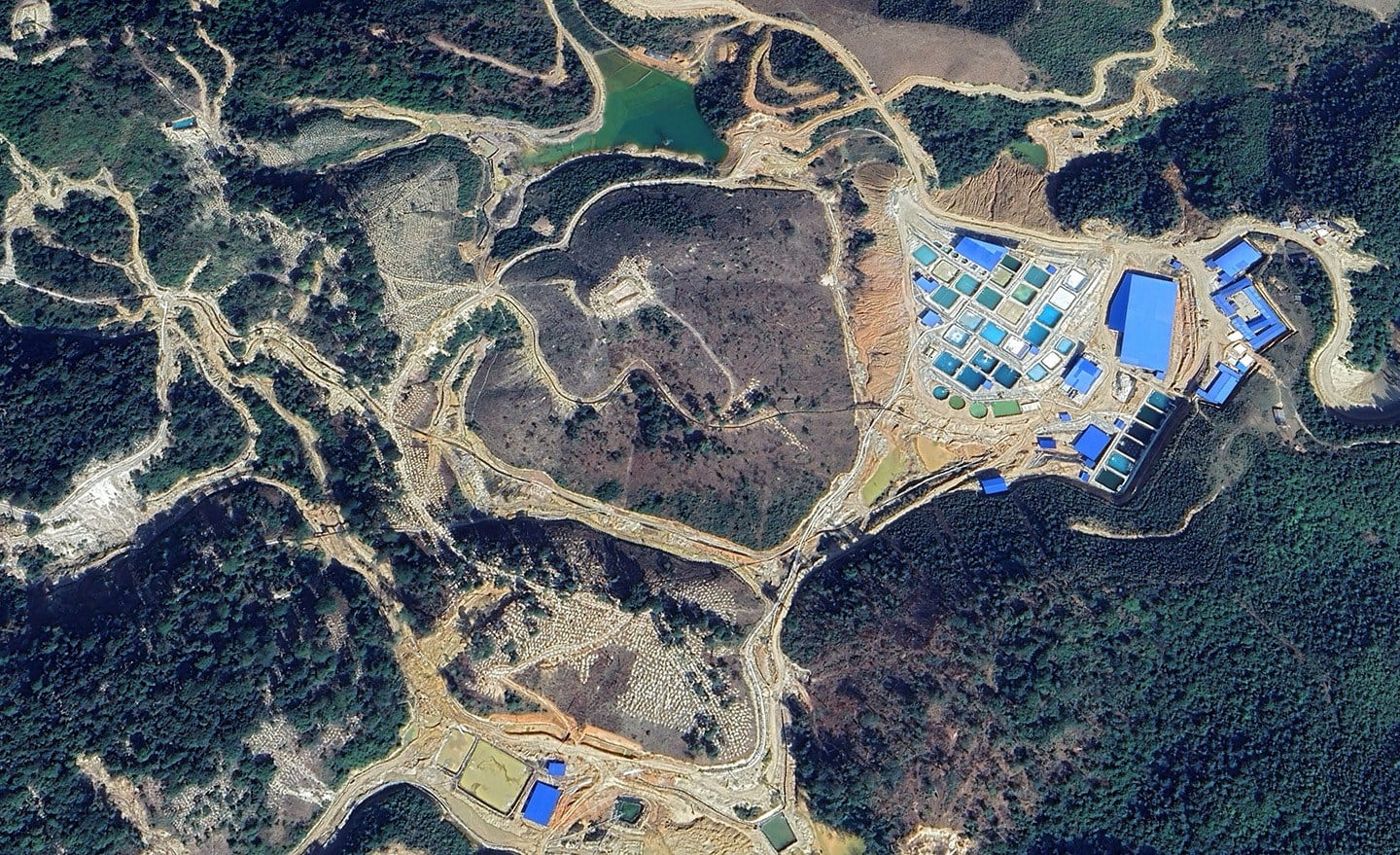
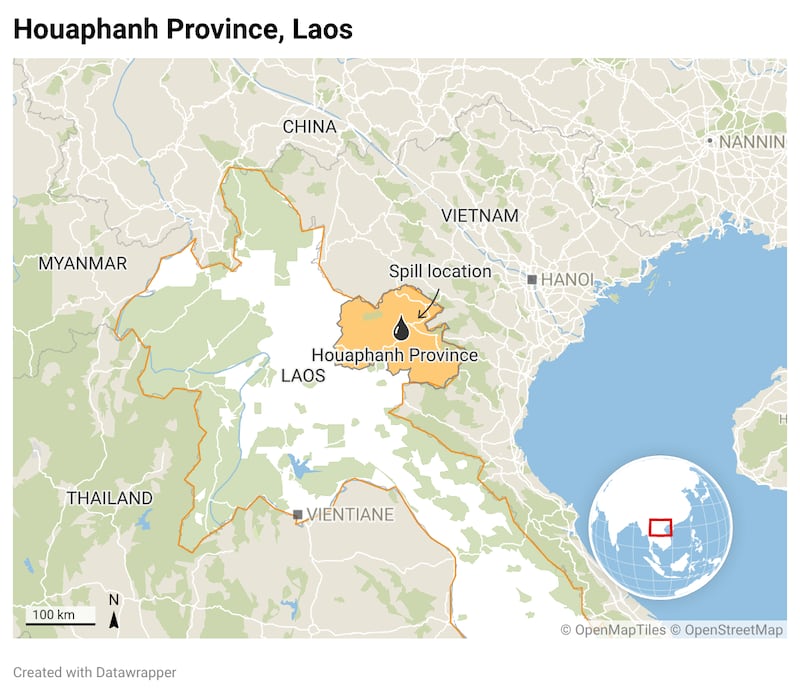
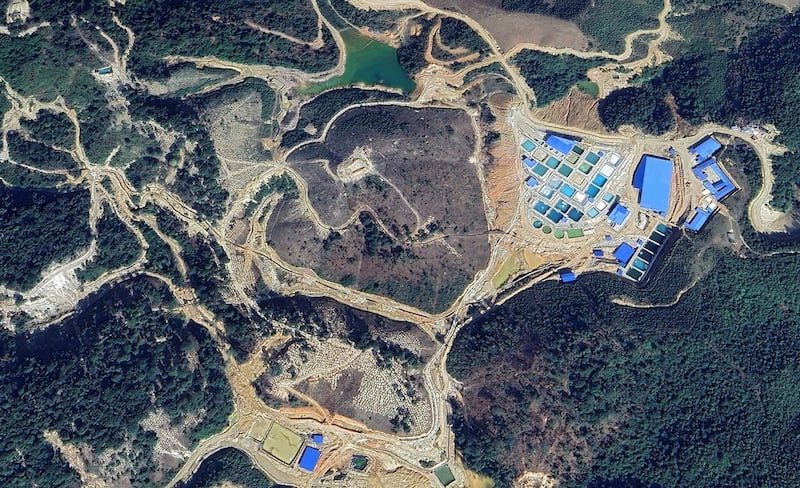
On Nov. 1, several drainage ponds began to overflow at the Laos-China Rare Mineral Development Company North 2 Ltd. in Houaphanh province’s Xam Neua district. The water from the ponds drained into the Nam Vaen River, which flows into the Nam Xam River, which crosses the border into Vietnam.
There are approximately 18 affected villages that rely on the two rivers for agriculture, and this is the third rare-earth spill in the area after similar incidents in February 2024 and April 2026.
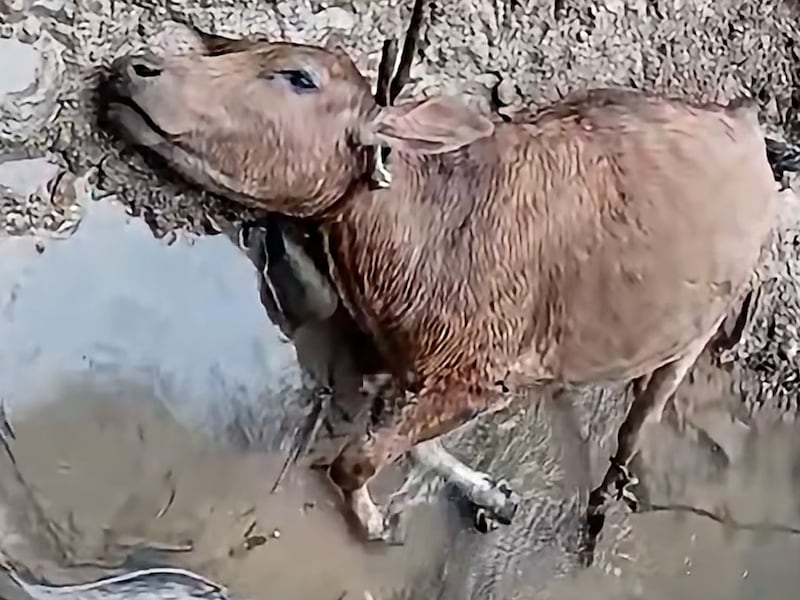
Authorities began an investigation on Nov. 4, consulting with officials from the mining company, who assured the government that the water was safe. But as early as Nov. 6, residents living downstream from the mining operation reported that fish were dying. Later, reports surfaced that birds and livestock like cows and pigs had also died. Authorities suspended mining indefinitely on Nov. 13.
The local government should have visited the affected villages instead of just talking to the company, a resident of Muang Vaen village told RFA on condition of anonymity for security reasons.
“They say there is no contamination, telling the people to be confident that nothing is wrong, but right now, fish are dying in massive numbers,” the villager said. “They didn’t go inspect the downstream area where the incident happened – they didn’t come at all. They went to the site up at the top, listening to them, listening to the company at the project site saying ‘nothing is wrong, this and that.’ They’re just trying to keep people from panicking.”
During the investigation, the mining company told the government that the pond that burst was a natural water storage pond, not a chemical waste storage pond. The company stated it has repaired the water pipes and will compensate damages to two families whose rice fields were damaged, in accordance with the law.
The villager said the people still do not dare consume the water or even use it for household chores, despite the assurances from the provincial government that there is no issue and they can use the water as usual.
Shortly after the incident, an official of the Houaphanh Provincial Department of Agriculture and Environment told RFA that residents living downstream should temporarily stop using the water until inspection results are available and the problem is resolved.
Later, on Nov. 15, another official of the same department told RFA that authorities are currently investigating why the animals are dying.
“Right now, they have fixed it,” the second official said. “Currently, agricultural production can proceed, and the water can be used normally. As for the dead fish and other dead animals, they are still analyzing it.”
Foreign-invested farming, mining and development projects in Laos have sparked friction over cases of environmental pollution and land often taken without proper compensation, leaving villagers fearing retaliation if they speak out.
Skeptical residents
Residents have raised questions and demanded that relevant authorities conduct a serious investigation following state media reports clarifying that there was no chemical contamination of the water.
They also told RFA that they do not trust the Nov. 4 investigation, after which authorities announced that they found no severe impact and no dead aquatic animals, though there was still an issue with water concentration that might be caused by saltwater seepage from an old mining pit. The authorities at that time said they were waiting for official confirmation test results from the National Water Quality Research Institute.
But some of the residents have turned to mountain spring water, which is more difficult to collect, and is insufficient for their livelihoods, they told RFA. They do not trust the government because a similar incident occurred at the same mining operation in 2024. At that time the villagers tested the water themselves and found it was contaminated.
“Many villages are indirectly affected, so to speak – all 18 or 19 villages here,” a second villager told RFA on condition of anonymity to speak freely. “We cannot use the main river, the Nam Vaen.”
The villagers are demanding that authorities help them find replacement water to use for watering vegetables and agricultural production.
“Right now, for drinking and living water, it’s just mountain spring water and tiny streams, which isn’t enough to water vegetables and other crops,” the second villager said. “We are facing many hardships. They came to inspect and said nothing was wrong, yet we see so many dead fish there. Just like the previous time—when we took the water to get tested and we found contamination. When they took it to get tested, they didn’t find anything.”
Edited by Eugene Whong.