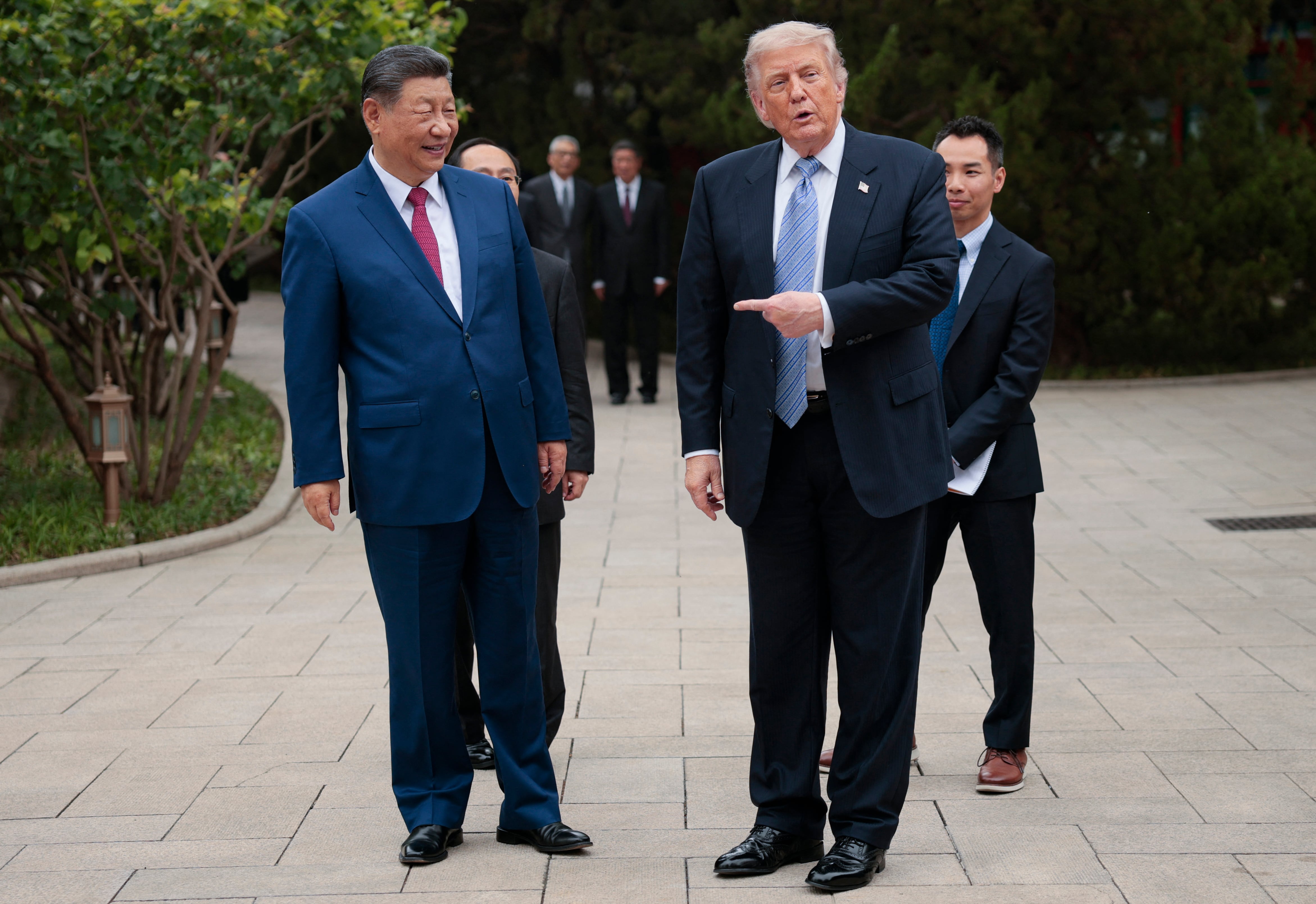
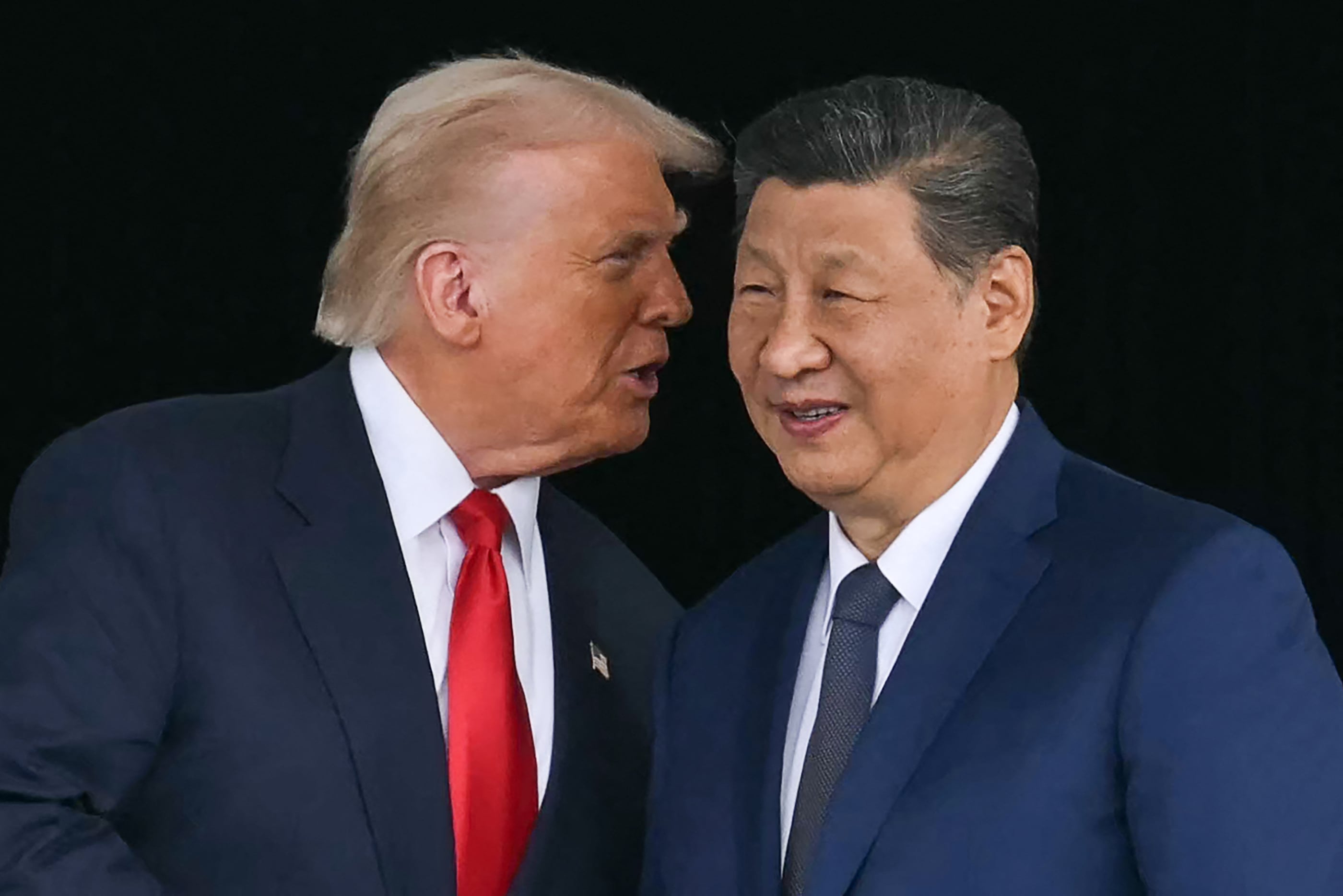
Chinese President Xi Jinping Wednesday arrived in Washington as diasporic minority communities urged U.S. President Donald Trump to press him on human rights and religious freedom during their three-day summit.
President Trump and First Lady Melania Trump met Xi and his wife Peng Liyuan on the tarmac at Joint Base Andrews in Maryland. After their brief greeting, which included a military honor guard, the two leaders parted ways to make last minute preparations for a full slate of events scheduled for Thursday.
Experts expect that Trump will try to work with Xi on a variety of issues, with economic friction over tariffs, U.S. soybean exports, and supply chains taking center stage.
But minority advocacy groups have been calling on Trump to use the summit to spotlight Chinese government policies that they say perpetuate human rights abuses and genocide.
Genocide unresolved
Toward the end of Trump’s first term, the United States classified China’s actions and policies in Xinjiang – where over a million Uyghurs and other minorities have been subject to mass internment and forced labor – as a genocide. This designation was upheld during the Biden administration and into Trump’s second term.
The summit presents an opportunity for Trump and the U.S. government to raise the Uyghur genocide both publicly and in private, the World Uyghur Congress, or WUC, an exile group based in Munich, said in a statement.
“Xi’s visit to Washington is a strategic moment to move beyond words of condemnation on the Uyghur genocide,” said WUC President Turgunjan Alawdun in the statement. “The United States has been a strong and vocal ally to the Uyghur people, and Donald Trump has to use this opportunity to continue proving it.”
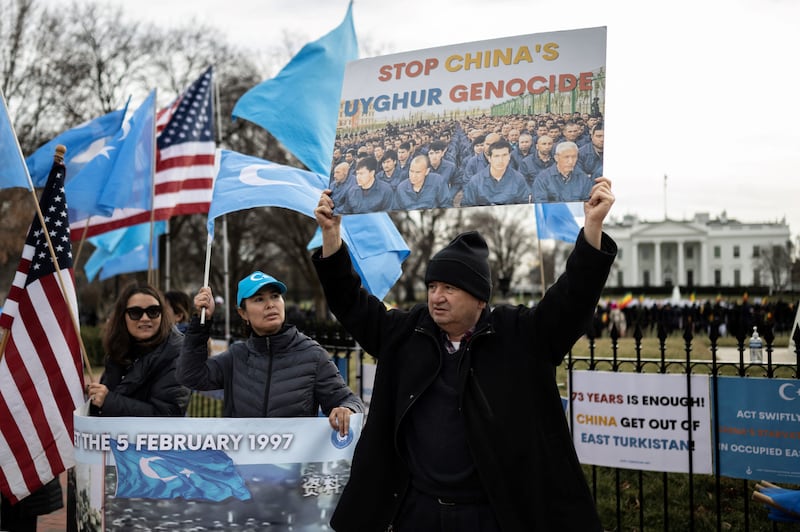
The East Turkestan Government-in-Exile, or ETGE, a Washington-based group that advocates for the independence of the Uyghur region, said in a statement that Trump should push Xi to end the genocide. East Turkestan is the preferred name for the region for diaspora and exile organizations.
President Trump “should make clear to Xi Jinping that genocide, colonial occupation, and the exploitation of our homeland cannot be separated from the strategic challenge China poses to the United States,” said ETGE President Mamtimin Ala in the statement. “Ending the genocide requires confronting the occupation that sustains it and supporting the restoration of East Turkistan’s national independence.”
Cultural erasure
Tibetan exile activists, meanwhile, urged Trump to raise the issue of Chinese authorities’ erasure of Tibetan culture.
“Since the two presidents are going to hold talks, I am appealing to President Trump, as the leader of a powerful country, to discuss with Chinese President Xi Jinping the strategies being pursued to infiltrate Tibet’s religion, culture, and language,” Lobsang Shastri, a Tibetan scholar, told RFA.
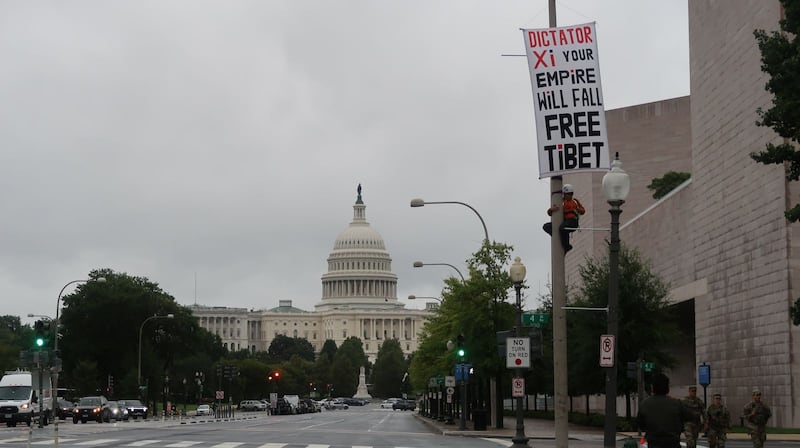
“I am appealing to President Trump to raise the issue of resuming dialogue between China and Tibet,” Nyima Lhamo, the niece of renowned Tibetan Buddhist leader and political prisoner Tulku Tenzin Delek Rinpoche, who died in Chinese custody in 2015, told RFA.
“I call for an end to the ongoing destruction of Tibet’s religion and culture, and urge the release of all political prisoners, including the Panchen Rinpoche,” she said, referring to the Panchen Lama, the second most important figure in Tibetan Buddhism.
The current Panchen Lama recognized by Tibetans is Gedhun Choekyi Nyima, who was at the age of six forcibly disappeared by Chinese authorities in 1995. His whereabouts remain unknown.
Following his disappearance, the Chinese government installed their own Panchen Lama, and this represents a “terrible violation against all of Tibetan Buddhism,” Asif Mahmood, the Chair of the United States Commission on International Religious Freedom, or USCIRF, told RFA.
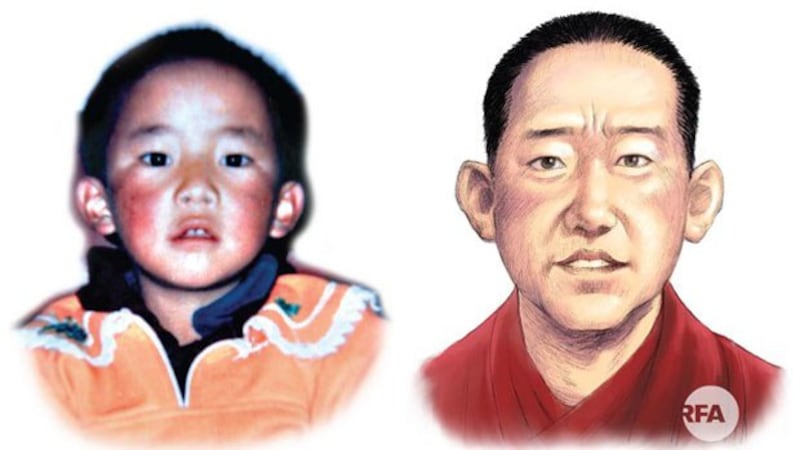
Tibetan Buddhists “should have, under international standards, the religious freedom to select their own leaders, free from the interference of the Chinese Communist Party,” said Mahmood. “This terrible situation facing the disappeared Panchen Lama, and indeed all Tibetan Buddhists, is why USCIRF has urged President Trump to directly advocate for freedom for Gedhun Choekyi Nyima and his family.”
Breaking with precedent
During previous visits of Chinese leaders to Washington, the U.S. President’s formal welcome had traditionally happened at the White House. That Trump is going to Andrews to meet Xi upon arrival is an indication of the high level of importance of U.S.-China relations to the administration.
Both leaders believe that a stable relationship between the two countries is a priority, Bonnie S. Glaser, a U.S.-China-Taiwan relations scholar and director of the German Marshall Fund, told RFA.
“They don’t want to see a rupture that could have negative consequences for their respective countries,” she said. “Both of them want to see that the problems in the relationship are managed, that things don’t spin out of control.”
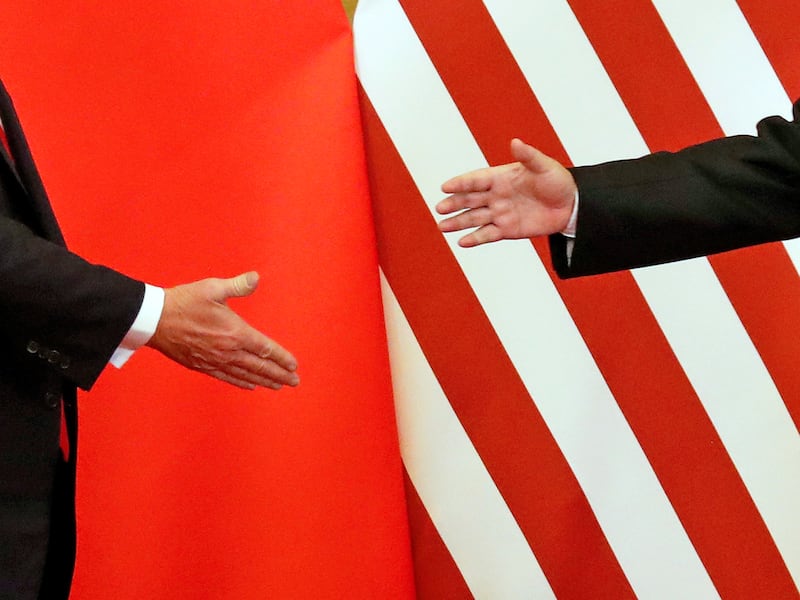
The summit will kick into high gear Thursday where the two leaders are expected to discuss artificial intelligence governance and security issues, including arms sales to Taiwan, and, Glaser said, they will likely discuss extending a trade truce – a temporary halt to escalating tariffs by Trump and retaliatory moves by Beijing – which they negotiated during a meeting in South Korea last year.
“The truce does not expire until November. So it remains unclear whether the two sides will actually announce an extension at this upcoming summit,” she said. “However, it has been reported that the United States wants a six-month extension of the truce and that China would like to extend it through the end of the Trump administration.”
Following the summit meeting, a state dinner is on the schedule for Thursday evening, and Xi will return to China on Friday.
Edited by Eugene Whong. Additional reporting from Washington by RFA Uyghur, RFA Tibetan and RFA Mandarin.