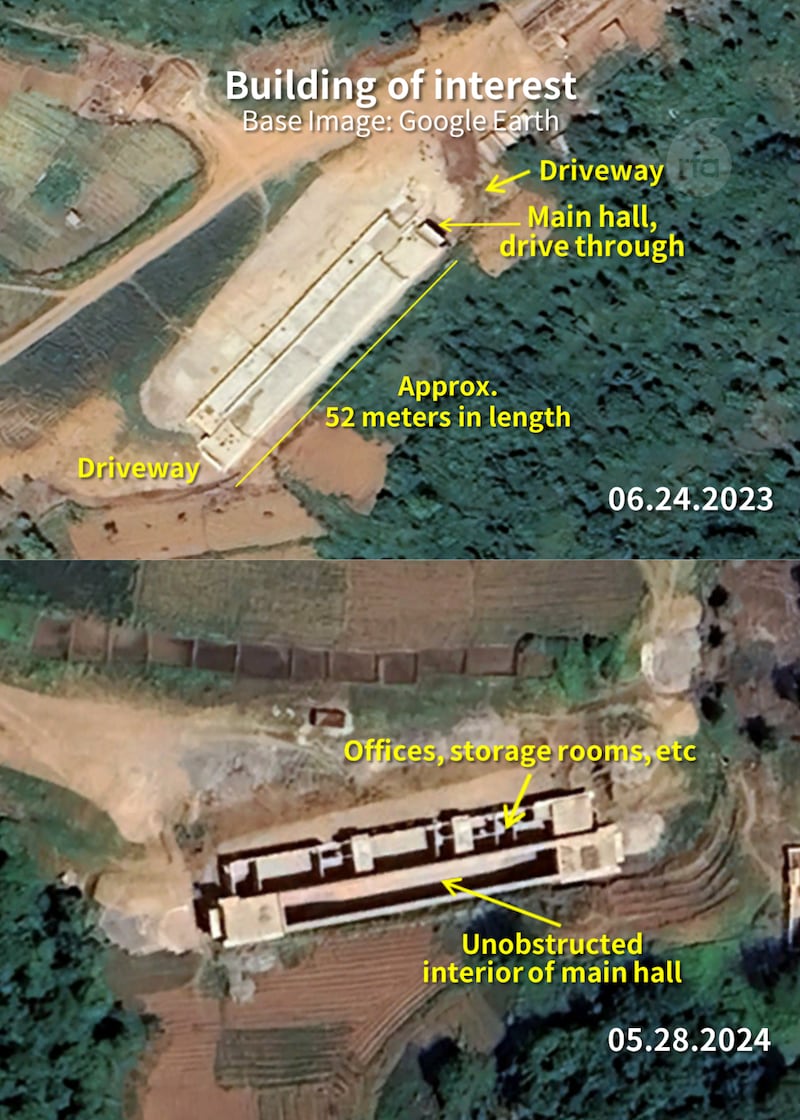
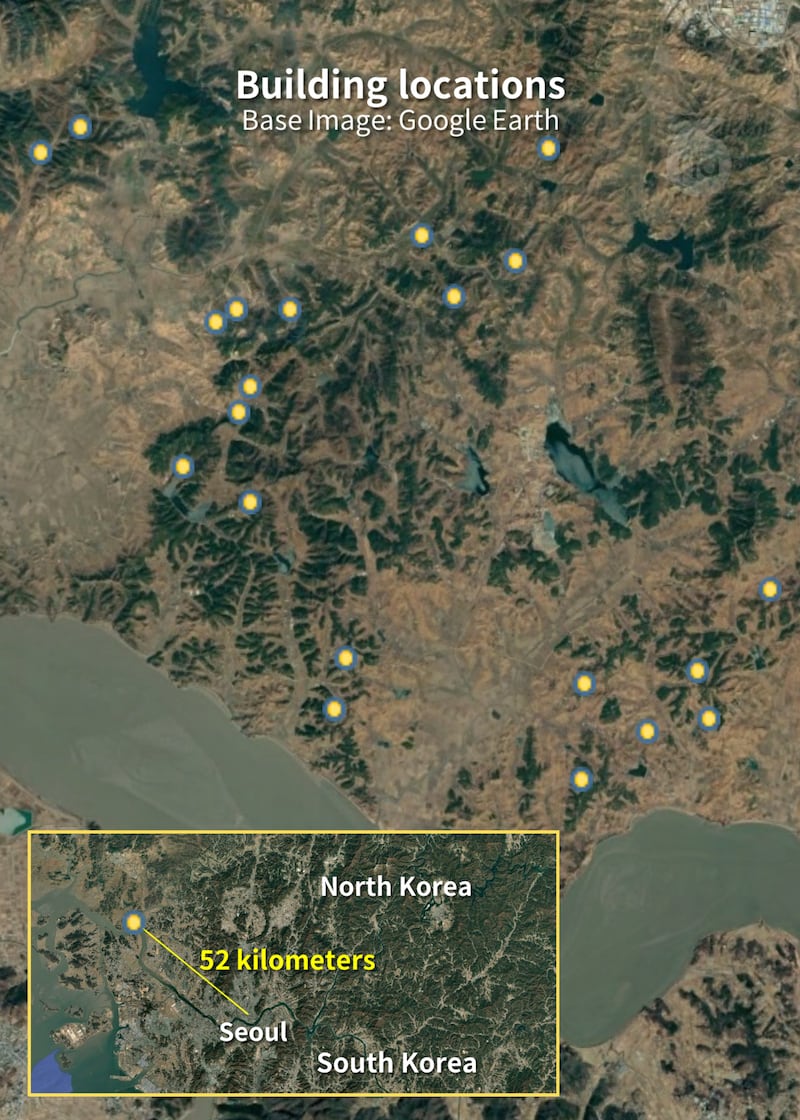
North Korea has constructed at least 21 identical drive-through structures near its border with South Korea that could potentially aid in the operation of truck-based missile or rocket weapons systems, satellite imagery analyzed by Radio Free Asia suggests.
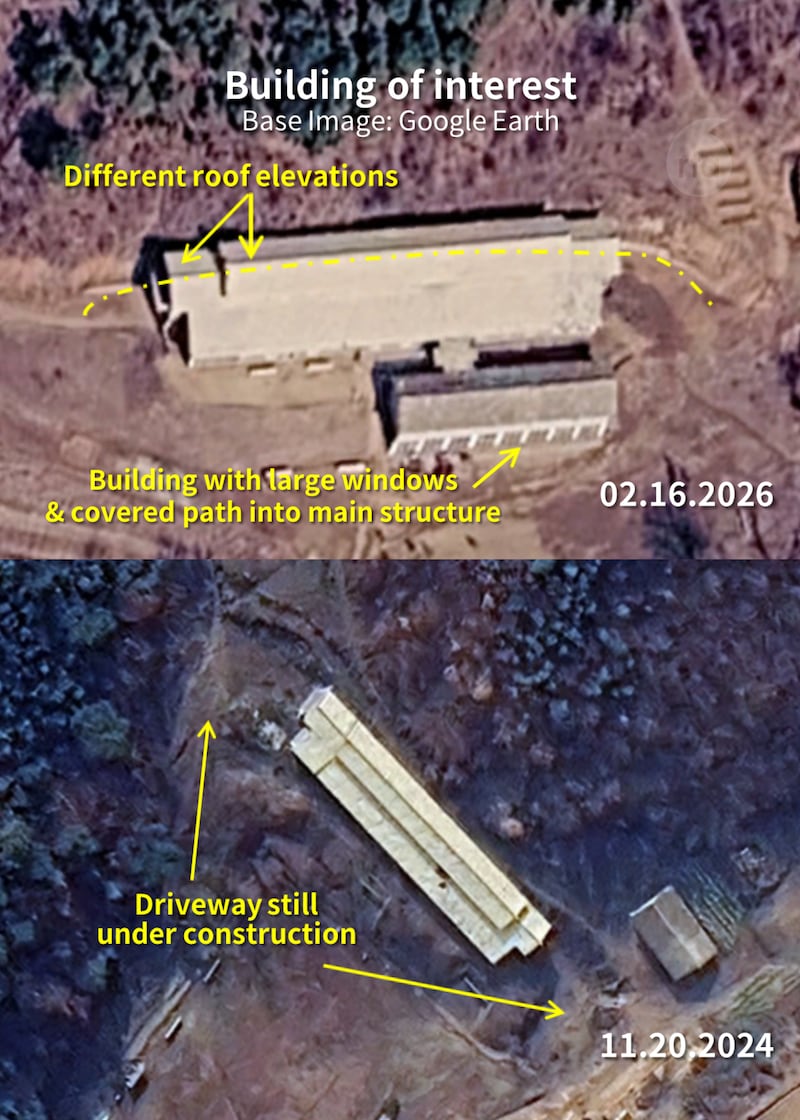
The buildings, each roughly 52 meters (171 feet) long, began to appear in satellite imagery between 2023 and early 2025 at small North Korean Army bases south of Kaesong, just a few kilometers north of the Demilitarized Zone, or DMZ, and only 52 kilometers (32 miles) from Seoul, the capital of South Korea.
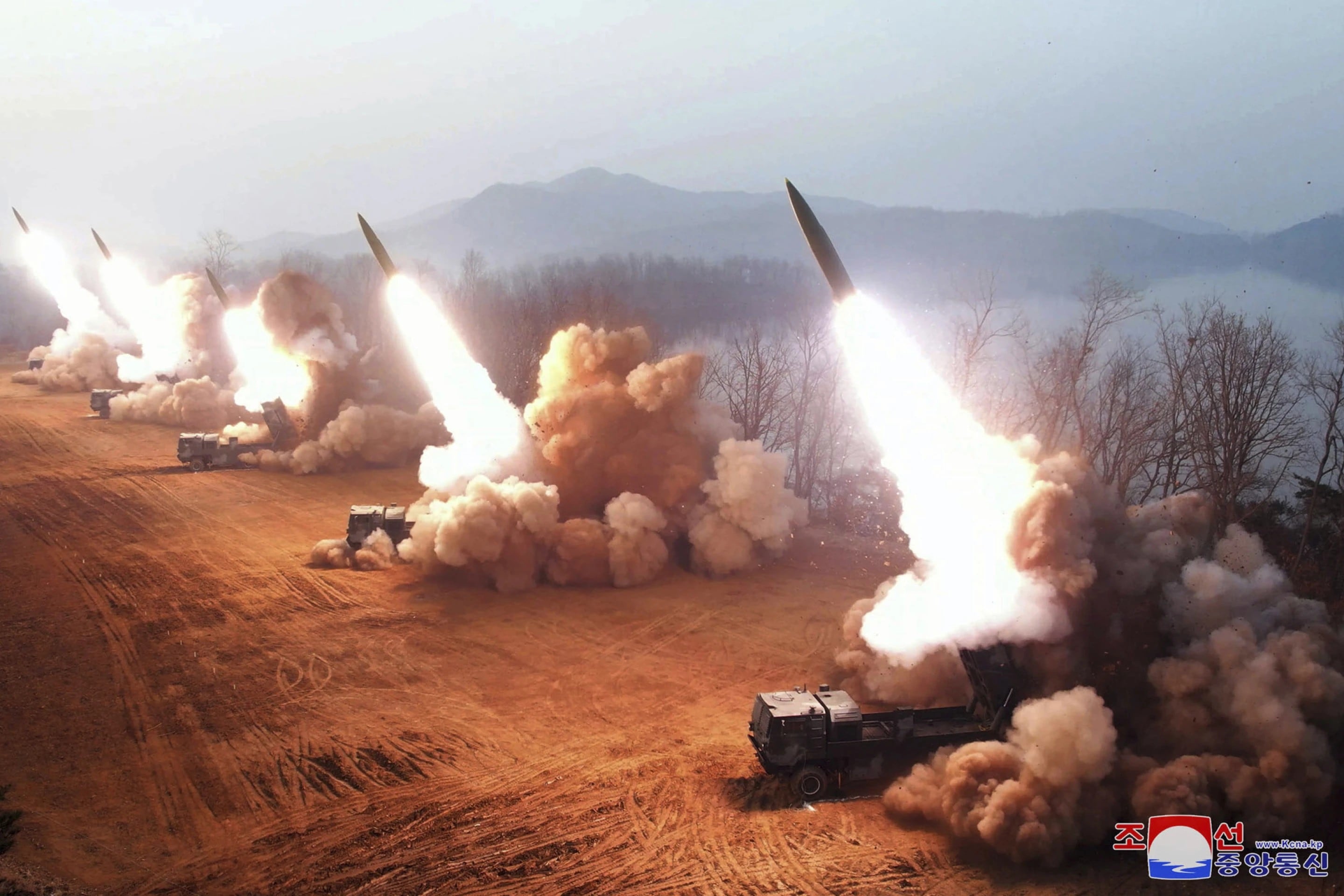
Their number, design and location suggest they could serve as maintenance and storage facilities for transporter erector launchers, or TELs, or multiple launch rocket systems, or MLRS, two types of weapons systems that can quickly launch guided missiles or rockets against targets across South Korea, experts told RFA.
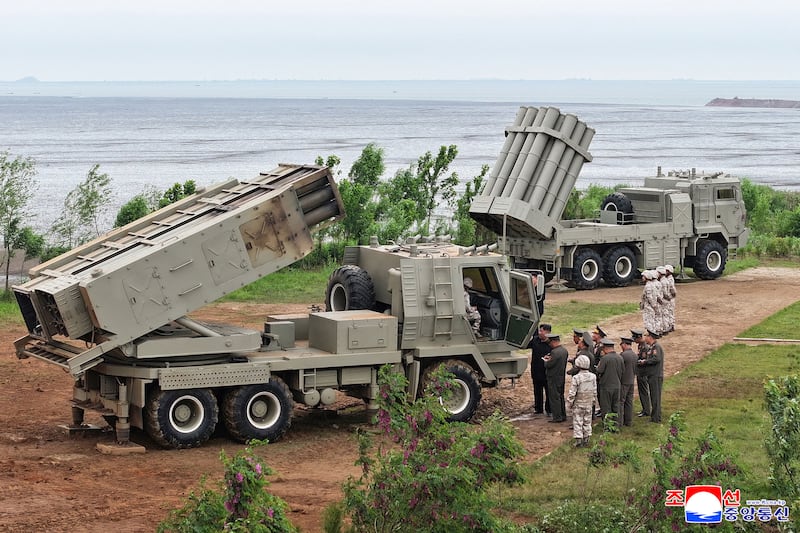
TELs are used in situations where precisely hitting one target is the goal, whereas MLRS is used to attack many targets over a broad area.
The experts noted that neither weapons system has been spotted in imagery but said that the weapons systems infrastructure was the likeliest explanation.
“I see no reason for civilian activity at this level of construction in this location,” Joseph S. Bermudez Jr., a senior fellow for imagery analysis at the Washington-based Center for Strategic and International Studies, told RFA.
Rockets or missiles?
The buildings seem more likely to be for MLRS rather than TEL, Bermudez said. Each building is connected to dedicated access roads designed for military vehicles, but the turning radius appears suitable for smaller vehicles rather than a large TEL.
“Multiple rocket launches seem reasonable,” he said. “Multiple rocket launchers grouped in batteries of four would fit, with the ability to have another vehicle — a support vehicle — in there.”
Each structure features a central drive-through hall with vehicles able to enter one end and exit the other, and a raised midsection roof tall enough to let a launcher elevate its missile or rocket modules for maintenance, Jacob Bogle, a U.S.-based private satellite imagery analyst, told RFA.
“North Korea has been quietly increasing its MLRS infrastructure before making any public announcements,” Bogle said. “These structures are only part of improvements to the DMZ area, but they are among the most potent.”
Another factor that indicates that the buildings are for TEL or MLRS is that they are so close to the border, Bruce Bennett, a senior national security analyst, told RFA.
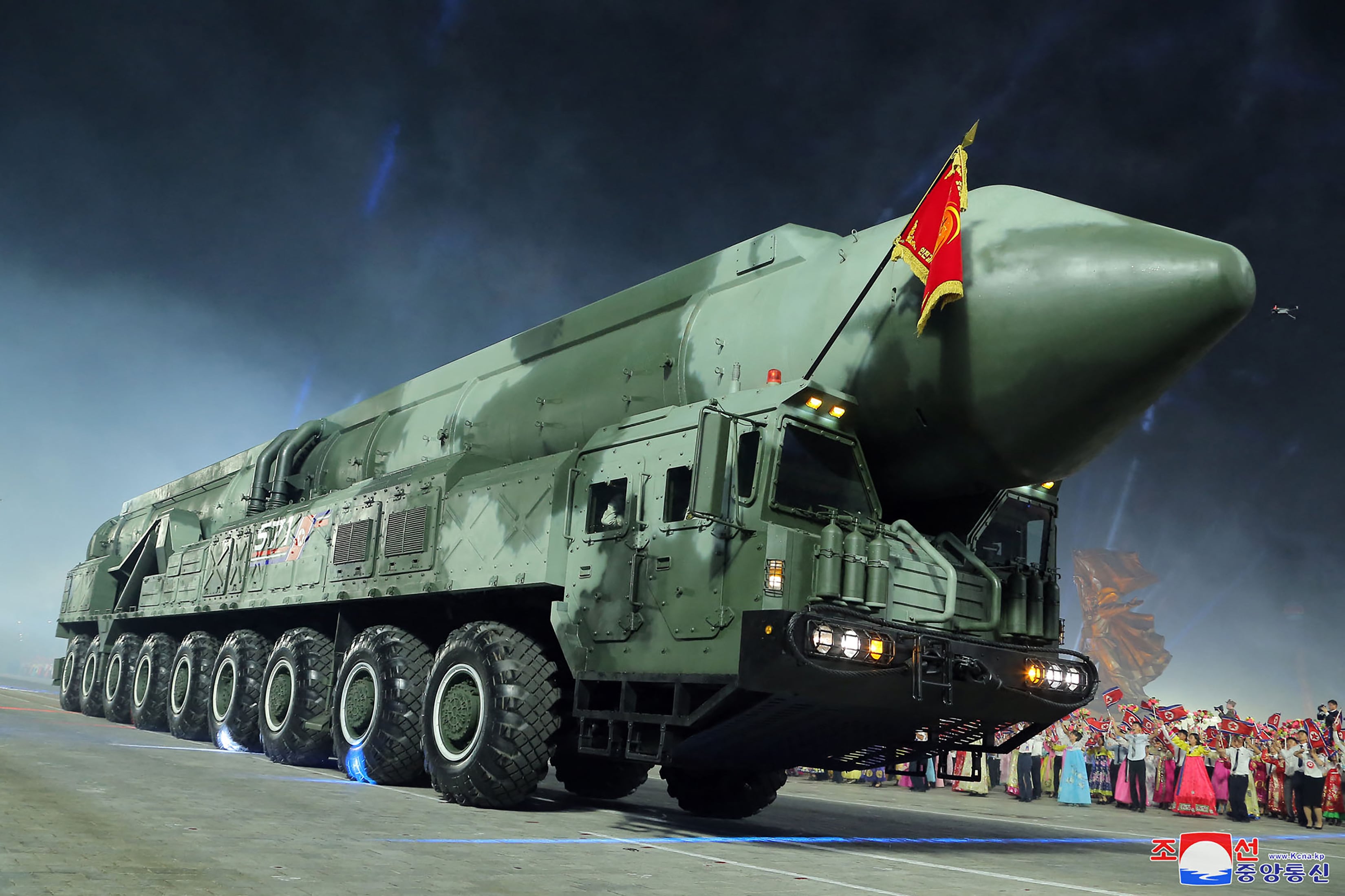
He noted that North Korean leader Kim Jong Un unveiled 50 new TELs last February capable of carrying 600-millimeter missiles, most likely KN-25s.
“Those missiles are just over 8 meters long, so the launchers are likely about 10 meters,” Bennett said. “A battery of three or four such launchers could fit inside one of the 52-meter buildings, one after the other.”
The 50 new TELs could potentially fill 13 to 17 of the newly built structures — leaving extra room for the other 600-millimeter systems and shorter-range launchers Kim has separately showcased.
Force buildup
North Korea has a long track record of sheltering its missile forces in drive-through facilities, experts said.
“It even built such facilities for its Scud missiles, but more recently it has been building such facilities even for its longer-range missiles,” Bennett said.
Similar drive through structures are present at the nearby Kal-gol missile operating base, according to the ‘Beyond Parallel’ project by the Washington-based Center for Strategic and International Studies.
The Kal-gol missile base is one of the most developed of North Korea’s approximately 15-20 undeclared ballistic missile facilities — with a specialized drive-through building with an arched clerestory allows for the elevation of a Hwasong-5/6 missile on a TEL or MEL, or missile erector launcher, for training and maintenance, the report said.
To tout his missile capabilities, Kim Jong Un has held three ceremonies since 2022 — most recently this year — unveiling more than 330 newly produced TELs for KN-25 and short-range Hwasong-11D missiles, the latter with a range of just over 100 kilometers (62 miles).
“These TELs will mainly be deployed close to the DMZ at a variety of bases because of the short-range of their missiles and this is almost certainly only the beginning of Kim’s deployment of new missiles near the DMZ,” Bennett said.
“North Korea is mechanizing its forward forces, so that they could move rapidly forward. It is also a reasonable probability,” Bermudez said.
Forward deployment
The construction of the drive through buildings also follows Kim Jong Un’s recent push to strengthen frontline firepower. These have included: a February ceremony presenting 600-millimeter multiple rocket launchers, a May order from Kim to reinforce southern border defense, and live-fire tests in June of an upgraded 240-millimeter multiple rocket launcher equipped with autonomous precision guidance and an extended range of up to 90 kilometers (56 miles).
Experts say the timing of the new drive through buildings is difficult to view as coincidental.
North Korea is “reinforcing its forward-deployed troops,” Bermudez said. “You just don’t build this many structures of the same type unless you’re forward deploying additional assets.”
Bogle said the pattern fits a long-standing North Korean survival strategy built on redundancy.
“Every new building, every new base, and every underground facility requires the ROK and U.S. to invest even more in building up supplies, and requires more of a burden for intelligence agencies to know what weapons are where at any given time,” he said.
Edited by Eugene Whong.