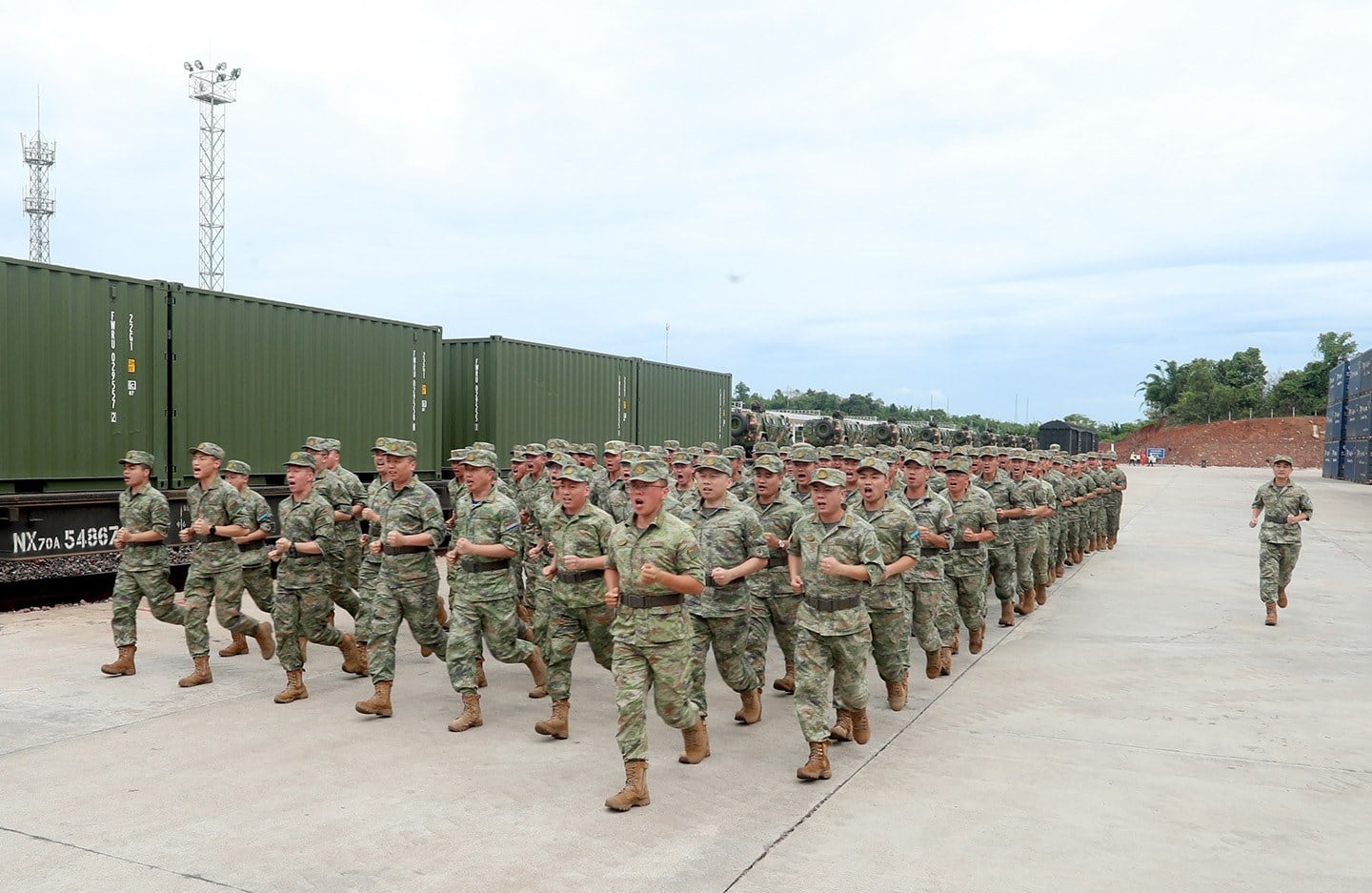
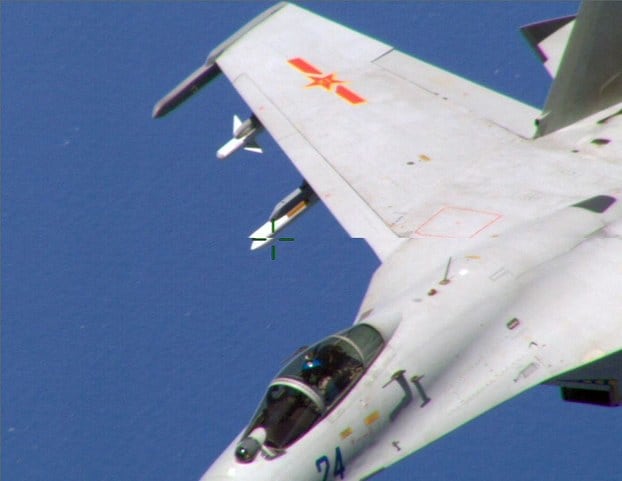
A new joint military training facility in Laos could give Beijing a lasting foothold in mainland Southeast Asia even without an immediate boost to its combat power, analysts told Radio Free Asia.
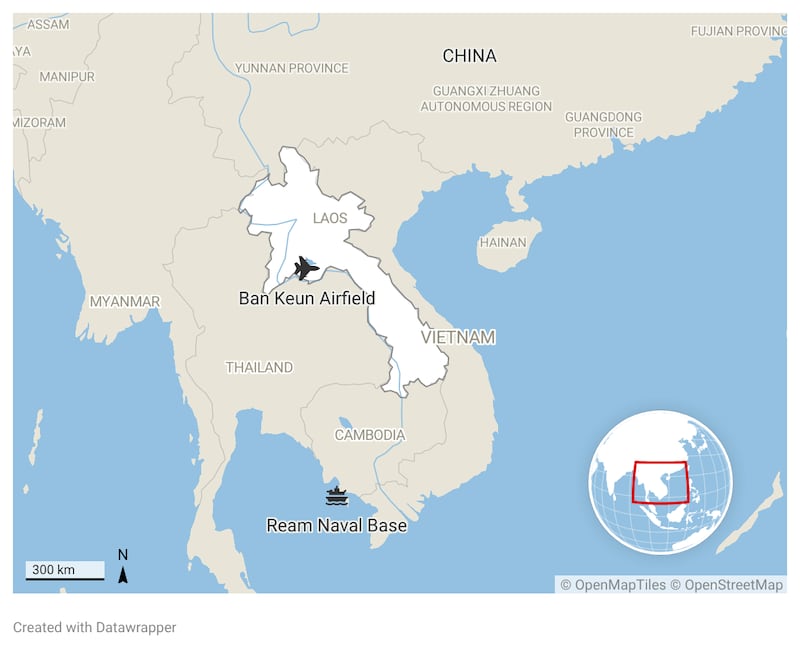
Beijing and Vientiane opened a joint support and training center and an aviation academy at Ban Keun, about 50 kilometers north of the Lao capital, on Sept. 29. Beijing says the facility will train Lao air force pilots and it will be maintained by both countries.
The airfield, once complete, would be China’s second joint military outpost in Southeast Asia, after a Chinese-funded expansion of Cambodia’s Ream Naval Base opened in April of last year. The facility at Ream, despite its official designation as a dual-use facility, has seen a regular rotation of Chinese naval vessels.
The joint facility in Laos could allow China to deepen military ties, familiarize personnel with overseas operations and lay the groundwork for a larger presence, Joseph Kristanto, a research analyst at Singapore’s S. Rajaratnam School of International Studies, told RFA.
“Ultimately, I think the more important question is not simply whether Ban Keun could accommodate Chinese military aircraft, but whether Beijing intends to develop the facility into a sustained operational hub,” he said.
China’s Defense Ministry said in an announcement that the facility would be maintained by both countries and was “not directed against any third party.” It said its construction and use complied with domestic and international law and would strengthen military cooperation and support regional peace and stability.
Laos’ state news agency KPL reported that officials from both countries described the project at the opening ceremony as the product of cooperation based on mutual respect and equality. The facility would develop Lao military pilots’ practical skills, it said.
The KPL report also said both sides pledged to expand cooperation through joint training and exercises, personnel development and humanitarian assistance. Neither that report nor the Chinese announcement specified how many Chinese military personnel would work at Ban Keun, how long they would remain or the conditions governing Chinese aircraft deployments.
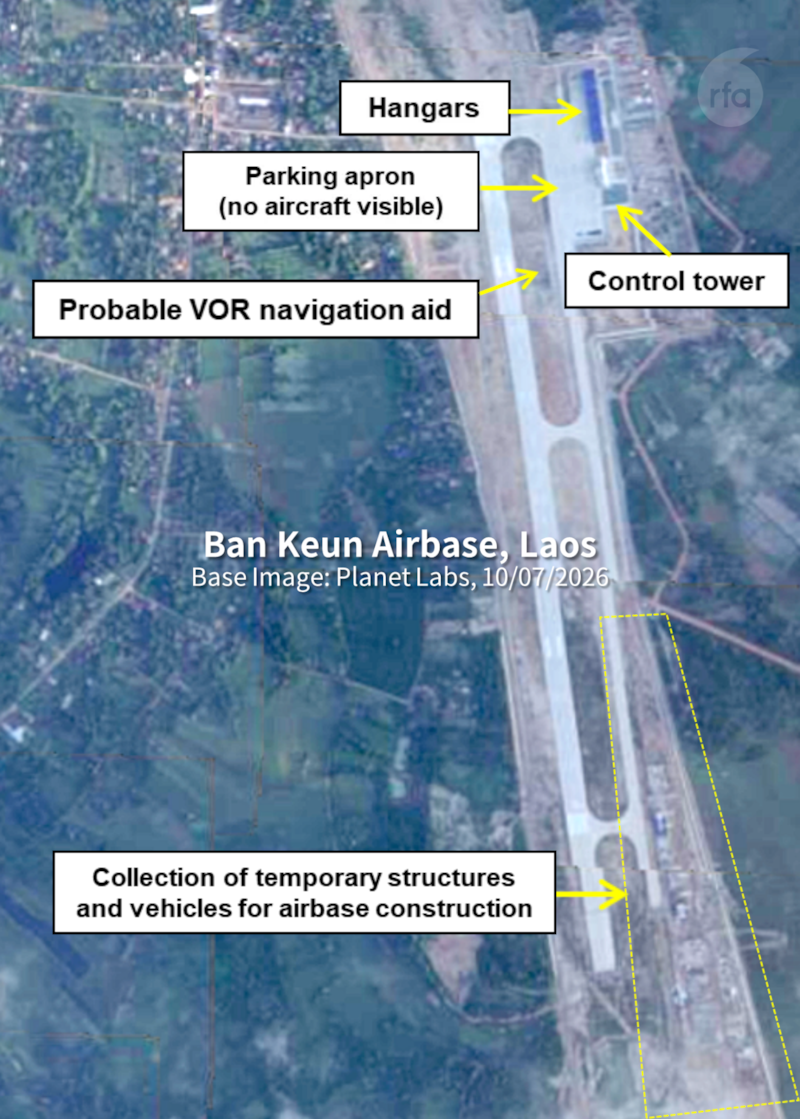
Satellite imagery analysis provided to RFA suggests some construction continued after the opening of the joint airfield. But its future military significance will depend on more than its physical completion, including the extent of Chinese access and the frequency and nature of activities there, Kristanto said.
China already operates military facilities on disputed features in the South China Sea. Ban Keun could extend its overseas presence inland, offering opportunities to build closer ties with the Lao military and gain experience operating from a foreign facility, he said.
The airfield’s immediate military advantages are less clear, analysts said. China has airbases in its own southern territory closer to the South China Sea, raising questions about what additional operations an inland facility in Laos would enable.
Strategic advantage for Beijing?
In satellite imagery of the airfield during its opening, eight aircraft are visible. Private satellite imagery analyst Jacob Bogle told RFA they were K-8, also known as JL-8, light attack and training aircraft.
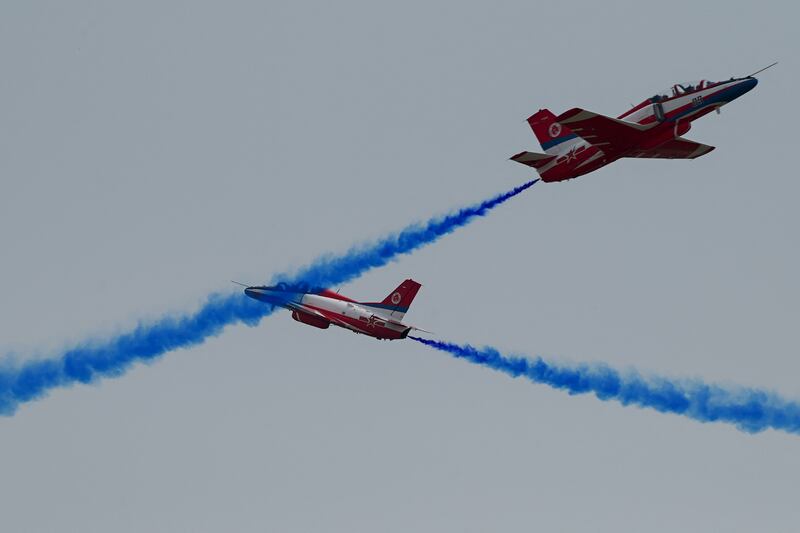
Examining an Oct. 7 image, he identified what he thought was one remaining aircraft, while cautioning that the image was blurry. He suggested the others had likely moved into hangars, although their locations could not be established from that observation.
Bogle also identified what appeared to be workshops and temporary construction infrastructure beside the southern end of the runway.
“So while the runway and main buildings are completed, it looks like there is still some minor work that is being finished,” he said.
The imagery does not establish who owns or operates the aircraft. Both China and Laos operate the K-8 type, according to analysts cited by Reuters.
But a Lao military officer, while downplaying concerns over increased Chinese military presence in Southeast Asia, confirmed to RFA that at least some of the fighter jets at the facility are Chinese.
“It is a pilot training airport. A group of people are envious that Laos has a flight training center, yet Laos has never complained about neighboring countries hosting U.S. air bases,” said the officer on condition of anonymity because he was not authorized to speak on such matters.
“When Laos built Ban Keun Airport for pilot training, some people overreacted. Naturally, Chinese officials brought their own fighter jets, given that it is a joint Lao-Chinese operation,” he said.
Bogle said it was too early to determine China’s future position at Ban Keun, but that the facility warranted monitoring.
Kristanto said operating combat aircraft from Laos would require substantial investment in fuel storage, maintenance facilities, munitions, air defense and other supporting infrastructure.
“At present, I see little evidence that Ban Keun offers a decisive operational advantage over China’s existing facilities,” he said.
Such limitations do not rule out a broader role in the future. Ban Keun could theoretically support intelligence gathering, surveillance, logistics or forward aircraft deployments if the necessary infrastructure and access arrangements were established, he said.
Surrounding Vietnam?
A sustained Chinese military presence in Laos could add another consideration for neighboring Vietnam, which already faces China across its northern land border and contests Beijing’s claims in the South China Sea.
China’s expansive maritime claims overlap with the exclusive economic zones of Vietnam, the Philippines, Malaysia, Brunei and Indonesia. Vietnam also claims the Paracel and Spratly island groups, where competing sovereignty claims are distinct from disputes over rights to surrounding waters. China controls the Paracels, while several governments occupy features in the Spratlys.
In 2016, an international arbitral tribunal rejected China’s claims to the entire South China Sea based on its controversial nine-dash line, which surrounds the whole sea. This claim was seen to exceed what Beijing could legally claim under the U.N. Convention on the Law of the Sea.

Beijing rejected the decision, and has continued to assert its claims over areas that are within the exclusive economic zones of the other claimants.
China has strengthened this position through island-building and military infrastructure, including runways, surveillance equipment and air defenses on occupied reefs. Those facilities support a wider maritime presence in waters where rival claimants seek to protect fishing grounds, energy resources and access to their outposts.
Ban Keun would introduce a different geographic consideration for Hanoi, potentially bringing Chinese military activity to its western side as well.
Bogle argued that facilities in Laos and Cambodia, together with China’s South China Sea bases, had effectively encircled Vietnam.
Kristanto was more cautious. Vietnam would have to account for the possibility of a Chinese military presence beyond its northern border and the South China Sea, he said, but Ban Keun’s inland location and China’s existing airbases limit its immediate operational value.
“For now, I would characterize Ban Keun as a potentially important strategic foothold rather than a major shift in the regional military balance.”
Ream offers a comparison
China’s involvement at Cambodia’s Ream naval base shows why a facility’s use over time can be more revealing than its designation as a joint training center, the analysts said.
China financed an expansion of Ream, on Cambodia’s southern coast, where its joint support and training center opened in April 2025. Cambodia maintains that Chinese personnel and warships are not permanently based there.
An analysis published in May 2025 by the Asia Maritime Transparency Initiative documented Chinese naval vessels rotating through Ream after their initial arrival in December 2023.
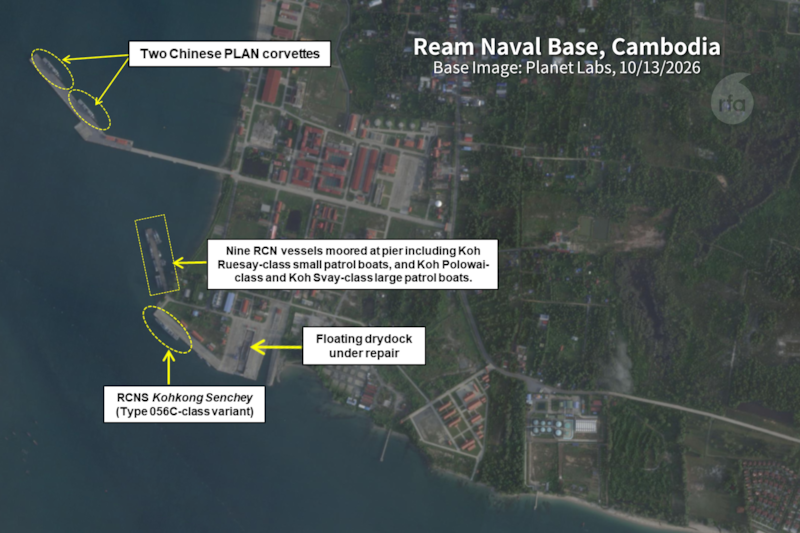
It also found that visiting Japanese and Vietnamese vessels used a different waterfront area from the large pier occupied by Chinese ships, suggesting unequal access to some facilities. Those findings described arrangements at the time and do not establish current access rules.
Kristanto said the comparison with Ban Keun was useful in examining how China could expand its military presence through partnerships that initially fall short of large, permanent bases.
“Rather than immediately establishing large, permanent military bases, Beijing appears to be pursuing arrangements that could provide access, logistical support, and opportunities for a more sustained military presence.”
The differences remain substantial. Ream provides direct access to the sea and can support naval deployments, while Ban Keun’s military utility depends heavily on the aircraft and supporting infrastructure deployed there, he added.
For the Lao facility, subsequent construction and deployments will help establish whether the training partnership develops into a broader operational role.
“Its future significance will depend on the extent of Chinese access, the infrastructure developed, and the frequency and nature of PLA activities there,” Kristanto said.
Edited by Eugene Whong.