
Read a version of this story in Burmese
It was just before noon on Saturday. Three gyrocopters flew low as they approached Nyaung Pin Lay village. A school and surrounding residential area was bombed. Eleven were killed, including four children.
A resident told RFA that although the local People’s Defense Forces (PDF) received a tip that the Myanmar military would bomb the school, the warning could not reach them in time due to the lack of internet in the village.
“Information that this would be bombed was sent online to everyone. They did inform us,” the Kani Township resident told RFA on the condition of anonymity for security reasons.
“But because there was no Starlink communication, casualties were high as a result. About a month ago in Nat La Po village, when we got the exact location that would be bombed and cleared the area, there were no casualties. That was fortunate. But now, even though we got the location to be bombed, communication was cut off.”
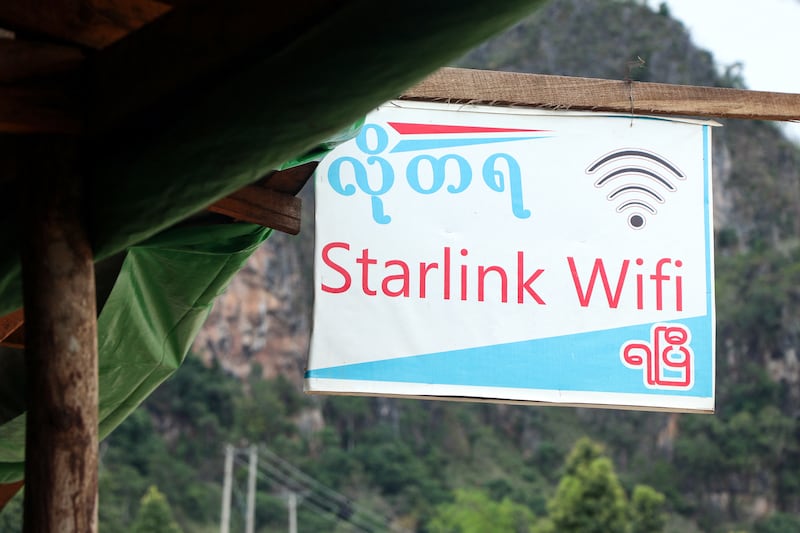
In Myanmar, home to the world’s longest-running civil war, the military-appointed government has cut off phone lines and internet communications in over 40 percent of townships nationwide. Locals, civil society groups, and revolutionary forces tell RFA that they rely on Starlink — acquiring the devices through unofficial and often expensive channels — as a lifeline for information.
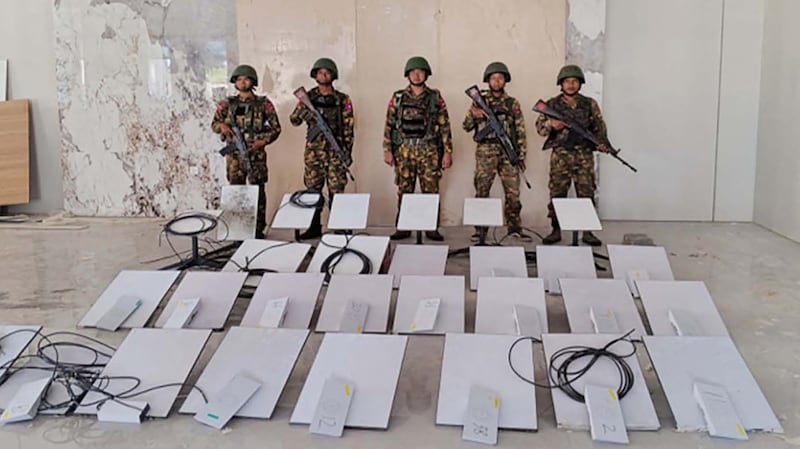
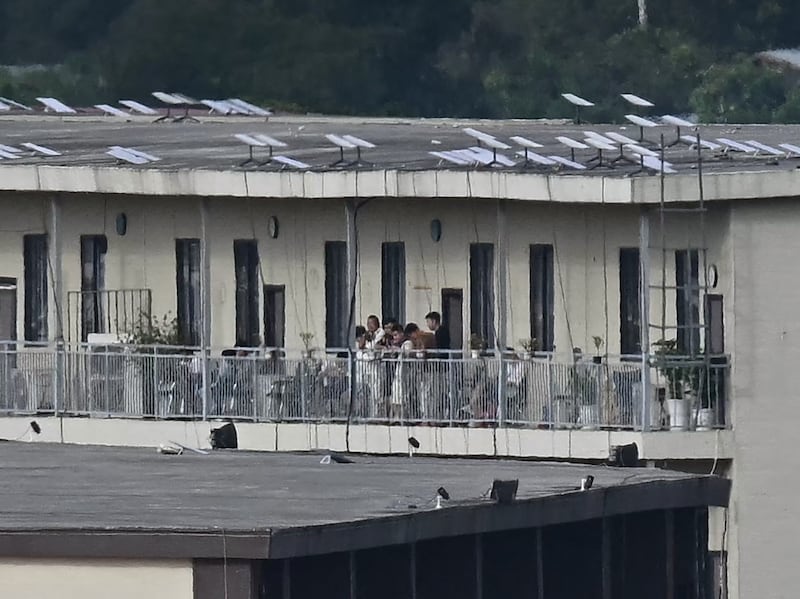
In October 2025, SpaceX announced the disabling of over 2,500 Starlink kits in Myanmar to crack down on transnational cyber-scam syndicates operating along the Thai-Myanmar border. Subsequent restrictions by SpaceX on unregistered units bought outside of Myanmar have shut down countless others.
Since June, more than 20 percent of Starlink internet devices used in Myanmar have had their services cut off, according to a report released on Oct. 23 by the group Athan.
Local residents and human rights activists told RFA that this has created a crisis for the survival of civilians in areas of intense civil conflict.
“The military cutting off phone lines and internet connections from the start was intentionally aimed at concealing human rights violations they commit and restricting people’s freedom of expression,” said Joy, a research director at Athan, a non-profit organization for the Freedom of Expression Movement in Myanmar.
“If Starlink also stops providing services to Myanmar and cuts connections, emergency humanitarian aid, air strike alerts, news regarding military columns, and natural disaster warnings for these local residents will stop immediately.”
According to a report titled “Dead Air” released by Athan on October 23, the communication cut-off directly affects the lives and safety of people in conflict-affected regions as they can no longer receive warnings about airstrikes and military movements, medical aid, or updates on family members’ safety and evacuation routes.
RFA contacted Khaing Khaing Soe, spokesperson for the military-appointed president’s office, regarding when internet and phone lines might be restored. She instead referred RFA to the Ministry of Digital Development and Communications.
Now, not only Starlink devices used by scam operations are being shut down, but Starlink connections used by civilians have also been suspended starting in June this year, with more than 20 percent of devices cut off by October, according to Athan. Consequently, regions like Sagaing, Mandalay, Magway, Rakhine, Kayah State, and other areas experiencing severe conflict were directly affected, Athan’s report states.
RFA contacted SpaceX regarding the impact on civilians in regions where the internet has been cut off, but has not received a response at the time of publication.
“Some of our Starlink devices were disabled. This has caused a lot of trouble for us,” said Ma Aye Myint Aung Aung, Head of the Department of Humanitarian Assistance and Emergency Management under the Mandalay Regional Interim Administrative Council.
“On the other hand, whether it’s our civilians, revolutionary groups, or those leading and operating the administrative mechanism in revolutionary forces, everyone relies on Starlink. As access to information becomes more restricted, limitations on civilian safety also increase. I would define this as a very major challenge for us.”
In Kayah State, Deputy Minister of Defense for the Karenni State Government Khu Daniel told RFA that Starlink connections are being shut down one by one, raising concerns.
“For the public and for the youth currently fighting in battle, it will become a cause for concern,” he said.
Khun Chit Htoo, who is assisting refugees in the Karenni Region, said that if all Starlink services are shut down, it could have a severe impact on humanitarian aid operations.
“Our current work relies on internet connectivity as well as donors. Since we connect online, we are very concerned,” said Khun Chit Htoo.
“We will face a situation where we can no longer help needy civilians receive the support they really need across all aspects of coordination. If there is no internet line left, I believe we stand to lose a lot because of this single connection.”
While welcoming and supporting the shutdown of Starlink internet lines used by online scam operations to crack down on scam syndicates, 317 civil society organizations issued a statement on July 17 expressing deep concern over potential negative impacts if all Starlink terminals nationwide are shut down.
According to an October 23 report by the Myanmar Internet Project, an organization monitoring internet shutdowns and conflicts, there were 581 military airstrikes that killed at least 353 civilians in the three months from July to September 2026, with 562 of those attacks occurring in areas where internet service was cut off.
Translated by Nayrein Kyaw. Edited by Charlie Dharapak.