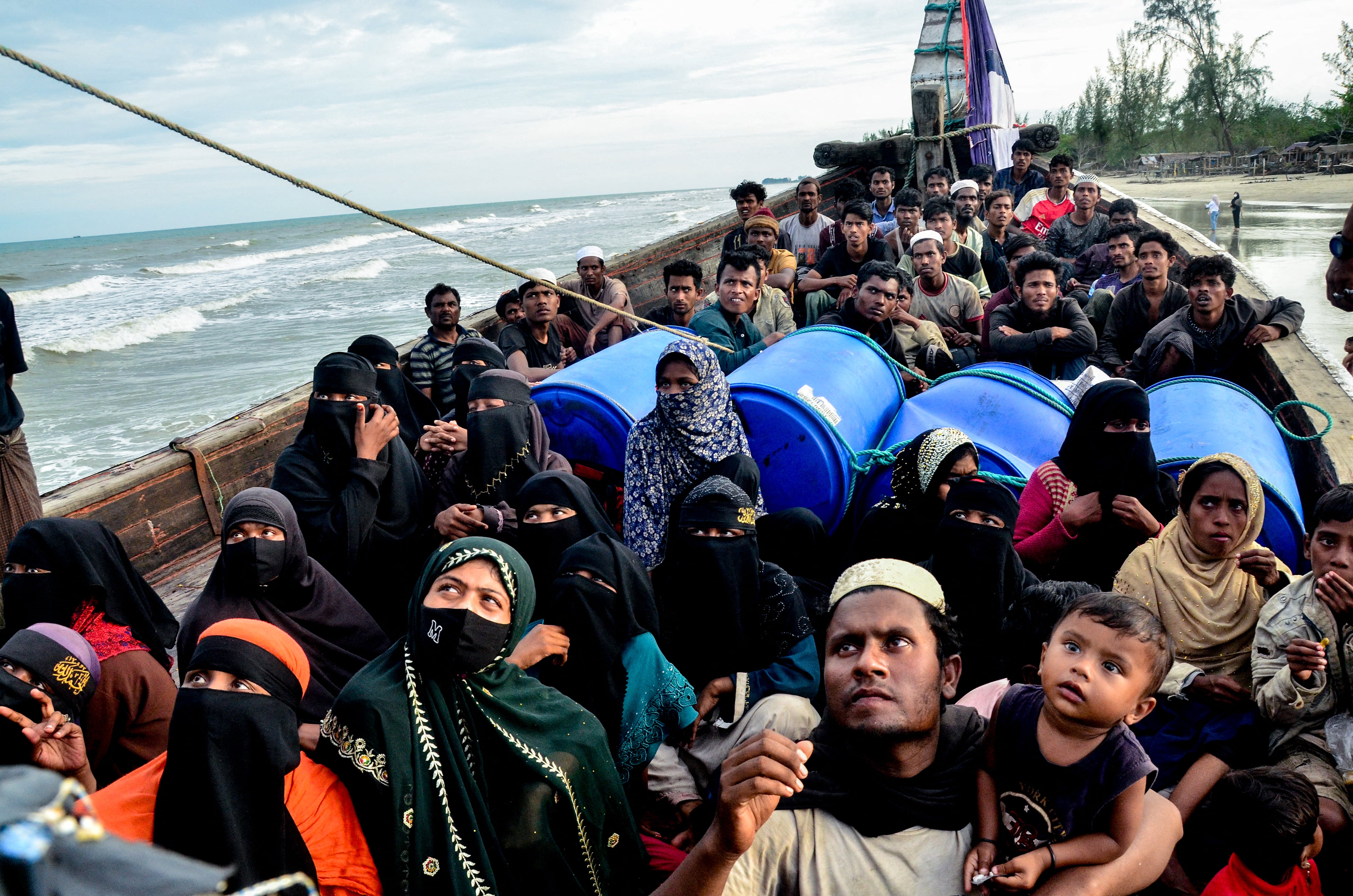
A Rohingya activist who fled Myanmar as a teenager hopes a landmark ruling by the United Nations’ highest court on Thursday will bring long-awaited recognition of her community’s suffering, she told Radio Free Asia.
The International Court of Justice (ICJ) in The Hague is set to rule Nov. 19 on whether Myanmar violated the 1948 Genocide Convention during a military crackdown against the predominantly Muslim Rohingya minority in 2017, which forced more than 730,000 people to flee to neighboring Bangladesh.
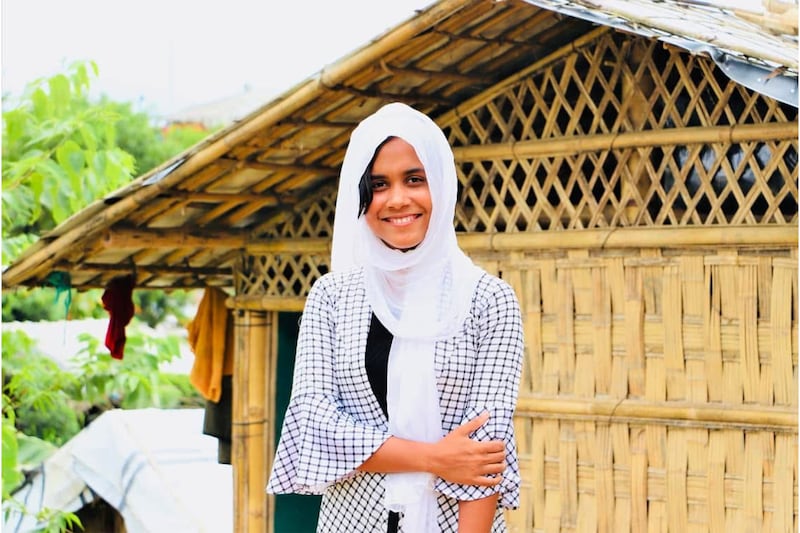
Though she hopes for a favorable ruling, Lucky Karim, a Rohingya who escaped the violence at the age of 14 and is now a human rights activist, warned that justice will mean little without action to protect refugees and allow them to return home.
“For Rohingya to have a positive outcome, it will be a historic moment, a historic victory for us,” she told RFA, adding that such a ruling could also offer hope to other ethnic minority communities in Myanmar, where years of conflict and military repression have displaced millions of people.
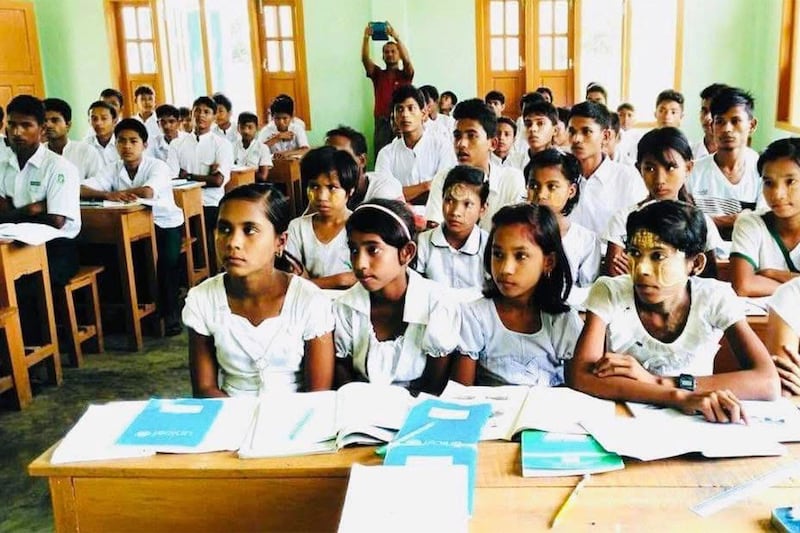
Originally from Hlaing Thi village in Rakhine State’s Maungdaw township, Karim spent six years in a refugee camp in Bangladesh. In 2022, she founded Refugee Women for Peace and Justice, an organization advocating for the rights and education of Rohingya women.
Her hopes reflect the significance of a case that has taken seven years to reach a judgment and could establish Myanmar’s legal responsibility for one of the worst episodes of mass displacement in recent decades.
What happened to the Rohingya?
The Rohingya are a predominantly Muslim ethnic minority from Myanmar’s western Rakhine State who have faced decades of discrimination, restrictions on movement and denial of citizenship in the Buddhist-majority country.
In August 2017, Myanmar’s military launched what it described as clearance operations after Rohingya militants attacked security posts. Soldiers were accused of killing civilians, raping women and burning entire villages, driving hundreds of thousands of people across the border into Bangladesh.
A United Nations fact-finding mission later concluded that there were reasonable grounds to infer genocidal intent behind the military campaign and called for senior military officials to be investigated and prosecuted.
Myanmar has rejected accusations of genocide, maintaining that its operations were legitimate responses to attacks by the Arakan Rohingya Salvation Army, a Rohingya insurgent group.
The Gambia, a small West African nation, brought the case against Myanmar in November 2019 with the backing of the Organization of Islamic Cooperation.
It accused Myanmar of violating the Genocide Convention, an international treaty adopted after World War II that obliges countries to prevent and punish genocide.
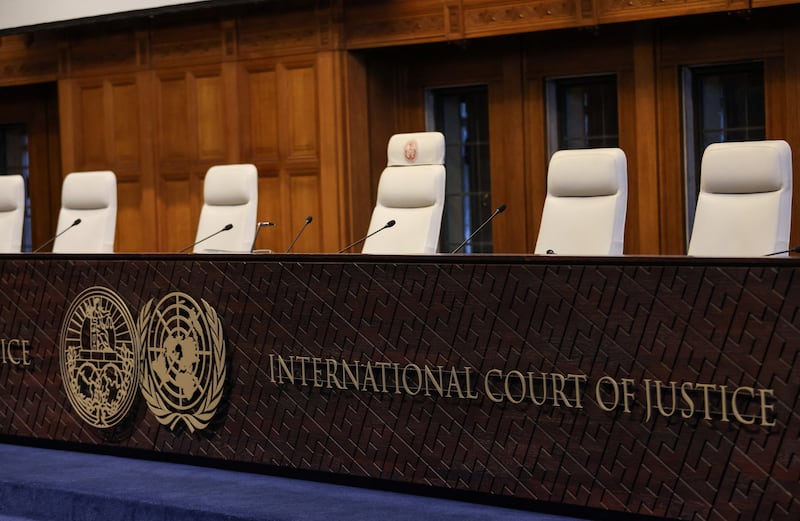
The ICJ ordered Myanmar in January 2020 to take measures to prevent genocidal acts against the Rohingya and preserve evidence.
Myanmar’s government filed objections to the case in January 2021, just days before the country’s military took control of the country in a coup.
The court rejected the objections in 2022, and held hearings on the allegations in January this year.
During those hearings, The Gambia argued that the pattern of killings, sexual violence and destruction demonstrated an intent to destroy the Rohingya as a group. Myanmar’s military government disputed that interpretation, arguing that the evidence did not meet the legal threshold required to establish genocide.
What could the ruling change?
Thursday’s judgment will determine whether Myanmar bears responsibility under international law for violations of the Genocide Convention.
Unlike the International Criminal Court, which prosecutes individuals, the ICJ settles disputes between countries. Its ruling cannot directly send military commanders to prison or compel the immediate return of refugees.
But a finding against Myanmar would carry legal and diplomatic weight and could require the country to take further measures to address violations and provide reparations.
For Karim, the distinction between a legal victory and improvements in refugees’ lives is crucial.
“The judgment from the International Court of Justice does not immediately change the ground reality. It doesn’t immediately repatriate refugees from refugee camps to Burma either,” she said, using Myanmar’s former name.
The challenges facing the Rohingya have only deepened since the 2017 crackdown.
After the 2021 coup, the country was plunged into a wider civil war. Renewed fighting in Rakhine State between the military and the Arakan Army, an ethnic Rakhine armed group, has exposed Rohingya civilians to further violence and displacement.
The United Nations said in May that approximately 150,000 Rohingya had arrived in Bangladesh since early 2024, adding to the pressure on already overcrowded refugee settlements.
Around 1.2 million Rohingya refugees were living in Bangladesh, according to the UN’s May estimate, most of them in and around Cox’s Bazar, home to one of the world’s largest refugee settlements.
Their return to Myanmar remains fraught with uncertainty, with concerns over safety, citizenship rights and protection from persecution still unresolved.
“Until it is safe for everyone, it’s not safe for any one of us in Burma,” Karim said.
She urged governments and international organizations to ensure that any judgment leads to concrete measures to protect refugees and create conditions for their safe, voluntary and dignified return.
The ICJ’s judgments are legally binding, although the court has no independent enforcement force. If a country fails to comply, the other party may seek action through the UN Security Council.
Karim said achieving lasting change would require sustained international commitment and the implementation of the court’s ruling, rather than simply recognizing the atrocities committed against the Rohingya.
“So the judgment should not be a piece of paper,” she said. “It shouldn’t be another genocide declaration.”
Edited by Eugene Whong.