
Regardless of how the current political crisis in the Solomon Islands unfolds, experts told Radio Free Asia that they anticipate no change in the country’s close-knit relationship with China.
The crisis was kicked into full gear in March, when 19 members of parliament defected from Prime Minister Jeremiah Manele’s ruling coalition, called the Government for National Unity and Transformation, or GNUT, to join the opposition.
This created an opposition coalition of 28 parliament members, a majority of the 50-seat legislative body. They immediately filed a motion for no confidence, and called on Manele to convene parliament so a vote could be held.
But Manele has been refusing to convene, so he remains Prime Minister.
Shift to Beijing
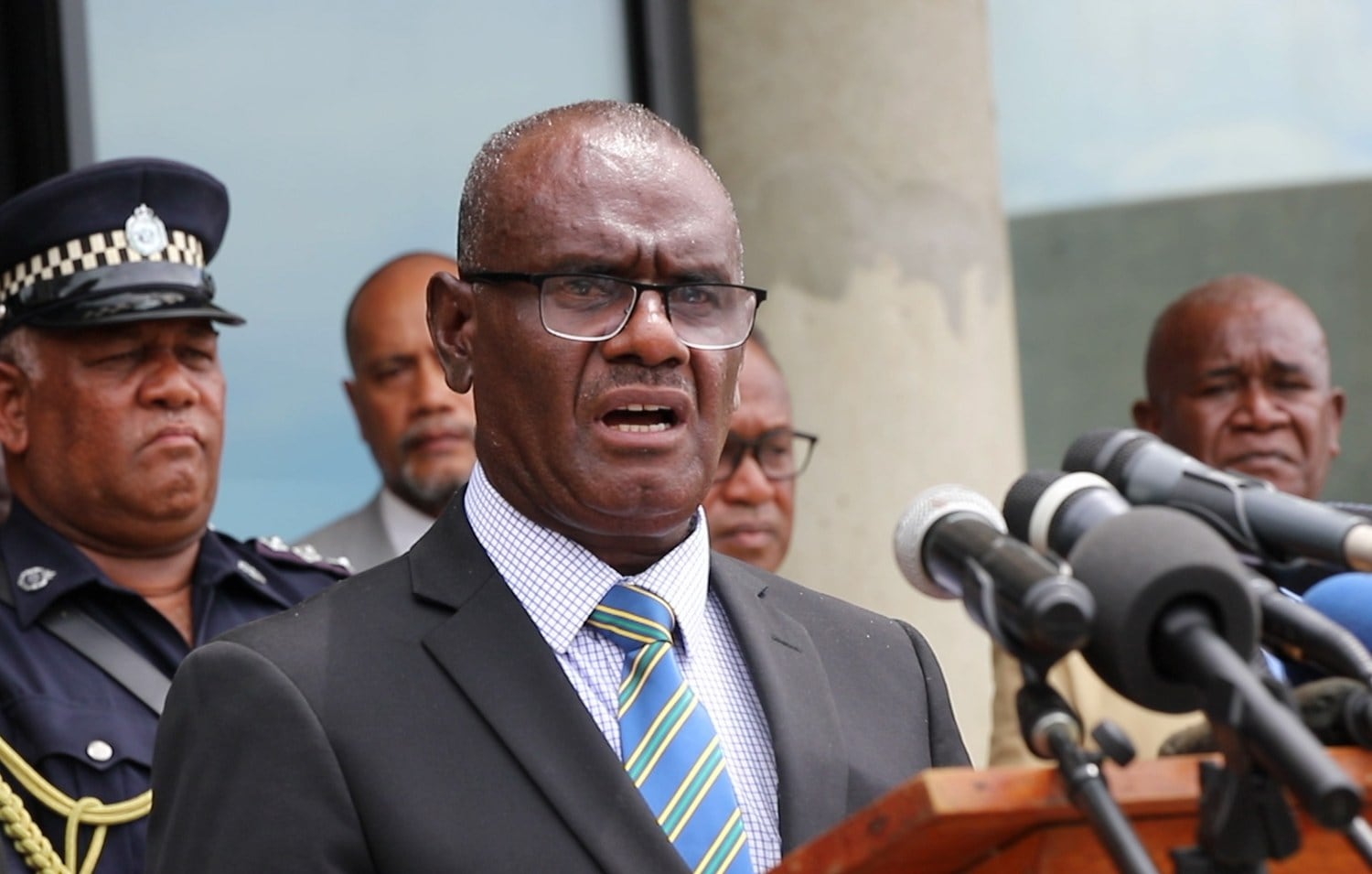
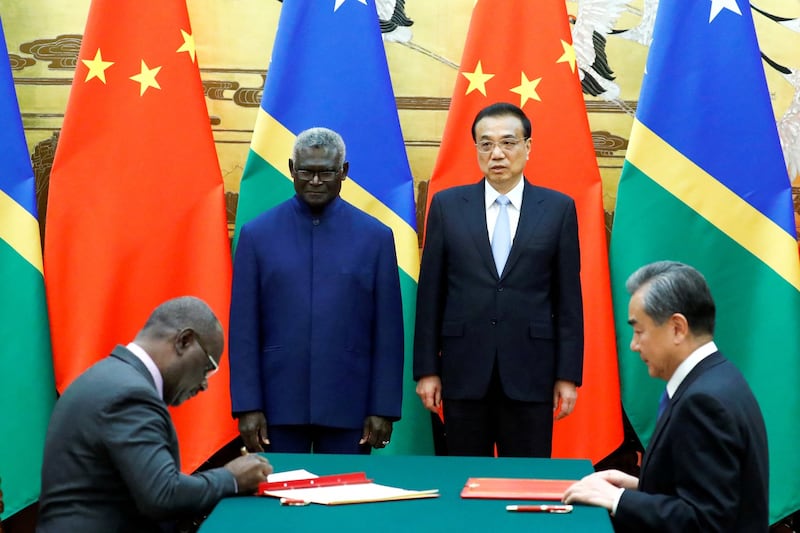
Manele has been described by observers as pro-Chinese, just like his predecessor Manasseh Sogavare, under whom Manele served as foreign minister.
Then-Foreign Minister Manele signed the 2019 agreement to recognize China instead of Taiwan, and was a central figure in negotiating the 2022 security pact with Beijing that opposition leader Matthew Wale has criticized as being too secretive and undermining the security of the Solomon Islands, based on leaked drafts of the agreement prior to its signing.
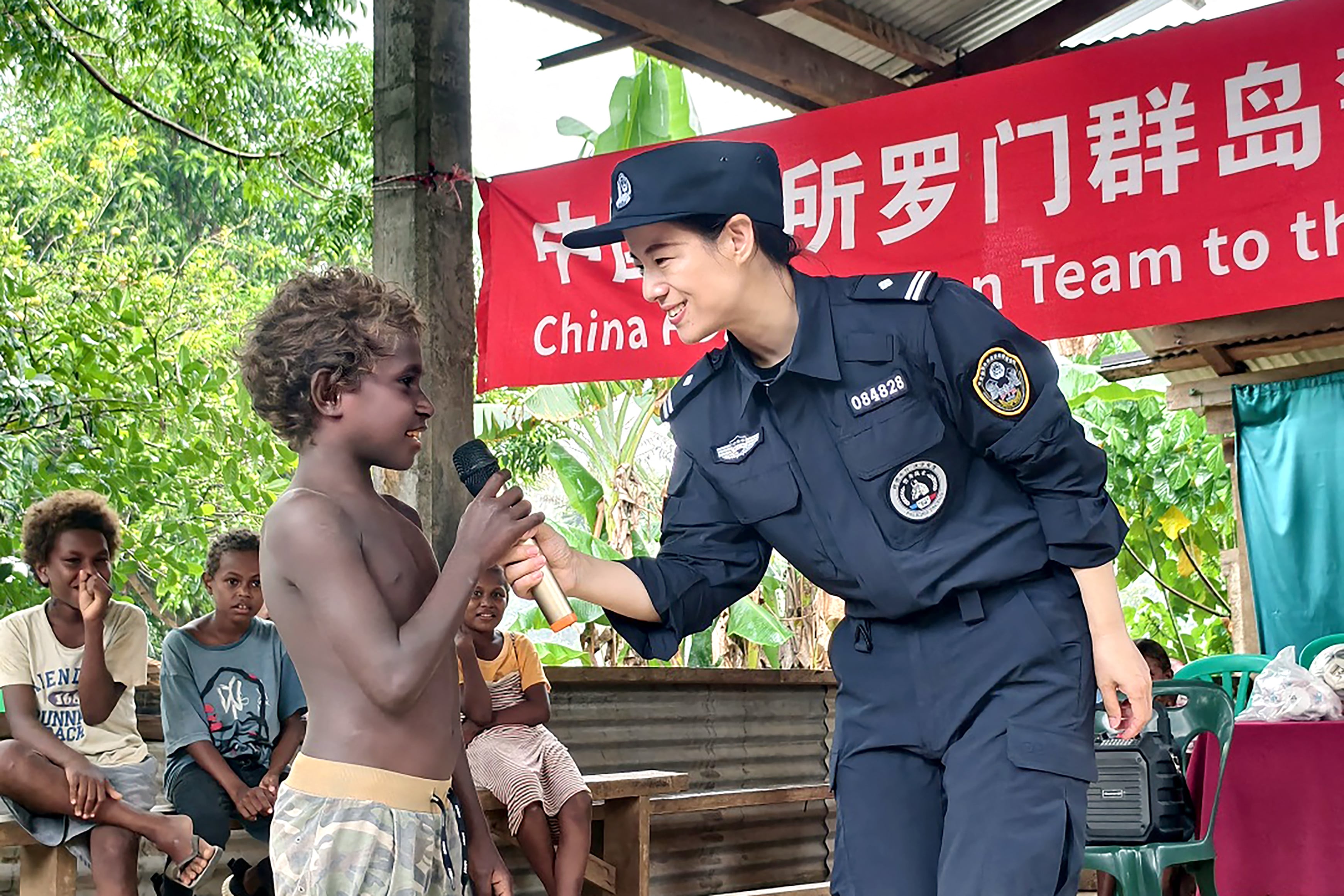
Beijing has even set up a police station in the capital Honiara, a move that sparked concern among the U.S. and Australia that China was expanding its security and surveillance capabilities beyond its borders.
Violent civil unrest broke out in 2021, with protesters claiming that Sogavare was selling off the country’s sovereignty to Beijing, and calling for him to resign. Rioters attacked Chinatown businesses in the capital Honiara, torched one of Sogavare’s homes, and attempted to storm parliament.
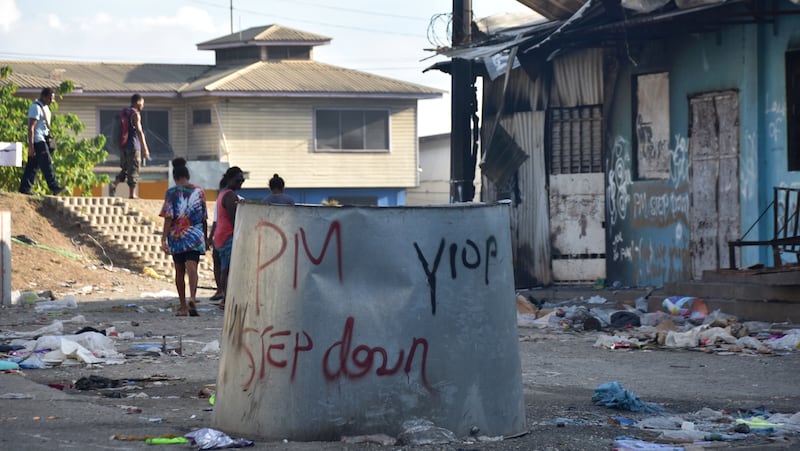
Three years later, Chinese influence in the Solomons was very much on the ballot in 2024, with opposition candidates even saying that if elected as prime minister, they would cancel the security agreement and switch back to recognizing Taiwan, but Manele’s party prevailed and he was sworn in.
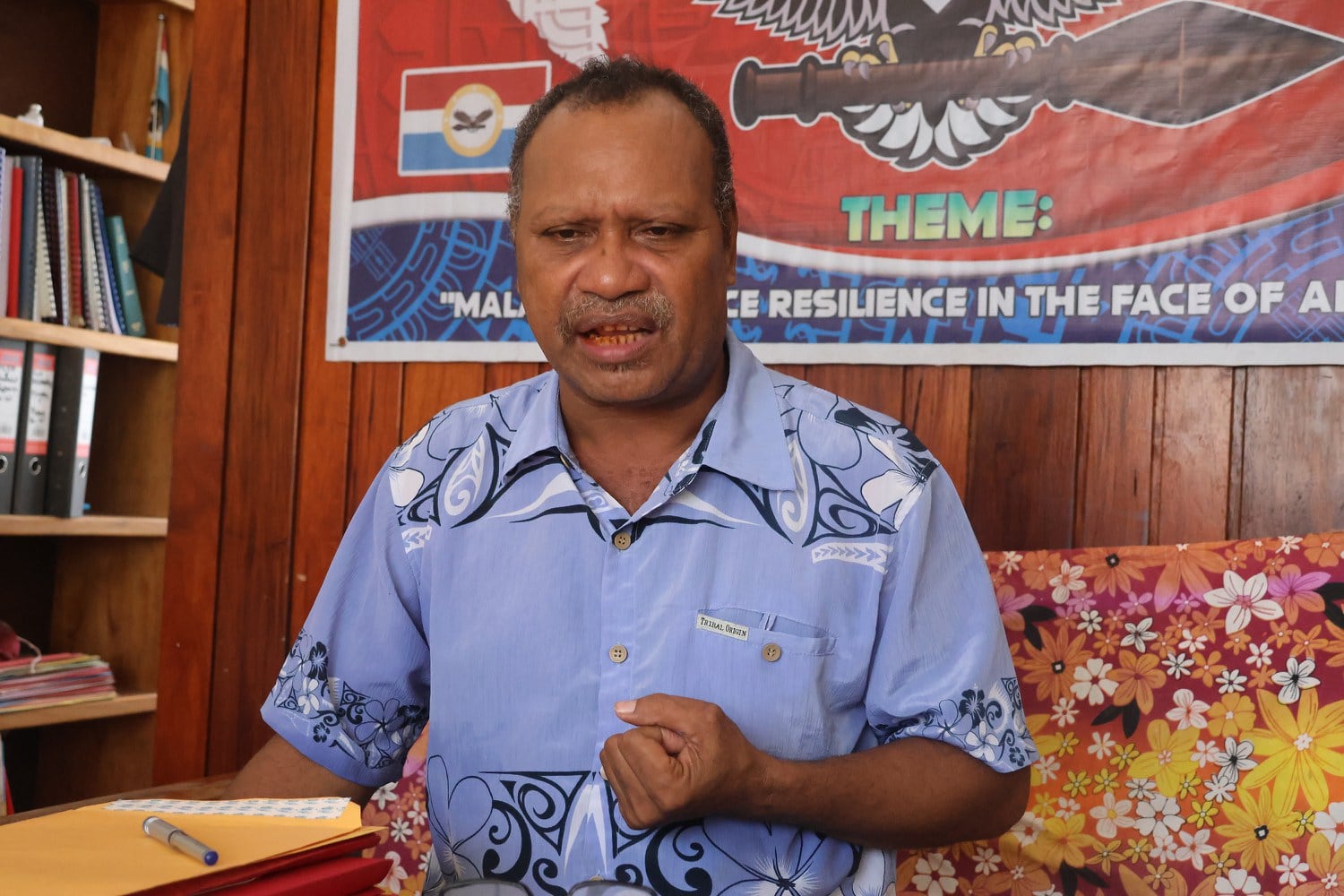
Manele’s government is a continuation of the Sogavare’s pro-Beijing stance, Joseph Foukona, a history professor at the University of Hawaii at Manoa, who hails from the Solomon Islands, told RFA.
“So in his role in the previous government, which was where Sogavare was the prime minister, It’s obvious that he promotes the one China policy and his government is sort of aligned with that policy as well,” Foukona said.
But when asked what the current rift in the government is about, Foukona said that there was not really much detail about why the 19 members of parliament defected, only saying that they must be having “internal issues.”
The rift is over more than just the pro-China stances of Manele’s government, Kathryn Paik, deputy director and senior fellow with the Australia Chair at the Washington-based Center for Strategic and International Studies, or CSIS, told RFA.
“There’s a lot more going on domestically and there’s a lot of power plays domestically happening within the parliament that might have nothing to do with China and the China relationship,” she said. “Parliamentarians are also going to use that relationship with China for their advantage whether it’s to oust Manele or if that’s a good argument against it.
But she said it is likely that China has started to build relationships with other politicians in the Solomon Islands as a hedge, just in case they come into power in the future.
What next?
The opposition, now referred to as the New Coalition, won a legal challenge in mid-April, with the country’s High Court ruling that Manele was unconstitutionally delaying the vote.
Manele’s government has filed an appeal to that decision, and the Court of Appeal is expected to issue a ruling on Friday.
But even if he wins the appeal, Manele will eventually have to convene parliament. Legally, the country’s constitution mandates that the body must meet at least once per year, and practically, it must pass yearly appropriations budgets to avoid a government shutdown.
Barring a breakup in the New Coalition or a withdrawal of the motion of no confidence, Manele will have to face the music eventually, and that could lead to his ouster.
Regardless of whether Manele survives the vote or is ousted, the country’s relationship with China will be more of the same, Paik said.
“I don’t expect there to be a fundamental change,” she said. “China has established a pretty regular presence on the ground as of right now and we haven’t seen any real push by any parliamentarians to change that significantly outside of Wale and some other opposition leaders.”
Manele has already survived one vote of no confidence roughly a year ago, defeating a motion led by his predecessor Sogavare.
Shortly after the 19 parliament members switched sides in March, Manele swore in Sogavare as his deputy prime minister in an attempt to stabilize the remaining pieces of his coalition.
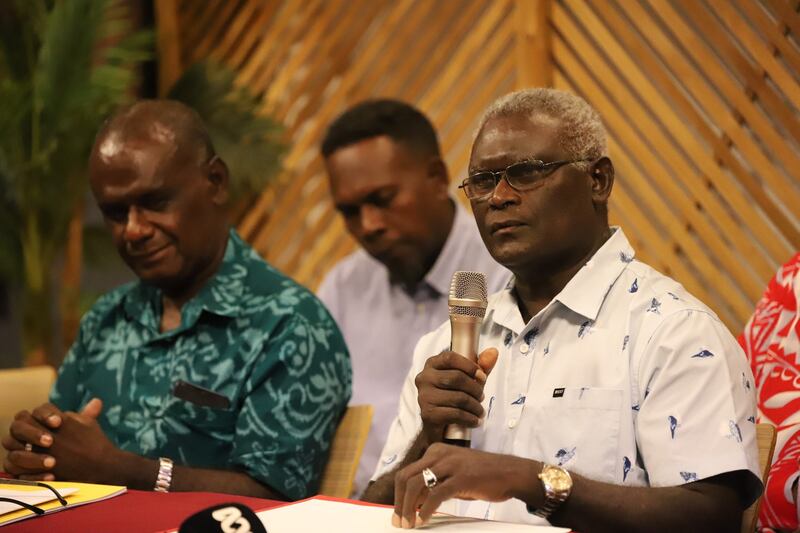
Foukona said the off-again, on-again alliance between Sogavare and Manele is driven by their respective personal interests.
“They usually say that in Solomon’s politics there’s no permanent enemy,” he said.
China’s foreign ministry and its embassy in Honiara have not made any direct statement regarding the Solomon Islands since the beginning of the political crisis.
Edited by Charlie Dharapak.