
TAMUNING, Guam - Jacqueline Guzman has been living with her husband in a small apartment in the village of Maite for 18 years, but now finds herself having to adjust her lifestyle to afford her rent.
“Our rent went up by US$300, from $850 to $1,150. The increase was only in the last four years,” she told Radio Free Asia. “Housing is definitely difficult because affordable housing is difficult to find for safe and attractive spaces.”
Guzman attempted three times to purchase property but was “scared away by the mortgage prices and length of the debt.”
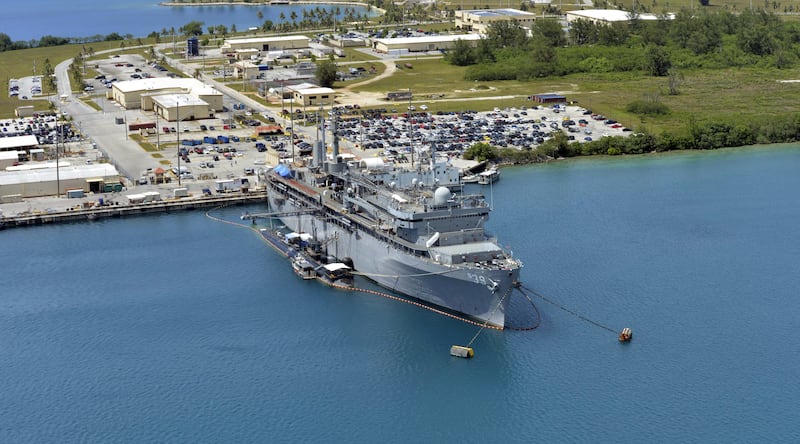
The couple is not alone. Housing costs are skyrocketing in Guam due to military buildup and a surge in military personnel in the U.S. territory. According to the U.S. Navy, the active duty population is expected to surge from 17,000 in 2024 to 24,000 in 2033, due to the relocation of marine units from Okinawa, Japan.
Additionally, contractors working on military upgrades, or even housing construction, require housing. The increase in demand and the dwindling supply are thus pushing prices higher and higher.

The Guam Housing and Urban Renewal Authority has reported that Guam faced a demand for 9,908 additional housing units in 2025.
Last year, the office of the governor estimated that the Department of Defense plans to invest $8 billion—$3 billion greater than Guam’s entire gross domestic product—over the next five years amid a military expansion driven by the escalating geopolitical situation in the region.
Military upgrades
Earlier this month, the U.S. Missile Defense Agency awarded Lockheed Martin Corp. a new $407 million contract to expand the Guam missile defense program, raising the project’s value from $1.5 billion to $1.9 billion.
The new award is part of the existing Aegis Ballistic Missile Defense Weapon Systems contract for the Guam project, designed to provide 360-degree protection against a potential threat from China’s ballistic and hypersonic strikes.
In September last year, Beijing unveiled its DF-26D missile, an upgraded variant of the missile nicknamed the “Guam Killer,” during a military parade marking the 80th anniversary of Japan’s defeat in World War II.
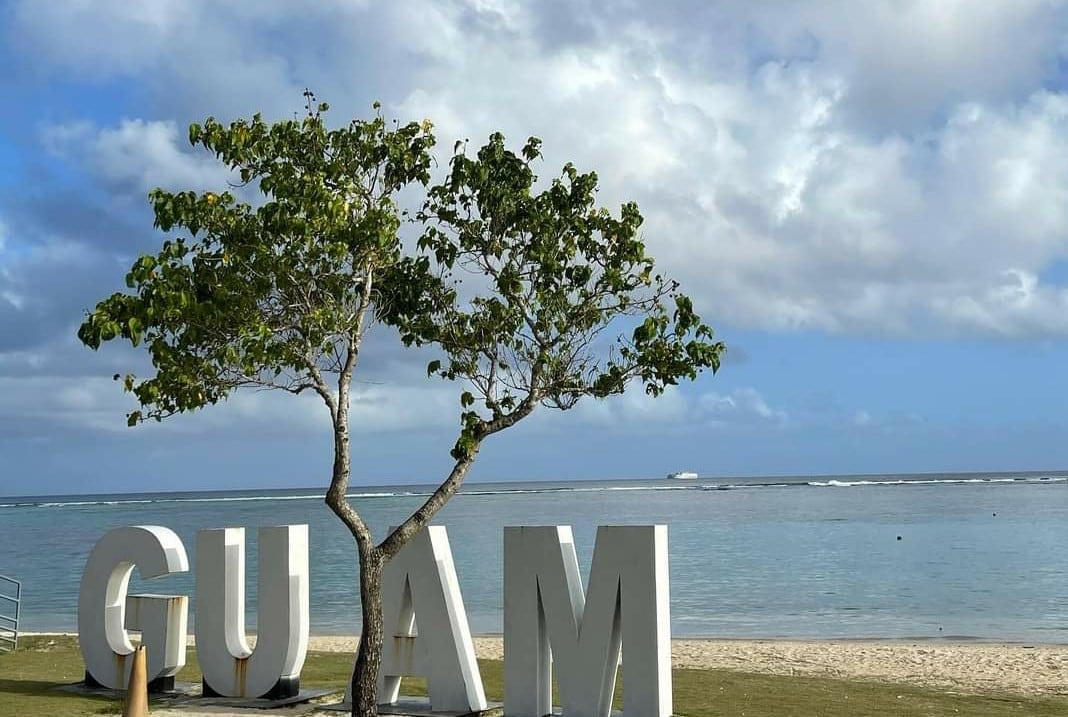


While the Department of Defense’s surging investment has been praised as an economic boon for Guam, the increasing presence of military personnel on the island and the U.S. territory’s role in Indo-Pacific strategy are taking their toll on the civilian community.
“Housing is a very big issue. We have a shortage of housing,” Sen. Jesse Lujan of the Guam legislature told RFA.“By the same token, we have quite a lot of people who are leaving Guam and looking for, of course, greener pastures. And those homes and those apartments or condos that are being vacated are being occupied, of course, by the military and federal contractors.”
Big military bucks
Housing developers and property owners are targeting military renters, setting prices based on the Department of Defense’s overseas housing allowance for Guam, which averages $2,205 per month for single service members, making rents unaffordable for most residents.
According to the U.S. Bureau of Labor Statistics, Guamanians on average earn less than $3,000 per month. This means that if rent is set according to military rates, then a Guamanian earning the average salary would need to pay more than three-fourths of it in rent.
While these high costs present a conundrum for Guamanian renters, landlords like Tes Schwab, who owns a rental unit in Agana Heights near a large U.S. Navy hospital, are more than willing to lease to military personnel.
“We appreciate military tenants,” she said. “I’ve only had two so far, and they have both been reliable payers.”
According to a May 2025 report by the Government Accountability Office, or GAO, the military population in Guam is projected to double in 10 years—from 10,000 in 2024 to 20,000 in 2033.
The report noted that the Department of Defense has yet to determine the infrastructure capacity it needs to support the population surge.
“DOD has identified that those facilities are already facing capacity issues,” the report said. “As such, DOD will not know how much the addition of Guam Defense System personnel will exacerbate existing challenges with the support infrastructure.”
The GAO acknowledged that Guam is already facing a housing shortage for military personnel.
While the Department of Defense is building housing quarters for military personnel, the growing population is outpacing construction, necessitating reliance on civilian infrastructure.
Renovation over construction
Meanwhile, much of the funding for adequate military housing is not going toward constructing new units, but rather to replace or update existing housing, Robert Underwood, president of the Pacific Center for Island Security, a Guam-based think tank, told RFA.
“In spite of the commitments made earlier that they would seek new housing on base to relieve the burden on the civilian community, they are only refurbishing the existing inventory,” said Underwood, a former Guam delegate to the U.S. Congress. “The disconnect between the activities they pursue and the consequences of those very activities is mindboggling.”
Siska Hutapea, president of the real estate company Cornerstone Valuation, told RFA Guam’s housing market is already driven by the significant increase in construction costs.
“The intensive military construction activities in such a short time frame in a fairly small market absorbed all of the construction companies’ capabilities, causing a substantial increase in prices,” Hutapea said. “This puts significant pressure on locals as it limits new supply.”

She said that median prices have essentially doubled since the start of the modern military buildup in 2012. Back then the median home price was $210,000. In 2025 it was $400,000.
“Infrastructure upgrades would definitely be helpful to release the pressure and assist the locals build more housing units,” she added.
Besides the prohibitive construction costs, Lujan said Guam’s labor shortage exacerbates the housing situation.
Foreign workers hired for Guam projects under the federal government’s H2-B visa program are working on defense projects, limiting the civilian contractors’ ability to complete their housing projects.
“We can’t build homes fast enough because of cost and because of labor shortage,” Lujan said. “So we have a double whammy here.”
The inability to construct new homes fast enough has the U.S. Navy looking to buy existing homes and land suitable for construction, according to a press release detailing a housing initiative announced last September.
To that end the navy is seeking a total of 2,400 housing units, including 1,600 units for families, with some ready for occupancy in 2028, and the rest by 2032.
“This effort is not just about meeting housing numbers,” Rear Adm. Brett Mietus said in the release. “It’s about ensuring our military members have the quality of life they deserve. We must explore every avenue from innovative partnerships and efficient construction to maximizing existing resources.”
Edited by Eugene Whong.