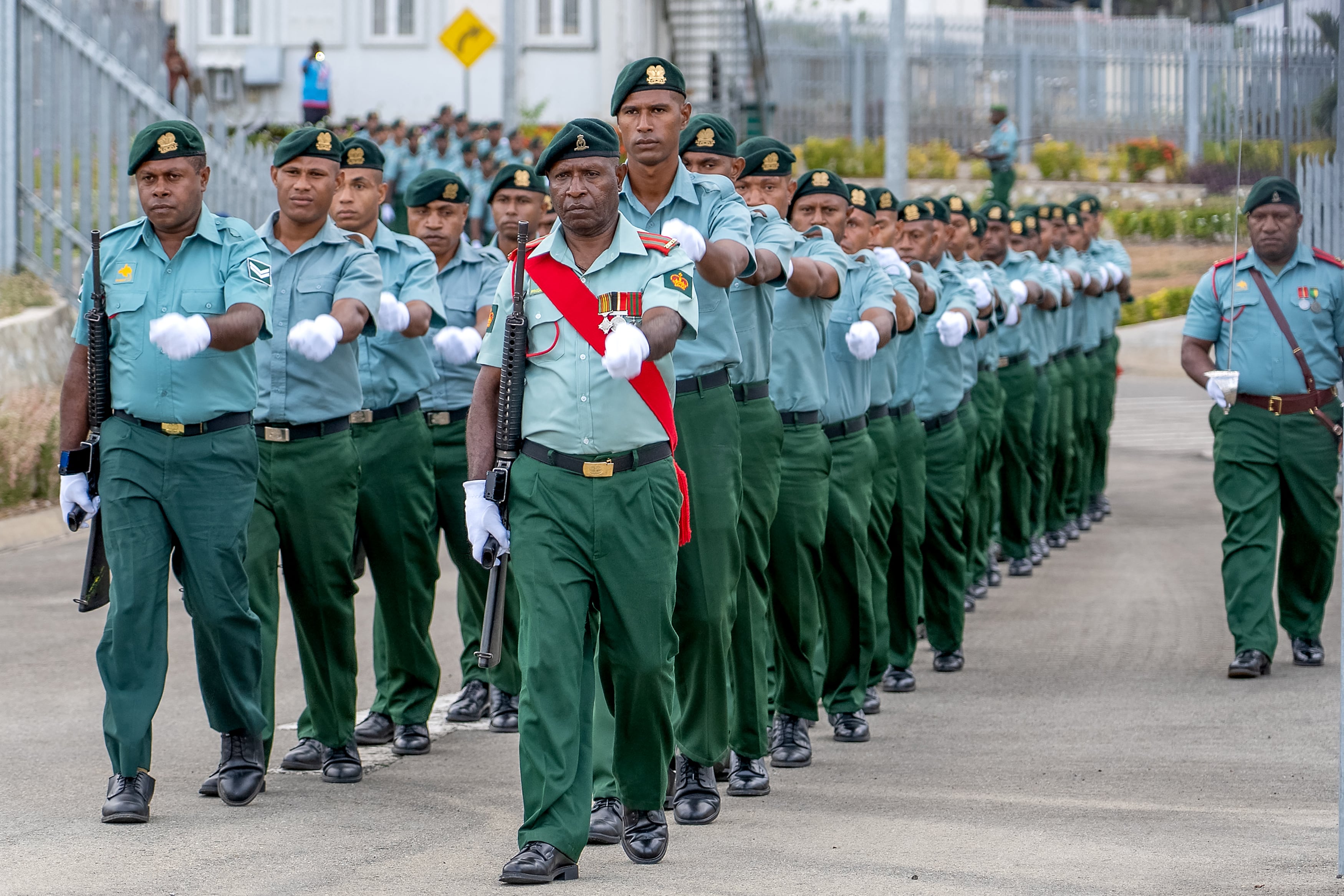
When Australia and Fiji signed a mutual defense treaty this week, a key component of the agreement was that other Pacific island countries could join. Experts told Radio Free Asia that this was a sign that Australia is providing much needed leadership in the region.
The Ocean of Peace Alliance, signed Monday in Suva by prime ministers Sitiveni Rabuka of Fiji and Anthony Albanese of Australia, requires that in the event of an attack on either country, both would “act to meet the common danger.”
Though the exact wording of the treaty does not absolutely require both sides to mobilize their military forces in such a situation, it still ties the security of the two countries together more closely than their previous agreements, the experts said.
The treaty “marks the continued march of Australia’s diplomacy,” Alan Tidwell, director of the center for Australian, New Zealand and Pacific Studies at Georgetown University in Washington, DC, told RFA.
“Internationally, the treaty signals to competitors that Australia is leading an effort to align parties in a Westerly tilt,” he said.
Tidwell noted that the alliance is the latest in a series of agreements with several Pacific Island countries including Tuvalu, Nauru, Papua New Guinea, and Vanuatu.
“Australia has firmly established itself as the standard bearer of Western engagement with Pacific Island democracies in the South Pacific.”
The Ocean of Peace Alliance is Fiji’s first, and Australia’s fourth – Canberra signed a bilateral defense treaty with Papua New Guinea in 2025, and with the United States and New Zealand in 1951.
Hours after Rabuka and Albanese signed the treaty, China’s foreign ministry spokesperson Mao Ning told reporters during a press conference that Beijing hopes that “the country concerned” would respect the Pacific island countries’ independence.
“China always upholds the principles of mutual respect, equality, mutual benefit, openness and inclusiveness in carrying out cooperation with Pacific island nations,” she said. “We do not engage in geopolitical rivalry or seek selfish political gains.”
Pacific NATO?
On Thursday, Newsweek published a report that suggested that opening up the alliance for others to join could lead to a South Pacific version of NATO to counter China.
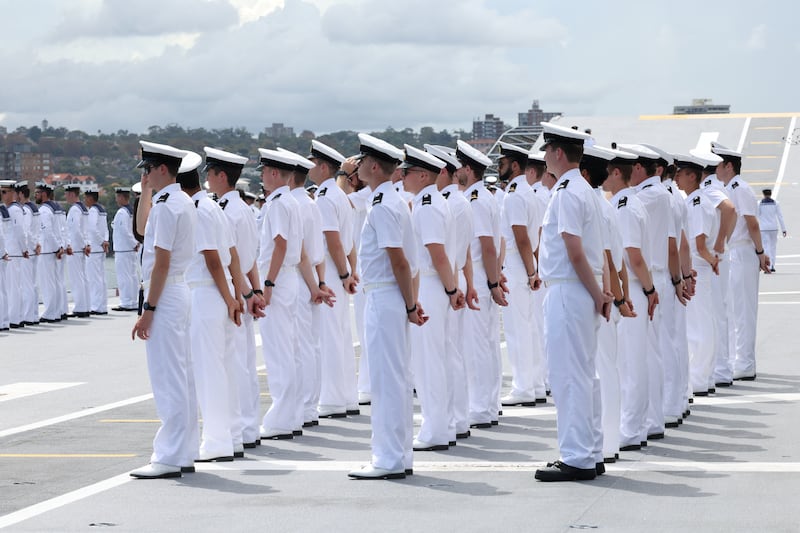
With Australia in an alliance with the United States, and Washington in its own alliances, in theory the mutual defense clause could be triggered by events far away from either Fiji or Australia. But several experts told RFA that that the prospect was unlikely.
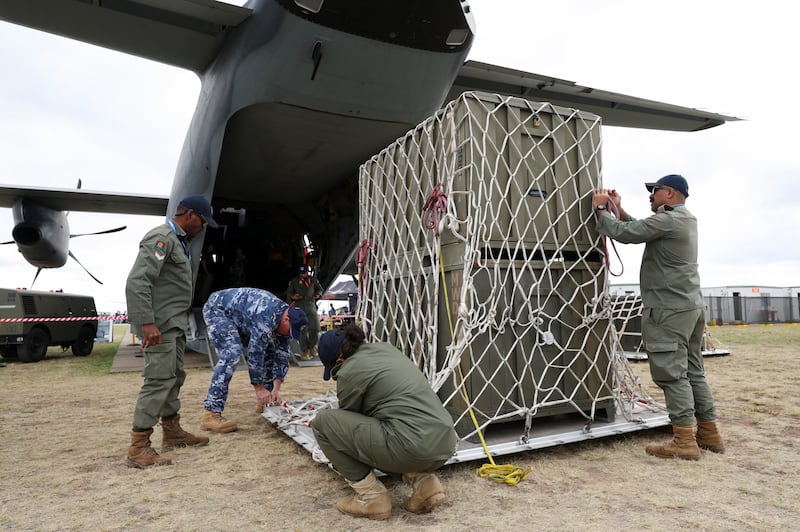
“I would not say that this treaty is the start of a major defense bloc like NATO,” Kathryn Paik, deputy director and senior fellow with the Australia Chair at the Washington-based Center for Strategic and International Studies, or CSIS, told RFA. “However, the flexibility built into this agreement to allow additional partners points to Australia’s creativity in crafting fit-for-purpose agreements and treaties throughout the region to continue to build out the regional security architecture.”
She said that it allows Pacific Island countries more power in decisions regarding their own defense.
“If others join – especially other Pacific Island nations – it will demonstrate an increasing prioritization of Pacific-led security agreements and the need for collective defense in the face of potential external threats,” Paik said.
Though the language of the treaty sounds similar to NATO’s Article 5, the Ocean of Peace Alliance, even if joined by other countries, would be fundamentally different, Gregory Brown, director of the Alliance Futures Initiative, a Washington-based think tank, told RFA.
“Just like NATO, you are required under the alliance and under the treaty to consult your constitutional processes in the event of an attack on either one,” he said. “Australia doesn’t have to defend Fiji as if it’s Australia and Fiji doesn’t have to defend Australia as if it’s Fiji. They’re required to take it back to their constituent processes to respond in some fashion.”
Ocean of Peace
The name of the Ocean of Peace Alliance gets its name from Rabuka’s central foreign policy platform, which advocates for the Pacific countries to address challenges like climate change, geopolitics and strategic competition through consensus and cooperation, while rejecting coercion and militarism. Rabuka also hoped to apply the principles of Fiji taking a “friends to all and enemies to none” approach to navigating regional competition between China and the United States.
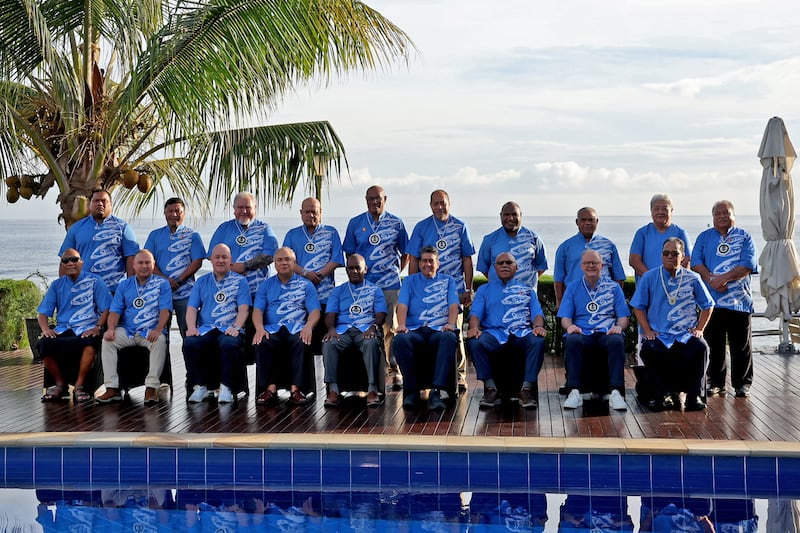
In 2025, leaders of the Pacific Islands Forum adopted the “Blue Pacific Ocean of Peace Declaration,” based on Rabuka’s vision.
But Brown said the Ocean of Peace Alliance is somewhat of a departure from Rabuka’s earlier messaging.
“I think maybe Rabuka has been reading Aristotle who, a couple thousand years ago, told us that ‘friends to all’ means ‘friends to none,’” he said. “In fact what Rabuka has decided is that ‘I’m going to sign a mutual defense treaty,’ which by definition is a departure from just friends to all.”
“He’s identified a threat to Fiji and he’s decided to align his security with one set of partners against that threat,” said Brown. “For me, that’s not a betrayal of Fijian sovereignty. It’s an exercise in strategic autonomy.”
In addition to signing into the Ocean of Peace Alliance, Australia and Fiji also signed into effect the Vuvale Union, another treaty-level agreement that integrates the two countries economically.
Hours after the agreements were signed, China fired an intercontinental-range ballistic missile into the South Pacific Nuclear Free Zone, in what experts told RFA was a message to U.S. allies, but which Beijing said was a routine test.
New Zealand’s Prime Minister Christopher Luxon said in a statement Thursday that Wellington would discuss with Suva and Canberra about the prospect of joining the alliance.
Edited by Charlie Dharapak.