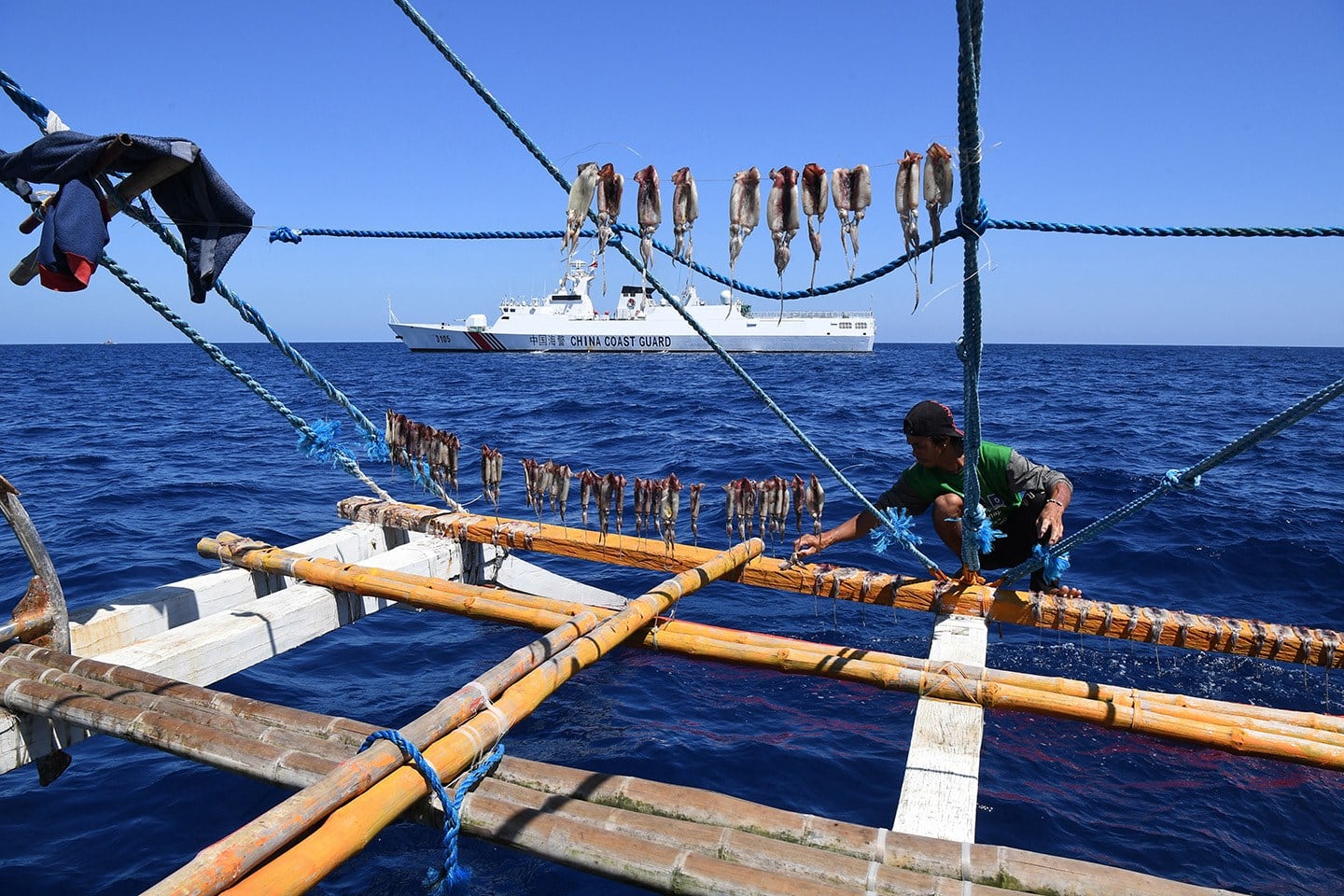
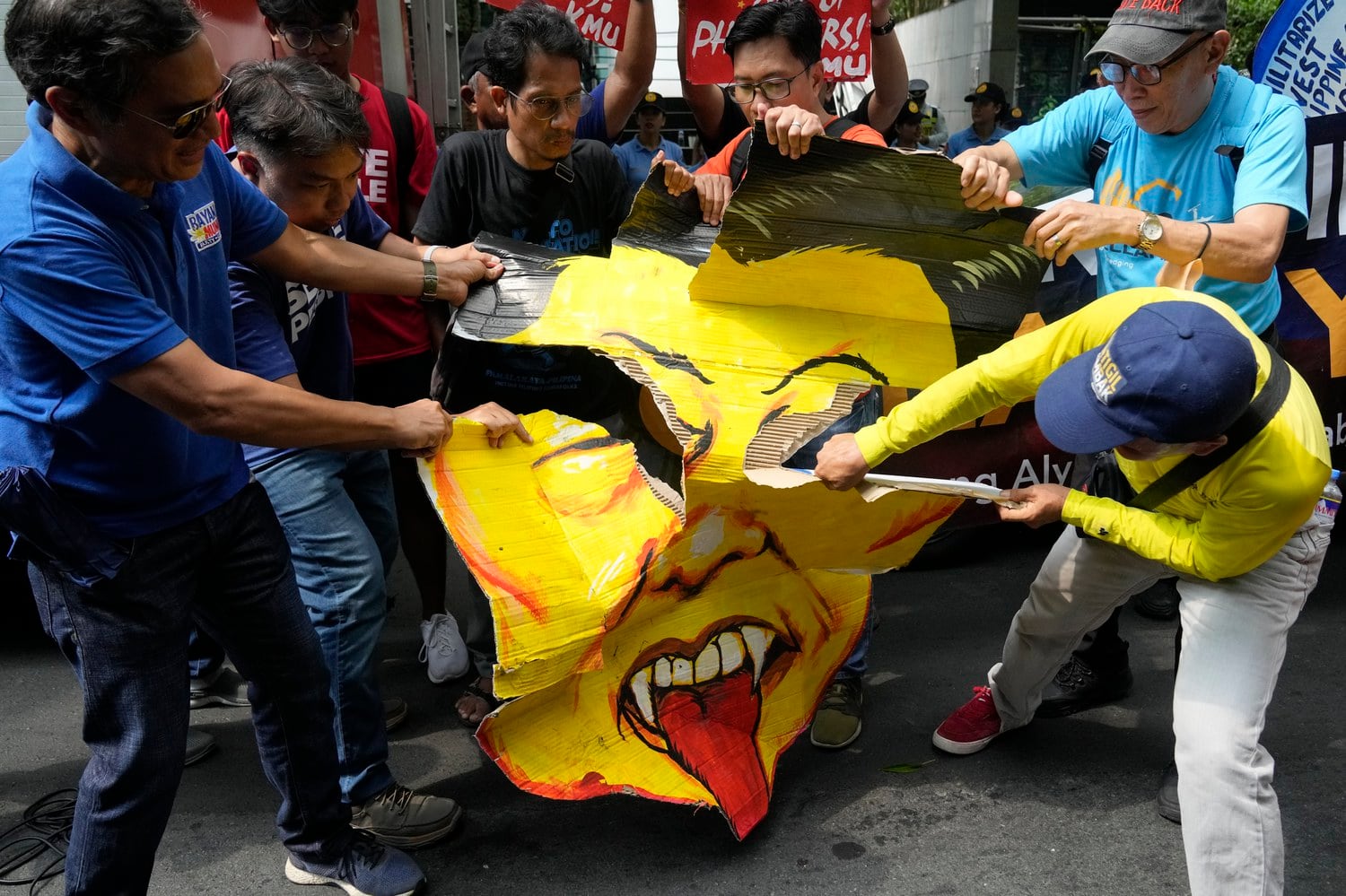
MANILA, Philippines - Ahead of two major international meetings for Manila next week, fishermen in the Philippines are urging their government to press the international community on territorial disputes with Beijing in the South China Sea that they say are responsible for a decreased catch, the fishermen told Radio Free Asia.
The Philippines will host a summit of the Association of Southeast Asian Nations, or ASEAN, from Nov. 15 to 17. In addition to the 10 leaders of the regional economic bloc, leaders of other global partners are also attending, including U.S. President Donald Trump and Chinese Premier Li Qiang.
Immediately after the ASEAN Summit, many of the same leaders will fly to Shenzhen, China for the Asia-Pacific Economic Cooperation, or APEC, leaders meetings.
The meetings come at a crucial time for the Philippines, as analysts say Manila will try to rally the international community to their side in disputes over waters in the South China Sea that are claimed both by the Philippines and China. Manila hopes to finalize a “code of conduct” governing actions in the sea region at the ASEAN summit, but analysts and observers are doubtful that the agreement will be completely hammered out before it ends.
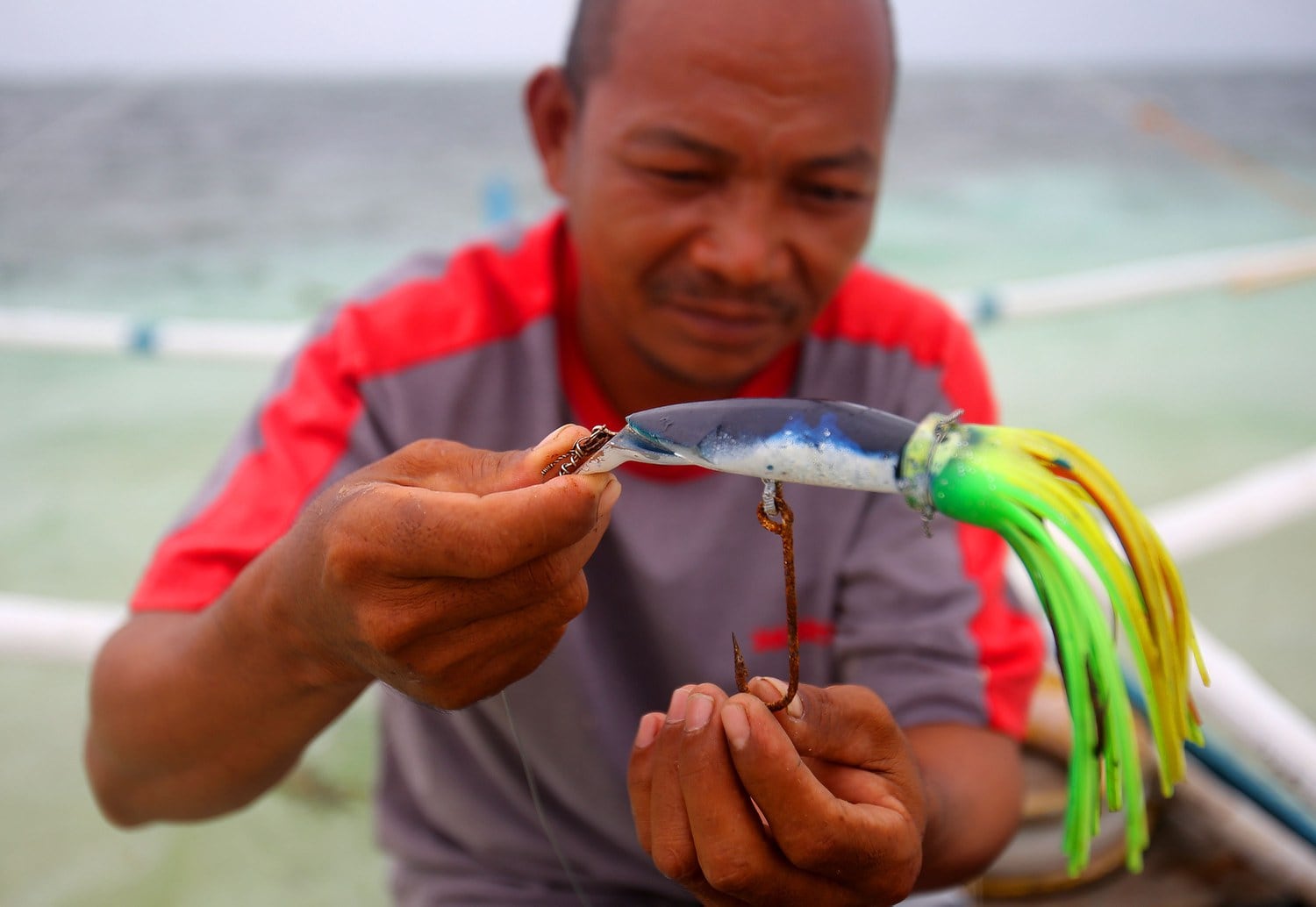
China’s incursions into the Philippines’ exclusive economic zone are directly to blame for dwindling fish catches, Joey Marabe, a Filipino fisherman, told RFA.
“We used to fish in Scarborough Shoal with other fishermen from other nations,” he said. But when China began claiming it as their own, “we were accused of stealing resources and fish in our own seas.”
Rising Tension
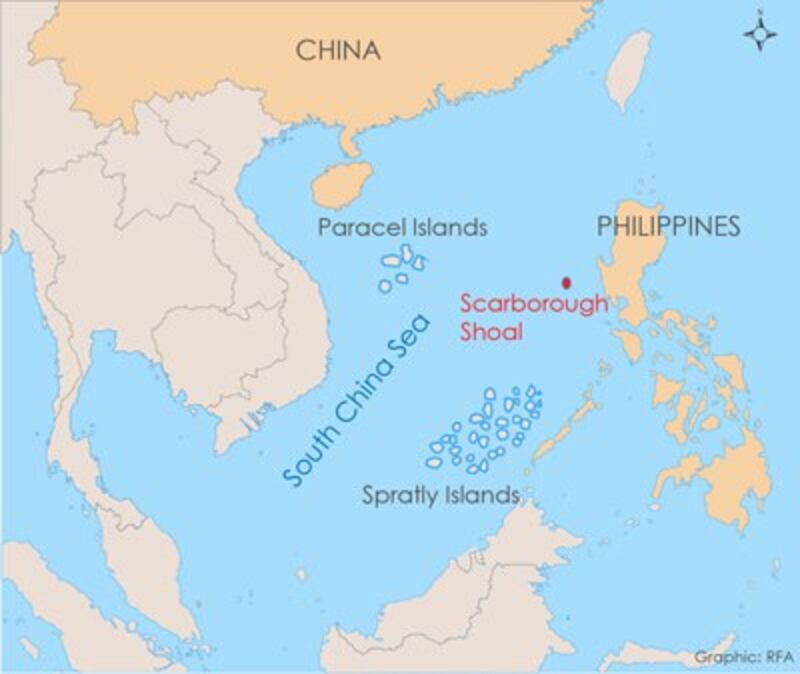
Scarborough Shoal is a rich fishing ground within the EEZ of the Philippines, but has been under Chinese control since 2012. Marabe hails from the coastal town of Masinloc, about 150 kilometers (94 miles) northwest of Manila. The shoal lies due west.
China claims territory within its “nine-dash line,” which essentially encircles the entirety of the South China Sea, including the shoal.
After escalating tensions that ultimately led to a standoff over the shoal in 2012, Manila took the dispute to the international arbitration court. The court issued a ruling in 2016 that invalidated the nine-dash line, but Beijing rejects the ruling and still maintains control of the shoal.
Marabe, a leader in the fishermen’s rights group Pamalakaya, said that a code of conduct for the South China Sea between China and ASEAN must put the welfare of fishermen first, and the regional bloc must be willing to work together to ensure that China follows through on its commitments.
“The government must also be prepared to fight and defend our sovereign rights,” he said.
Filipinos need to put their domestic political differences aside and speak to China with a singular voice to get a code of conduct done, Rodrigo Laudit, a fisherman from the coastal community of Las Piñas in Manila, told RFA. He said fishermen would be the most affected by the code, or lack thereof.
The Philippine Department of Foreign Affairs “should lead all agencies of the government that are dealing with WPS in this,” he said, using the abbreviation of the West Philippine Sea, the part of the South China Sea inside the Philippines’ EEZ. “Above the dwindling catch, it is Filipinos’ sovereignty that is at stake here.”
But diplomacy can only go so far, Dindo Manhit, president of the Manila-based Stratbase Institute, told RFA.
“It cannot replace transparency and public accountability,” he said, warning against diplomatic considerations that could potentially weaken defense of sovereignty.
Manhit’s comments are in response to recent debates over how Manila should walk the tightrope of responding to Beijing’s encroachments into its EEZ while also maintaining good relations with China, a major economic partner.
Discretion and diplomacy can work, but they “must never be used to suppress scrutiny or silence officials on matters of core national interests,” he said. “Exposing coercion and unlawful maritime activities is a lawful defense of our rights,” he stressed.
Deescalation?
For now, both sides appear to be dialing down the tension to avoid a further deterioration of diplomacy, recognizing the potential impact of tough talk on bilateral ties and economic discussions, analysts said.
Both sides must also be careful not to undermine their respective diplomatic meetings, Lucio Pitlo, a policy and security analyst based in Manila, told RFA. In October, Beijing sent its lowest-level delegation to a defense ministers’ meeting held in the central Philippine island of Cebu.
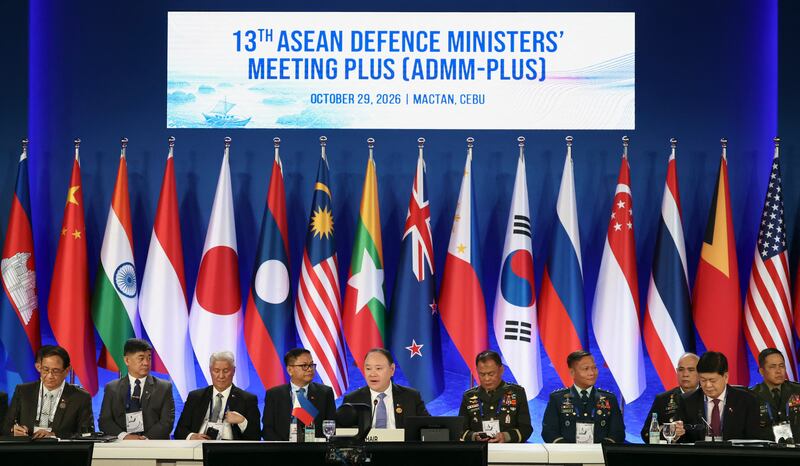
“One important goal is to avoid a possible snub or low-level delegation attending each other’s event, which may not look well for the host and affect the enthusiasm of other regional leaders attending the meetings,” he said.
Pitlo, who heads the Philippine Association of Chinese Studies, noted that the foreign ministers of both countries had also recently agreed during a “much-needed phone call to stabilize ties ahead of the back-to-back regional summits.”
During the phone conversation, China’s Foreign Minister Wang Yi told his Filipino counterpart Theresa Lazaro that bilateral relations were facing “malicious disruptions” from unnamed Filipino officials who have allegedly smeared China. He called on the Philippines to boost restraint over the officials and send “a rational and unified voice on its policy toward China.”
“For the Philippines, avoiding the economic fall-out from heated verbal and social media exchanges between some Philippine security officials and the Chinese embassy” means that “President Marcos has had to encourage officials to be more cautious about their language, recognizing its potential diplomatic impact,” said Pitlo.
Edited by Eugene Whong.