Read a version of this story in Korean.
A white tiger entered the courtyard outside the National Museum in Seoul. He mugged for the camera and darted up the steps. At the top were the six members of BOYNEXTDOOR, wearing quasi-traditional outfits that mixed elements of hanbok with modern formal wear and a tinge of “bad boy” biker gear.
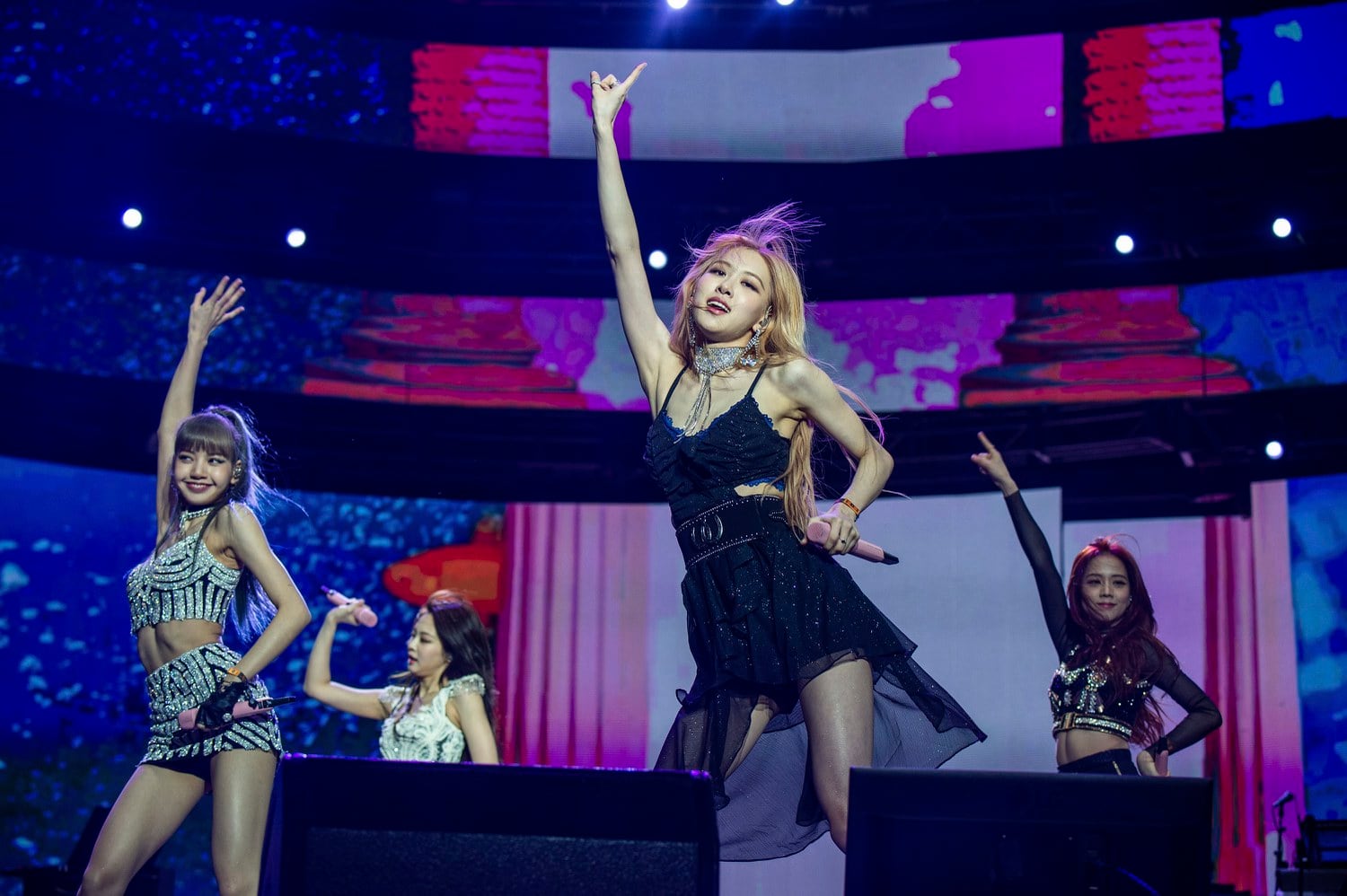
As they danced in unison and sang the opening lines of their hit single “Animal,” the crowd went wild.
Sitting in the audience was Cho Mi-young – born in Chongjin, North Korea – who arrived with her family in the South in 2004.
Mi-young can’t contain herself. “You’re so amazing!” she cries out, as the monitors show the young men dominating the courtyard with their precise dance moves.
Mi-young is in the audience at an episode of KBS Music Bank, a Friday night K-pop showcase program that has all the latest acts, and has been kicking off the K-pop weekend for most of its 28-year runtime. Surprisingly, it’s her first time ever seeing a live K-pop performance in person after 22 years in the South.
Tickets to studio tapings of KBS Music Bank are hard to come by. Fans either have to know someone, know someone who knows someone, or enter the ticket lottery. The episode she’s watching on Oct. 16 is special - it’s a live broadcast and the biggest boy bands, girl bands, and boy-girl bands plying their craft on an outdoor stage on the grounds of the National Museum of Korea, which the show’s special intro vignette called the “beating heart of Korean culture.”
When the opening act was finished, the show’s hosts began introducing this week’s lineup, as Cho and the rest of the audience settled in. Many more K-pop groups and solo artists would take the stage in front of them on a night they would likely all remember forever.
“I’ve seen it a lot on TV, but today is the first time I’ve seen it with my own eyes,” Cho told Radio Free Asia. “Seeing such beautiful and handsome people dancing and singing right in front of me, moving like that, is absolutely mesmerizing.”
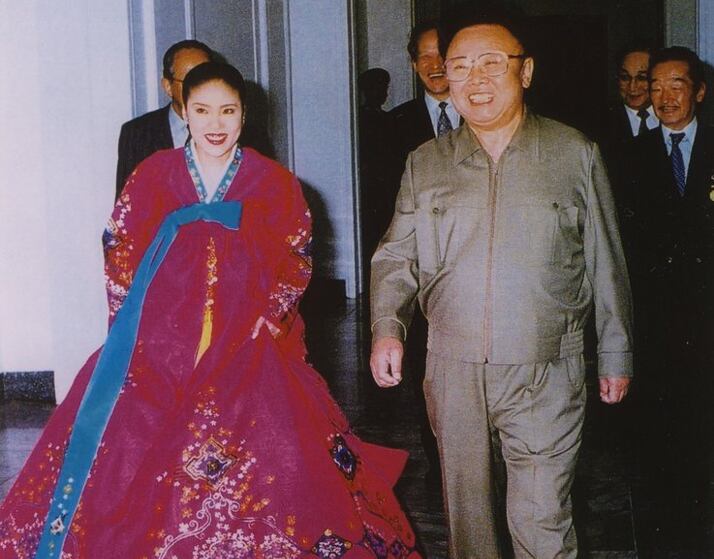
Cho is no stranger to music, or to the stage. In North Korea she had been a vocalist for a state-run provincial arts troupe. After settling in the South, Cho was a fixture in Seoul’s burgeoning musical theater scene and she toured as an accordion player. She later transitioned into broadcasting, at one point even co-hosting the RFA Korean webseries “Northboy Northgirl.”
At present, she runs a content production company and maintains an active presence both online and in traditional media.
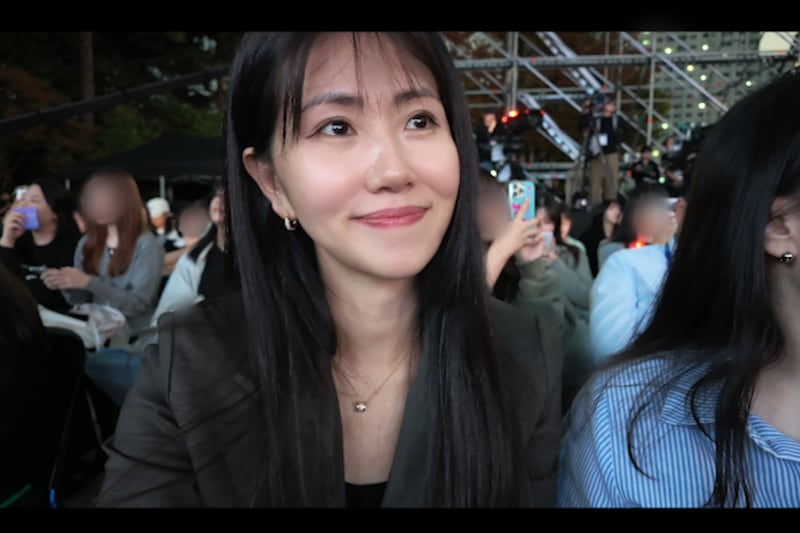
But today, she’s just a fangirl in a sea of other diehards, most of whom are screaming the names of the idols on stage.
Music in isolation
On the night of her first live K-pop concert, Cho reminisced about how she first encountered South Korean music in North Korea. At the time, she didn’t have access to what most would describe as K-pop today; instead she took in a lot of trot – a unique South Korean genre that mixes Western foxtrot dance rhythms with pentatonic minor scale melodies. Most young South Koreans consider trot to be music their grandparents like.
But after arriving in the South, she became a huge fan of South Korean love ballads, much slower than the catchiest K-pop numbers, but thicker in emotion. Music occupied much of her daily life in the South early on, as she scanned the radio for something new to listen to.
Today’s performances on the Music Bank stage were a far cry from her own back in North Korea. For one, everyone on stage just seems happy to be there, she said.
“When I performed in North Korea, I was always stiff,” she said. “When we were on stage, we performed with the mindset of conveying the Party’s voice, so I don’t think I ever had the thought that we were actually enjoying our own music.”
Several more musical acts came and went and then the undistorted electric guitar of indie rock band Jannabi’s Kim Do-hyung echoed through the air as vocalist Choi Jung-hoon sang the first few lyrics of “Thoughts on an Autumn Night.”
“Even on that distant shining star up there… love must be alive singing its song.”
The song struck a chord with Cho. Performed by just one singer and one guitarist it was a bit of a shift from the rest of the evening’s heavily choreographed bangers.
Jannabi “are a group I absolutely love,” she said, adding that she really liked this song. “The lyrical melody seems to have a bit of North Korean sensibility to it.”
She sat, transfixed by the more intimate, scaled down performance on the stage and quietly sang along.
“I really am in the South now”
When it was all over, Cho talked about her experience on the show, but it wasn’t only the dazzle of the K-pop acts that caught her eye. She was also amazed by the devoted fans, who sang along with every lyric from memory and chanted in pre-arranged cheers in unison. She thought back to how strange that seemed when she first arrived.
“I didn’t understand it in the past. But as I’ve lived here longer, I’ve come to understand the fans and their pre-prepared chants,” she said. “I think maybe next time, I might enjoy it even more if I learned those.”
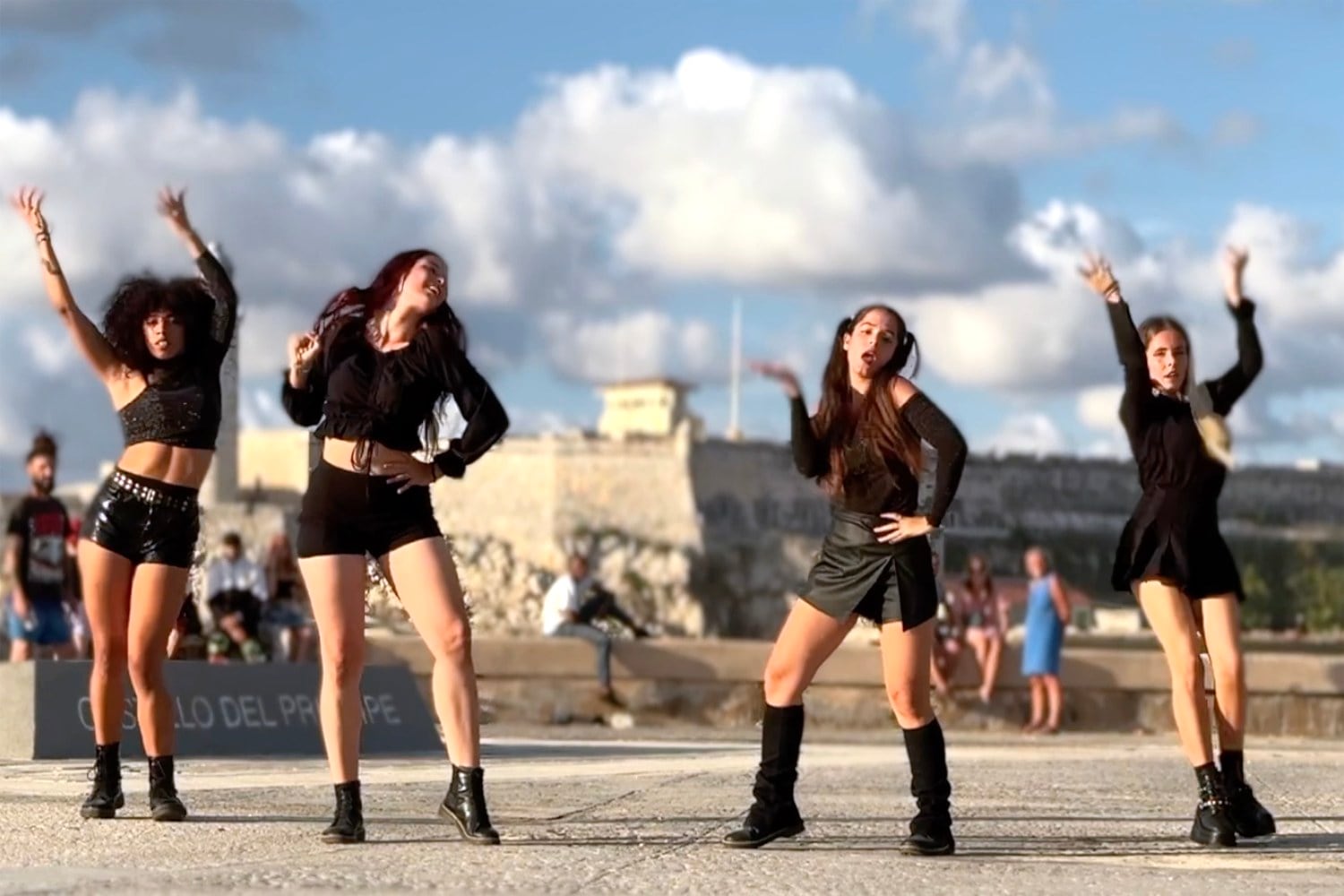
The best performance of the evening, according to Cho, was by a co-ed group called AllDay Project. She thought they looked cool in their all-black outfits, some in furs, others in biker leather – almost like warriors.
But as an artist, Cho’s thoughts naturally turned to the massive effort that must have gone on behind the scenes. The meticulous choreography alone must take many months of practice, she said.
She recalled how she herself had put in a lot of effort as a singer back in North Korea.
“Even in North Korea, artists are trained very strictly in a Spartan manner,” she said. “In terms of the sheer volume of training, it might be difficult to see a significant difference between the North and South.”
But she noted that the payoff in the South is individual success, unlike the North, where it would merely advance the goals of the state.
She said the whole evening was surreal. Back when she was in North Korea, she could maybe catch glimpses of what the music scene in the South was like, but she could never actually see it. Now she finally has seen it in person, “it sinks in that I really am in the South now.”
Cho said that she thinks any North Korean escapee would probably feel the same way.
“The emotion felt in the live setting is completely different from listening to a recording,” she said. “I think many escapees would finally feel they truly have arrived in South Korea when they go to the venue, see the singer in person, and listen to the songs live.”
Edited in Korean by Lee Yong-in and in English by Eugene Whong.