Read a version of this story in Burmese
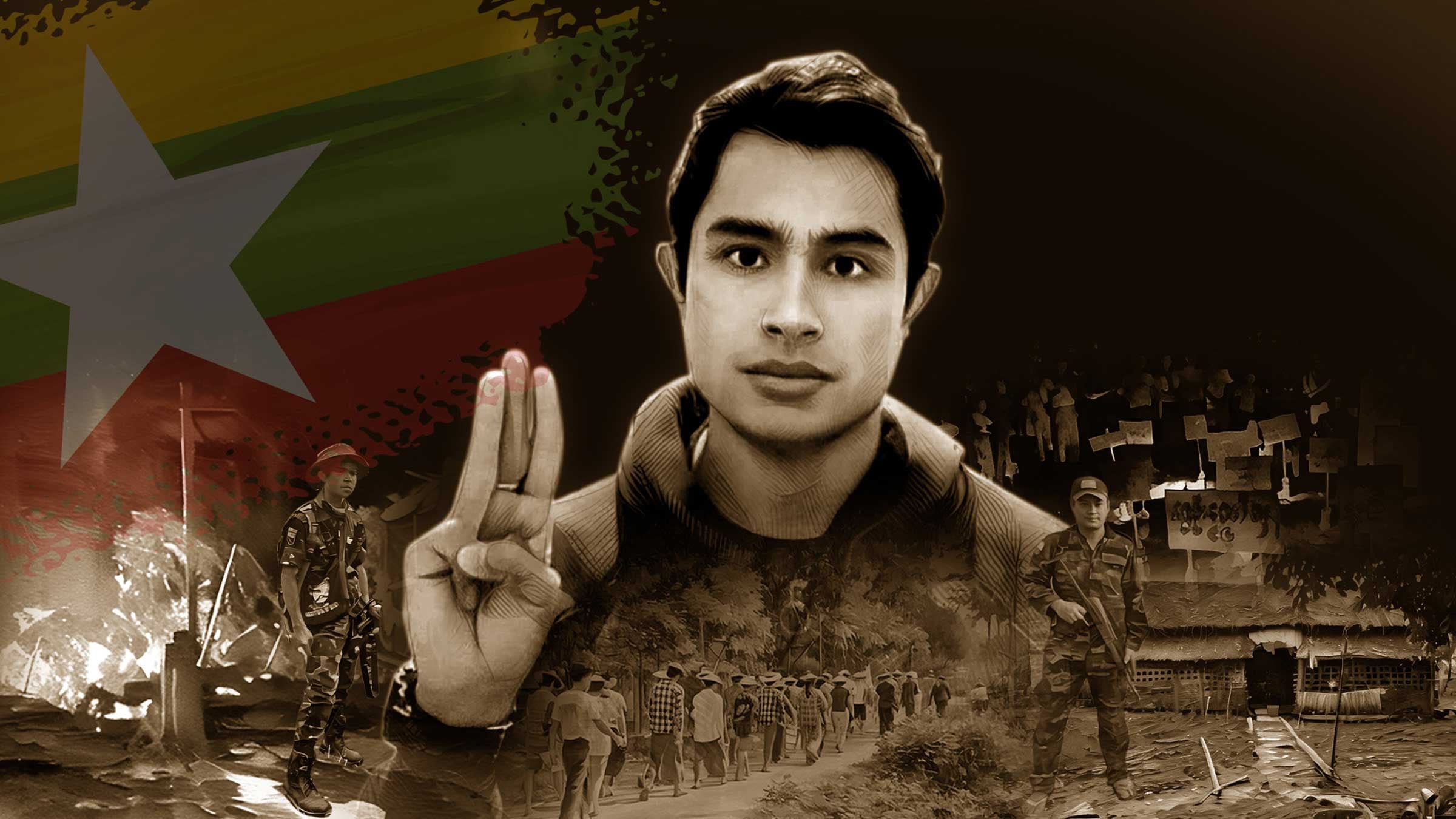
The Myanmar military junta’s recruitment practices are “modern day slavery,” an expert from the volatile Southeast Asian country told Radio Free Asia. An investigation by RFA Burmese shows that for more than two years, thousands of young men in Myanmar have been captured, sold, and conscripted in ways that rights groups say may be crimes against humanity.
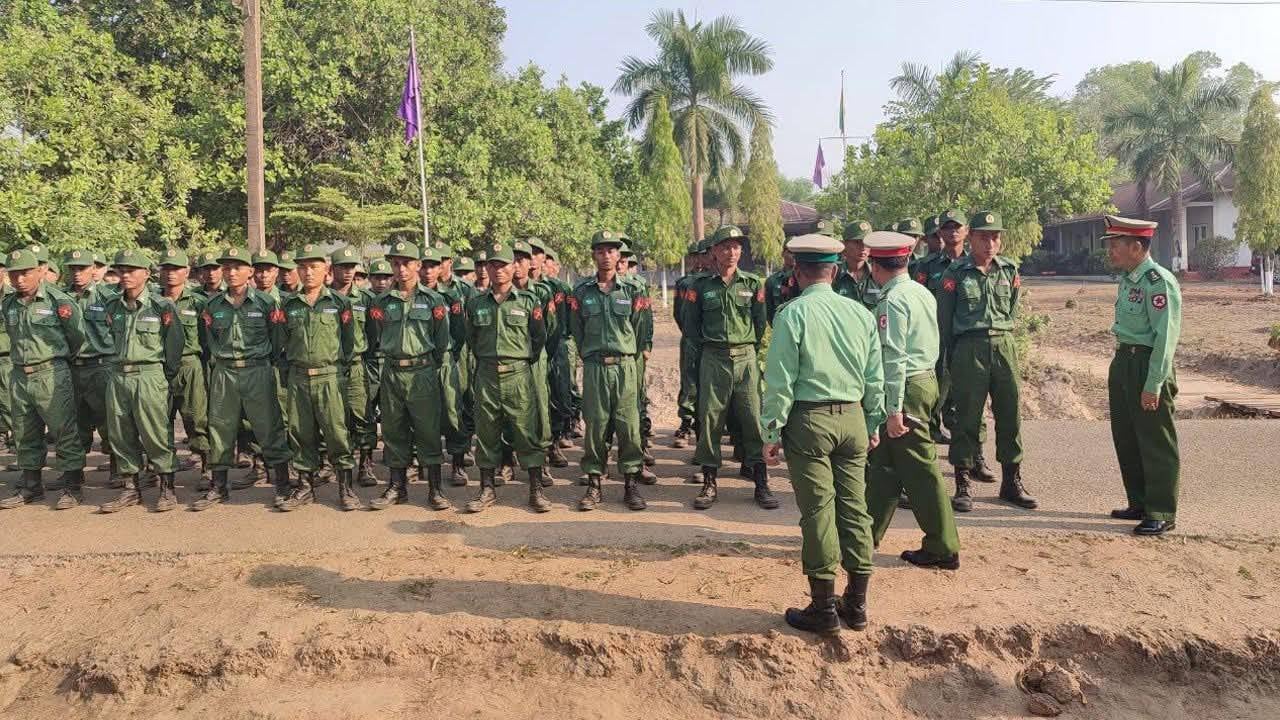
Ever since the military junta seized power in the 2021 coup, it has faced a growing armed resistance and significant personnel shortages. To fill the gap, the military has resorted to a conscription system, based on a 2010 law, that has resulted in mass human trafficking.
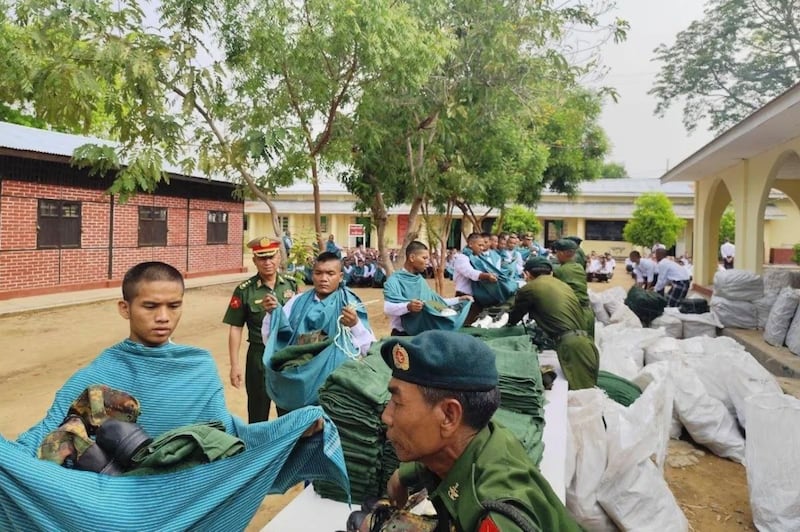
RFA interviewed more than 30 families of people they say were trafficked into the military. Their testimonies reveal that trafficking networks operate at the grassroots level—where young people are captured in every possible way and sold to recruiters for millions of kyat (thousands of U.S. dollars). The scheme involves various actors that include the junta’s low-level administrative officials, immigration officers, police and military officers, ex-soldiers and criminals who have links with the authorities according to interviewees.
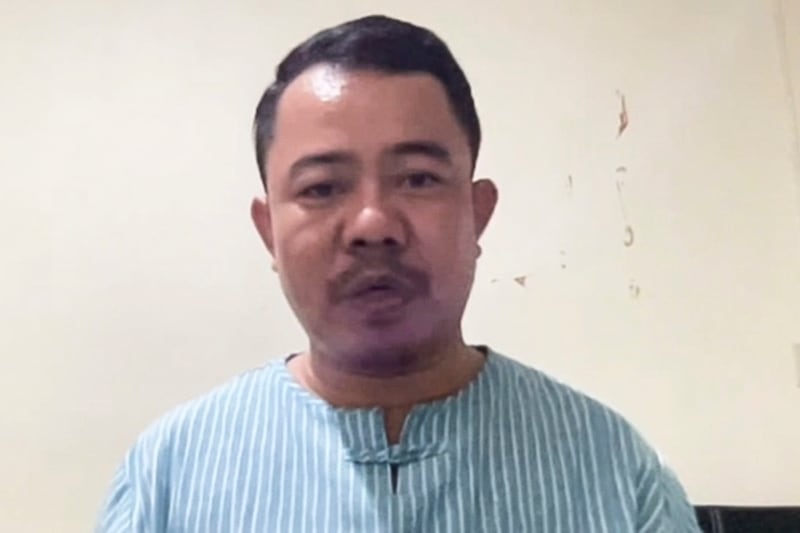
“This is modern day slavery,” Maj. Naung Yoe, the military affairs official at the Myanmar Institute for Peace and Security, or MDSI, and a former military officer who defected and joined the anti-coup Civil Disobedience Movement or CDM, told RFA Burmese.
“They are trading people like goods. They are forcibly capturing these people for their own financial gain, treating them like slaves,” he said. “If they refuse to join the army, they are beaten all night.”
The MDSI tracks military recruitment, and said the system provides financial incentives for funneling the country’s youth into active-duty service.
“Once they agree to join, they are held, and then sold to the necessary locations for exorbitant fees,” said Naung Yoe. “We can call this modern human trafficking, a modern slave market.”
Soldiers for sale
The military’s conscription order demands a specific quota of recruits from each village, ward, or township proportional to its population. Findings show that the burden falls disproportionately on the poor. Though technically all men of conscription age – between 18 and 35 – are vulnerable, young men from wealthy families that get the call can pay to make poorer youth serve in their place.
The market price starts at 10 million kyat per person (about $2,500). Those who are healthy and pass the medical examination for military service can fetch up to 30 million kyat ($7,500), according to those who have purchased substitutes.
The people who were interviewed for the RFA Burmese investigation shared details about how the conscription scheme worked.
Ko Kaung, a youth from a suburb of Yangon whose real name is changed here for safety reasons, was working odd jobs to support his family in the volatile post-coup economic situation, a member of his family told RFA.
One day, a friend told him he could get a job loading construction materials for 40,000 kyat (about $10) per day. Ko Kaung accompanied him, hoping to land the job. The friend was actually working with traffickers and Ko Kaung was sold into military recruitment.
“They came to get him, saying there was a job in North Okkalapa township loading construction materials for 40,000 kyat a day,” Ko Kaung’s family member said. “Because there was no other work, he went. We lost contact completely. It was 18 days later that we finally made contact as he joined the military training where he could use a phone. We then learned he had been sold.”
Ko Kaung told his family he was sold to someone in Zayatkwin, Hlegu township in Yangon region; from there he was transported to Kyaing Tong, eastern Shan state bordering the Golden Triangle region, an area at the convergence of the borders of Myanmar, Thailand and Laos that is notorious for human and drug trafficking. It was August 2, 2026 when he could contact the family informing them that he was at military training.

The friend who recruited Ko Kaung allegedly has connections with the military, and currently is stationed at the No. 11 Infantry High-Level Training School, Ko Kaung’s family member said.
The People’s Military Service Law was first introduced and enacted by the previous junta led by Sr. Gen. Than Shwe, on November 4, 2010 in order to address the recruitment shortage in the possible future.
In February 2024, the current junta, led by Sr. Gen. Min Aung Hlaing, implemented the law and formed the Central Body for Summoning People’s Military Servants which would oversee all recruitment activities across the country.
Ko Kaung was recruited by an unknown individual recruitment group and transported to a military training camp under the body.
When RFA contacted the central body for the CBSPMS to inquire about Ko Kaung’s disappearance and illegal forced recruitment on August 17, 2026, no one answered.
Ko Kaung is not alone. Many others were also trafficked and conscripted under similar circumstances.
Zin Win Paing was abducted and sold as a new recruit for military service, his family told RFA. He was captured by a group of people as he came back from work to his home while waiting for a bus in South Dagon Township, Yangon, on March 5, 2025.
According to the family, Zin Win Paing was sold for 15 million kyat ($3,800). He was sent to Infantry Battalion 213 in Hlegu Township, Yangon, and subsequently to the front lines. He was killed in battle against the Arakan Army in Kyaukphyu, Rakhine State, on May 18, 2026.
Aung Ko Ko (a pseudonym) from Htantabin Township, Yangon, was also abducted and sold, his family told RFA. Aung Ko Ko was a welder in the Shwe Lin Ban Industrial Zone of Yangon and was captured while returning home on May 3. The family said he was sold for 12 million kyat ($3,000) to serve in the military for the Maubin Township area of Ayeyarwady Region.
Government corruption
Under the conscription law, every jurisdiction has a recruitment quota proportional to its population, but some of the youth were trafficked to fill the quota of nearby jurisdictions. This requires a change in registration and the issuance of a new national ID to count toward the second jurisdiction’s quota.
Such a change would have been impossible without the participation of government officials.
Zin Win Paing, who died in a battle in Rakhine state, is originally from Insein Township, but was sold to serve under South Dagon Township. Similarly, Aung Ko Ko, from Htantabin Township, was sold to serve for Maubin Township, Ayeyarwady Region. Both received new IDs prior to their conscription.
Interviews conducted by RFA with family members and village representatives reveals a belief that government officials of all levels are working together in collusion at every step of the scheme.
A village administrator from Mandalay Region, who wished to remain anonymous for safety reasons, told RFA that military authorities work together with trusted brokers to make the scheme work.
Pro-junta militia groups and others associated with the military “capture suspicious people or criminals and persuade them to join the army. They hand these kids over to the broker. The military (officers) give the order. The (brokers) then give (the captured recruits) to the administrators,” the local administrator told RFA.
“Since they are captives taken by the military-affiliates, they can be bought for 4,000,000 to 5,000,000 kyat (about $1,000 to $1,250). The middlemen handle the talking, the shifting, and the persuading, then they resell them for around 15 million kyat ($4,000)” the local administrator told RFA.
The local administrator admitted that he, too, had sourced recruits from brokers every three months to fill the conscription quota for his village. If the recruit is from a different township, immigration officials immediately issue a new ID card, receiving payments from the brokers for doing so.
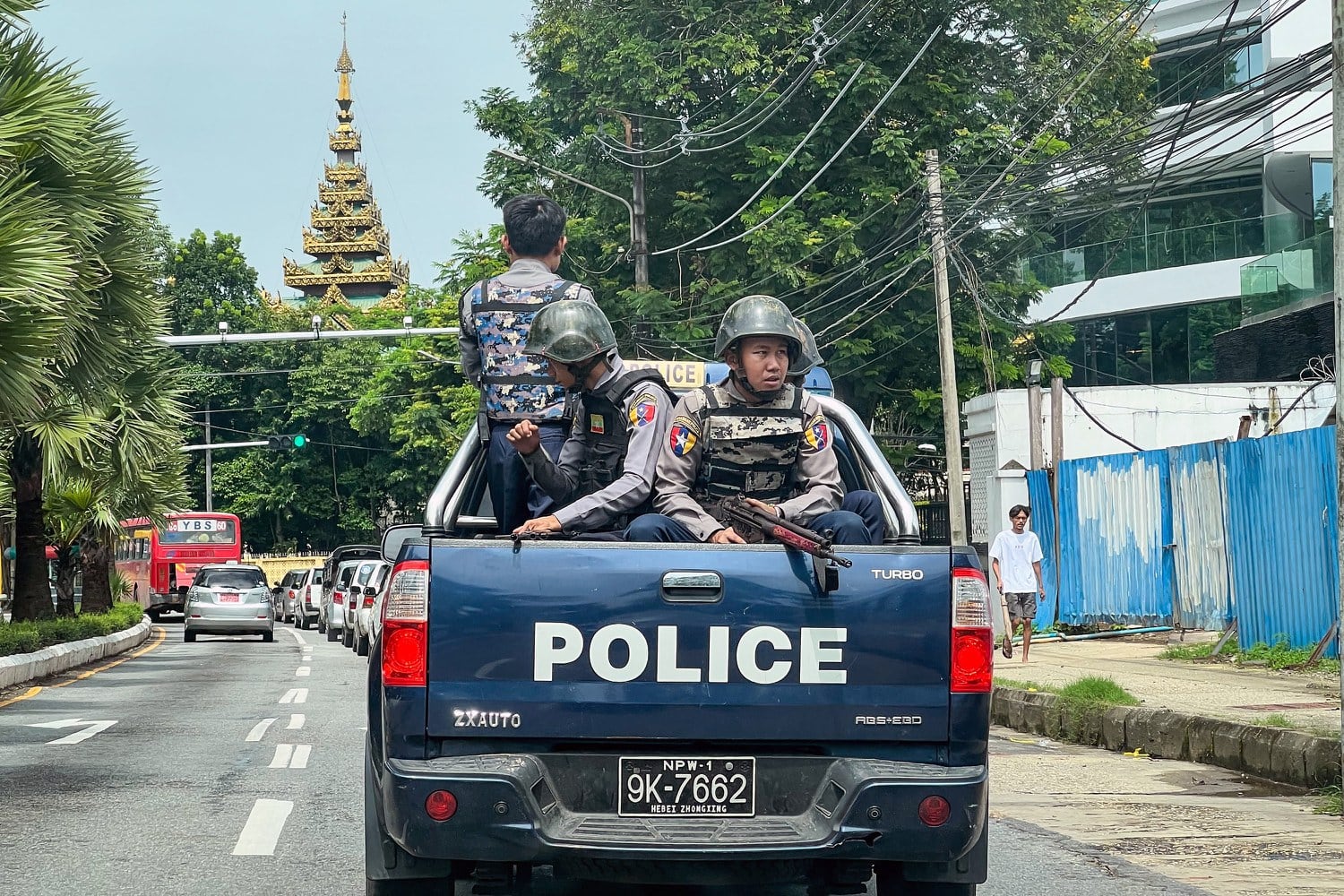
While abductions are carried out directly by the military and police, or by junta-appointed administrators and their associates, the end result is always the same: they are forced into military service.
If families want to avoid their loved ones being sold, they sometimes have to pay hundreds of thousands of kyat in ransom to get them back. A family from Sinbaungwe Township, Magway Region, paid 20 million kyat (about $5000) to release their son after he was abducted last month.
“It is heartbreaking to have to buy back our own lives in our own country,” a family member of one of the victims said. “There is no one to rely on. We have no hope for justice from the leaders or the law because they are the ones openly doing this.”
In some cases, even after paying the ransom, the person is not released and is still sent to military training, resulting in the loss of both the person and the money. These incidents are widespread in areas where military control is strong, including Yangon, Mandalay, and Naypyidaw.
The money is simply too good for many government officials to resist, a lawyer in Yangon, who requested anonymity for security reasons, told RFA.
“I see this as using the law for business profit. This is not a military matter; it is forced, illegal coercion,” the lawyer said. “It is not part of the military service law. If subordinates are abusing this law, the military leaders should investigate and take severe action.”
RFA contacted Daw Khaing Khaing Soe, spokesperson for the former coup leader Min Aung Hlaing, but there was no response.
In state and local parliaments, questions on incidents of forced disappearance and illegal recruitments have been raised but the resulting discussions are often not highlighted by the junta-controlled media.

Meanwhile, the police often do not act on these cases because military officials are involved, Aung Ko Lin Han—a former deputy police inspector in Yangon who defected to the anti-coup Civil Disobedience Movement after serving until late 2025, told RFA.
“Retired army captains and active-duty military personnel—along with what you might call thugs or, essentially, their henchmen—collude to carry out these acts,” he said. “It is true that victims can be ransomed back. If one has the means, they can secure a release based on what they can afford to pay.”
Aung Ko Ling Han said that there have been cases where the police arrested traffickers.
“But we were unable to take action against those belonging to the active-duty military,” he told RFA.
Swelling the ranks
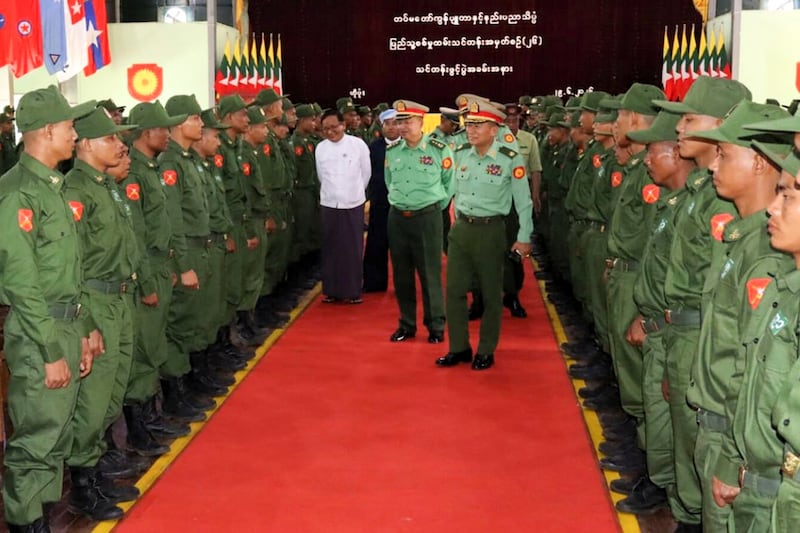
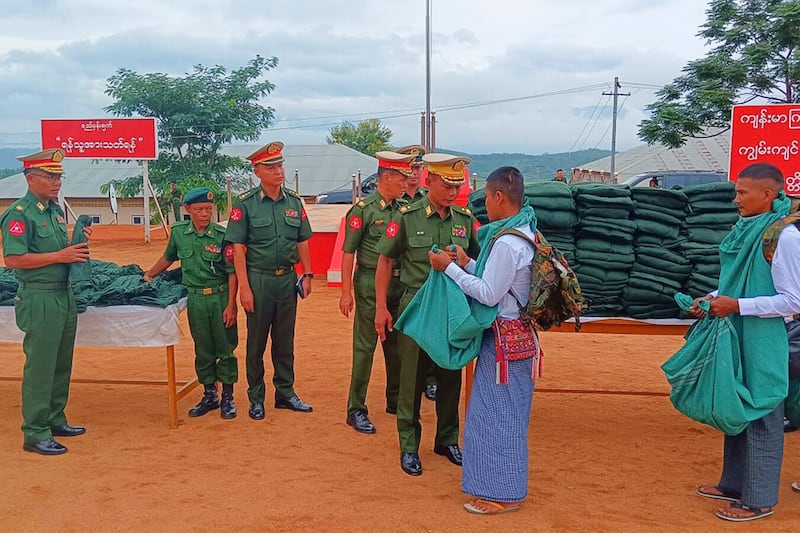
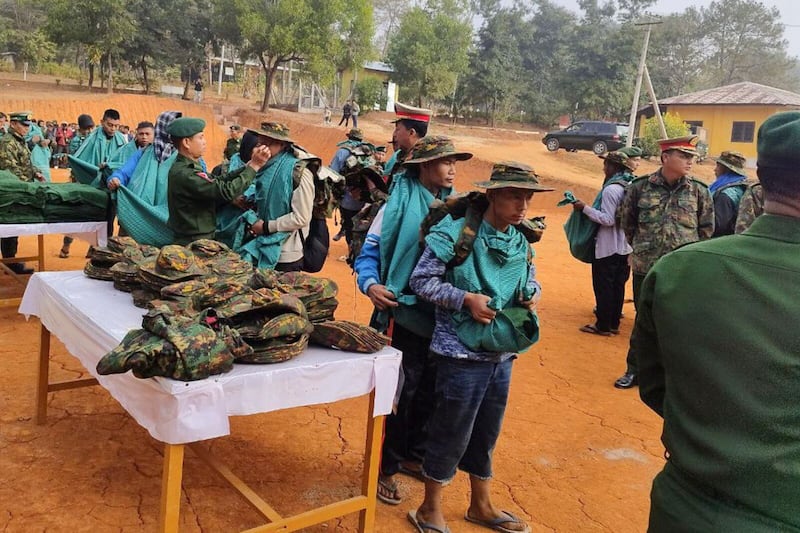
Since the implementation of the Military Service Law in 2024, thousands of young people across the country have been sent to 28 military training centers each month, So far, 28 batches of trainees have been recruited.
MDSI estimates that the military has recruited more than 130,000 new soldiers since the law went into effect, based on a newly imposed national quota of 5,000 recruits per week that was announced in April. RFA was not able to determine exactly how many of these 130,000-plus young people have been subjected to trafficking.
“Myanmar security forces have carried out abductions or detentions without informing families about where they are or their condition,” the United Nations Independent Investigative Mechanism for Myanmar, or IIMM, stated on August 29.
“Their families and loved ones live in uncertainty and anxiety. The Mechanism is investigating reports related to enforced disappearances. Under international law, if enforced disappearances are committed as part of a widespread or systematic attack directed against any civilian population, it may constitute a crime against humanity.”
Concerns about human trafficking have even been raised by politicians who support the military.
In the Mandalay Regional Parliament on August 4, Ko Ko Htwe, a regional member of parliament from the pro-military Union Solidarity and Development Party (USDP), criticized these activities, calling them a massive human trafficking ring.
“Since the initial call-up began, levies labeled as ‘military service fees’ have been collected from every household in the neighborhood, leading to financial issues and corruption,” he said. “Furthermore, these collected funds are being used to ‘purchase’ young people for military service—a practice akin to human trafficking. Consequently, young residents of Mandalay and migrant workers from other regions no longer feel safe.”
When questioned about these issues in the Naypyidaw parliament in July, the Deputy Minister of Home Affairs, Maj. Gen. Min Thu, claimed they were acting systematically and that they would punish those acting outside the law.
“On behalf of the Chairman, and based on the coordinated responses from the Ministry of Defence and the Sagaing Region Government, I state that the People’s Military Service Summoning Body is issuing strict instructions at all levels to prevent summons that do not comply with the law, and that effective action will be taken against any activities that exceed the scope of the law and its bylaws,” the deputy minister said.
USDP spokesperson Hla Thein told RFA that it was necessary to take strict action against the perpetrators.
“If the authorities take action, these things will eventually disappear,” he said. “If people file complaints with concrete evidence, as has appeared in the newspapers, and if it is true, they will take action.”
Edited by Kyaw Min Htun and Nayrein Kyaw for RFA Burmese, Eugene Whong and Charlie Dharapak for RFA English.
RFA Burmese journalists who reported on this story have withheld their names for safety reasons.