Updated on Sept. 2, 2026 at 6:26 p.m. ET
HONIARA, Solomon Islands – Geopolitical competition over the Pacific between great powers could be playing out right now in the domestic politics of the Solomon Islands, experts told Radio Free Asia after Prime Minister Matthew Wale abruptly fled an international summit to defend his government against a motion of no confidence.
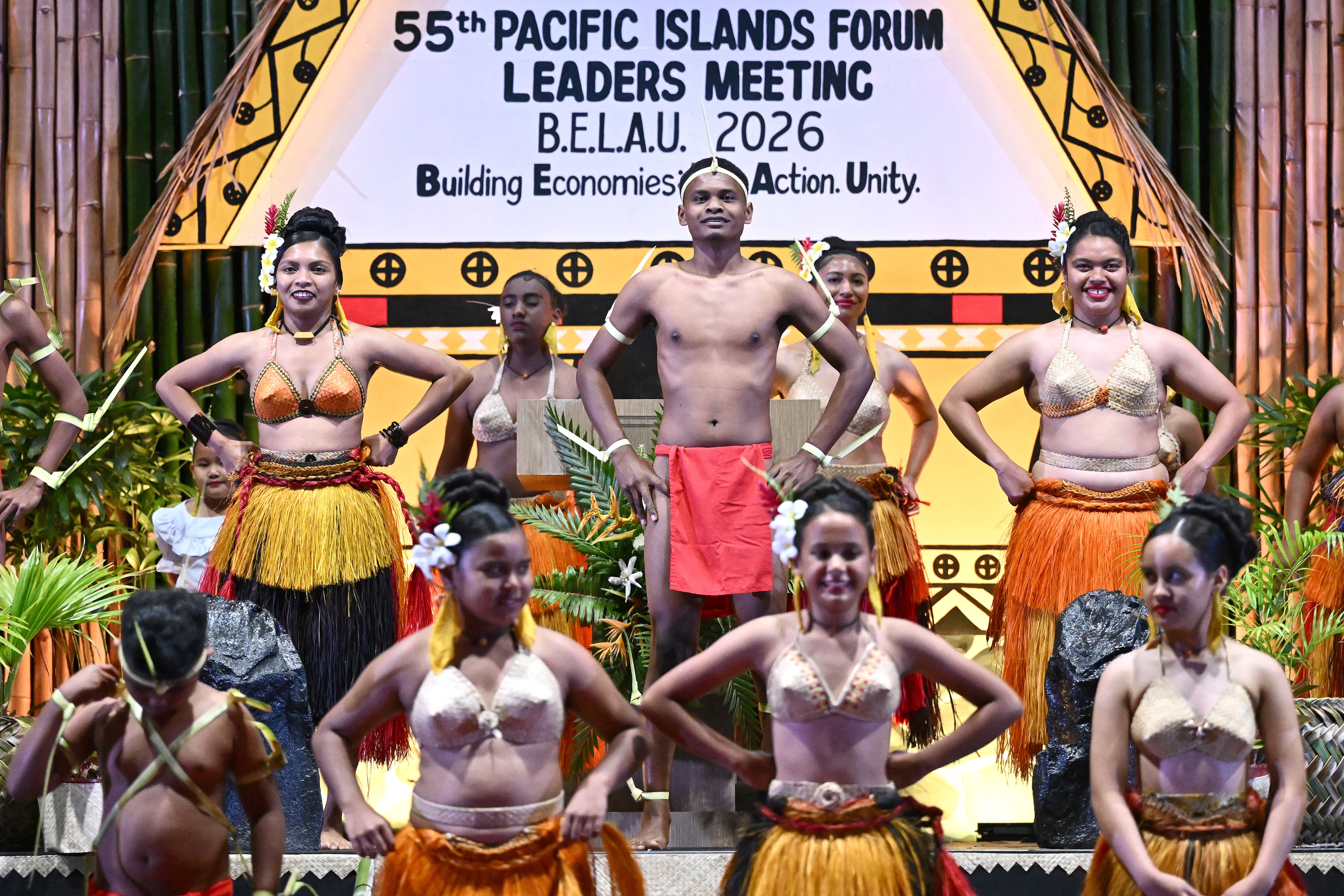
Wale had arrived in Palau on Saturday evening ahead of the start of the annual Pacific Islands Forum Leaders Meeting – a high-stakes gathering for regional diplomacy – only to depart hours later on Sunday to address the motion against his leadership.
Wale has yet to address the motion publicly. Sources familiar with the situation indicate that the cabinet has been locked in high-level consultations since his return as the government scrambles to mount a defense.
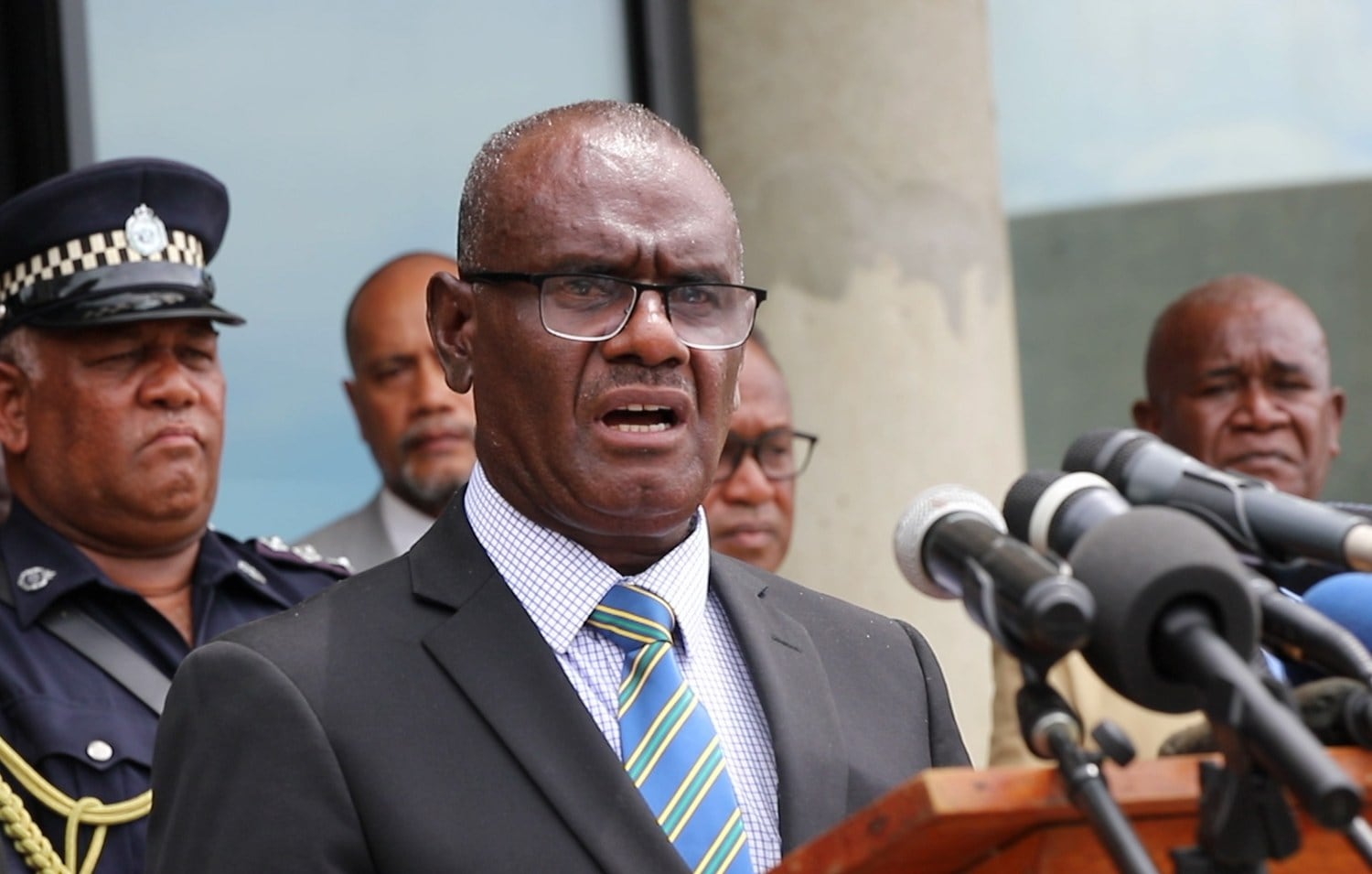
The Prime Minister delegated representation duties in Palau to his Foreign Affairs Minister Rick Houenipwela. Wale has been prime minister only since May 15, after a no-confidence motion sacked his predecessor Jeremiah Manele.
Political Instability
The volatile nature of Solomon Islands politics has been significantly intensified by the aggressive maneuvering between China, Australia, and the United States, Alexander L. Vuving, a professor at the Hawaii-based Daniel K. Inouye Asia-Pacific Center for Security Studies, told RFA.
“Domestic politics in Solomon Islands is inherently unstable, the absence of strong party structures and the dominance of personality-driven coalitions,” Vuving said. “You have different individuals juggling for power, and they would change the coalition.”
The political landscape in the Solomon Islands is plagued by the absence of robust party frameworks and the prevalence of shifting, personality-led coalitions, Vuving said.
The resulting internal turmoil in Honiara is amplified as the Solomon Islands are positioned at the center of intensifying great power rivalry in the Pacific, he said, adding that a constant change of leadership at the top could jeopardize the efficacy of international agreements, including security pacts.
“It’s not easy for Solomon Islands to just say, ‘I cannot just throw these agreements away,’” Vuving explained, adding that these commitments represent formal treaties between sovereign states.
Suspicious timing
Observers of regional security interpret the timing of the filing of the motion as a potent demonstration of Beijing’s strategic leverage. A prominent skeptic of Chinese influence, Prime Minister Wale had been prioritizing the acceleration of a fresh bilateral security pact with Canberra while curbing Beijing’s regional expansion.
It is “very possible” Beijing actively sought to shape domestic politics due to deep displeasure with the current administration, Vuving said.
“China is very unhappy with the prime minister… and they would not have stayed idle,” he said, adding that Beijing could have leveraged influence with parliamentarians, though the true extent of any interference, if at all, remains unproven.
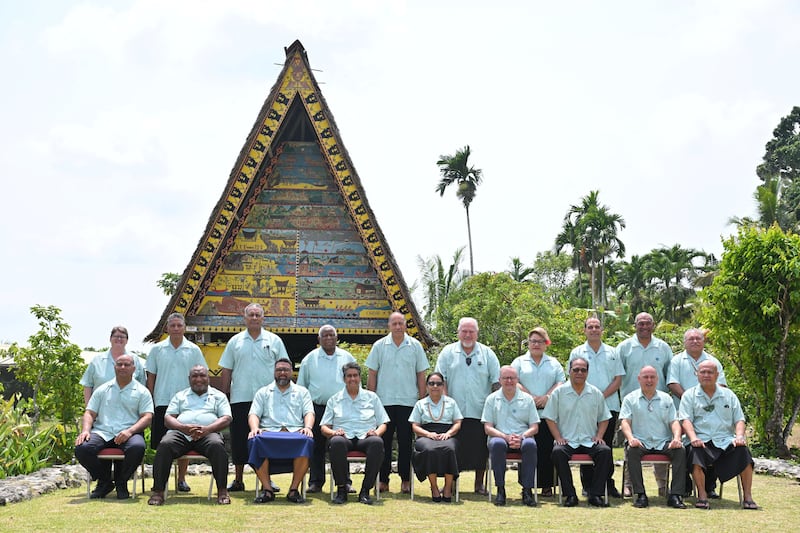
Wale’s plans for the meeting of the Pacific Islands Forum, or PIF, included advocating for the proposed “Blue Pacific Ocean of Peace Regional Security Treaty.” Supported fervently by the United States, Australia, and New Zealand, this multilateral initiative is aimed at cementing Canberra and Wellington as the cornerstones of regional stability while curbing Beijing’s strategic reach.
The current instability underscores a persistent dilemma for Western planners, Tarcisius Kabutaulaka, an associate professor based at the University of Hawaiʻi at Mānoa originally from the Solomon Islands, told RFA.
Sophisticated security pacts negotiated with regional heads of state remain highly vulnerable to the volatile nature of parliamentary shifting alliances, he said.
“The reasons for the motion of no confidence in PM Wale are complicated,” Dr. Kabutaulaka stated, pointing to broader governance issues. “While Solomon Islands’ members of Parliament tussle over who rules, Solomon Islanders watch, many with disappointment and anger. The island country once again dangles over the edge of political instability.”
The shock motion was filed on August 29 by Minister of Home Affairs Manasseh Maelanga, who defected from Wale’s ruling coalition, alleging that the “Prime Minister has repeatedly made unilateral decisions on matters of national importance without proper consultation.” The political upheaval comes against a backdrop of deep domestic discontent over emerging corruption inquiries, including an audit into the 2023 Pacific Games spending and unaccounted bauxite shipments.
In March, 19 members of former Prime Minister Manele’s ruling coalition who defected to the opposition which was at the time led by Wale. This created a new 28-member opposition coalition that had a majority of the parliament’s 50 seats. They filed a no-confidence motion in Manele that ultimately led to his ouster in May, after which Wale was elected his successor.
Though Maelanga was not a part of the 19 defectors, he had been a part of a previous defection in 2025, which set up a no-confidence motion that Manele was able to neutralize by luring members of that defection back to his side.
Geopolitical significance
The Australian government has heavily invested in countering Chinese regional influence through Pacific defense treaties, security guarantees, and infrastructure funding. In response to the unfolding crisis in Honiara, Australian Defense Minister Richard Marles stated he remains “confident” in the enduring bilateral relationship.
Australian diplomats are working quietly behind the scenes to preserve fast-tracked security agreements, reinforcing Canberra’s “red line” against any expansion of Chinese military or policing assets in the region.
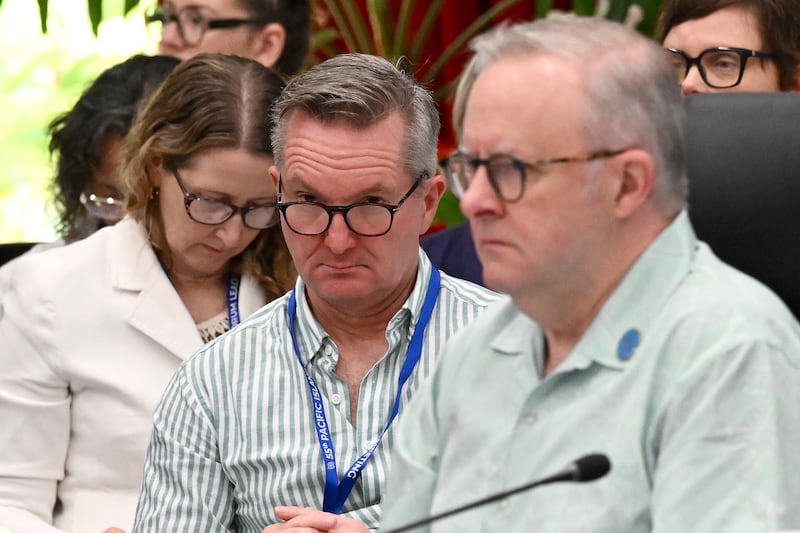
The sudden developments have raised immediate alarms in Canberra. Greg Sheridan, the foreign editor for The Australian, called the retreat of the China-skeptic Prime Minister a “very, big worry” for Australia’s strategic landscape.
“He was willing to make an agreement with Australia and limit China’s influence in the Solomons,” Sheridan said in an interview with Australian outlet News24. “China has a lot of influence in the Solomons, which it’s got through brown paper, money, politics, and all kinds of nefarious activities.”
“So this is part of the ongoing struggle that we are endlessly involved with in the South Pacific,” he said.
Edited by Eugene Whong.
Update corrects the circumstances of Maelanga’s defection.