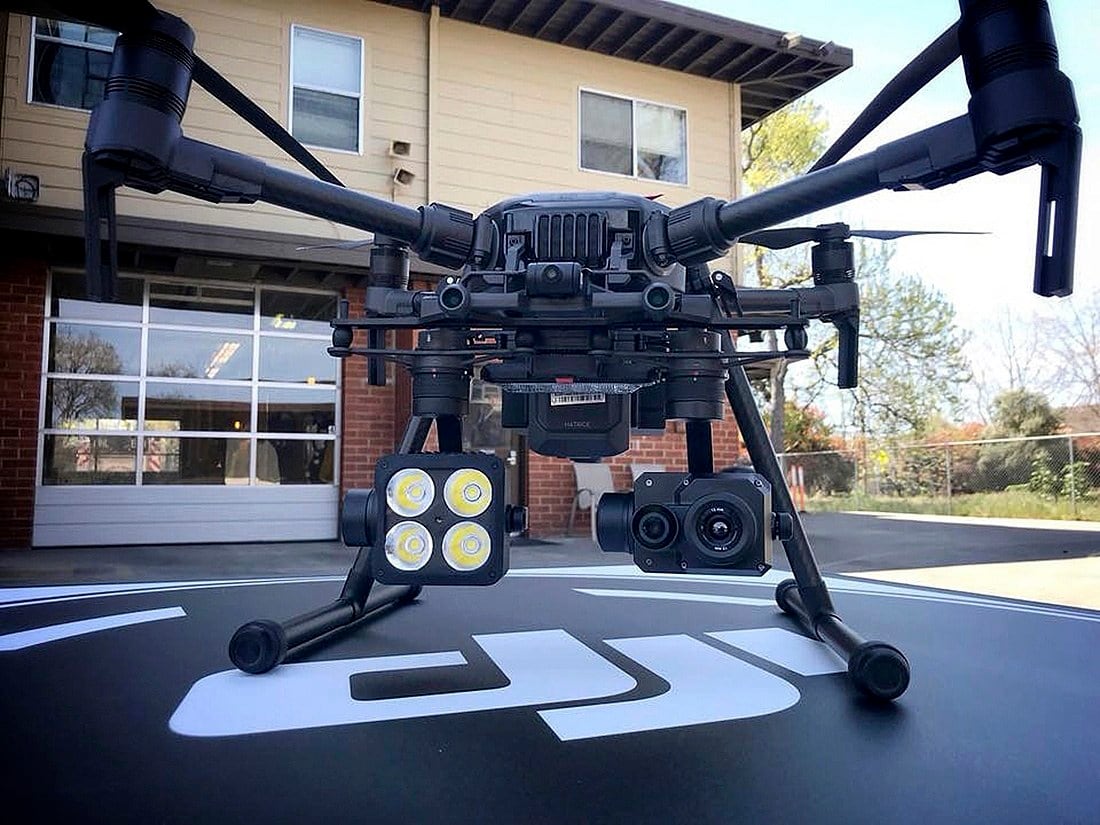
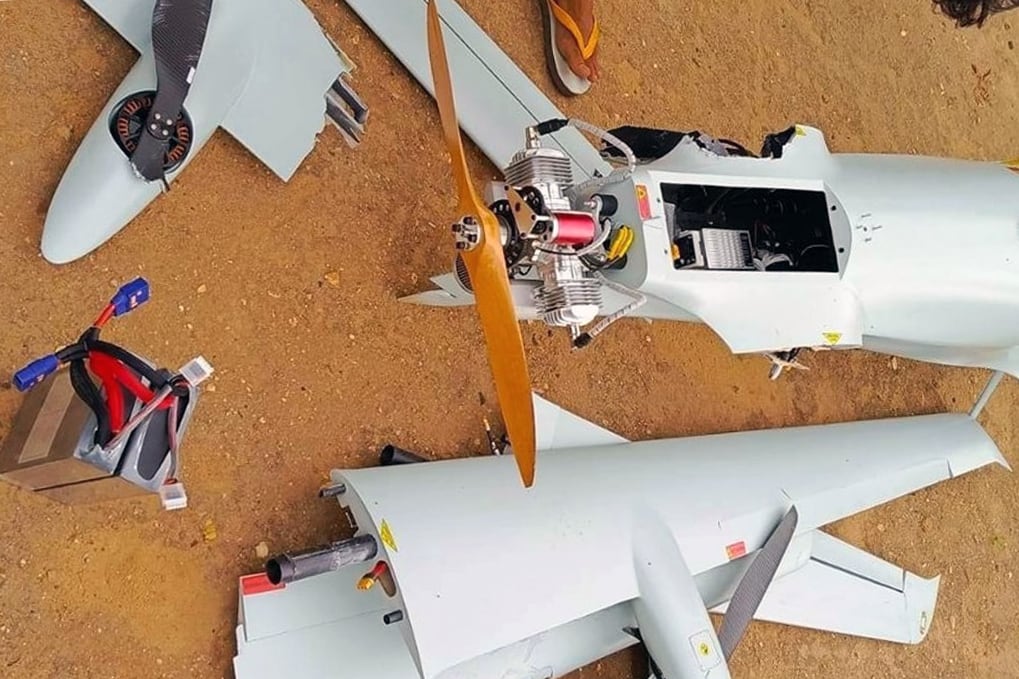
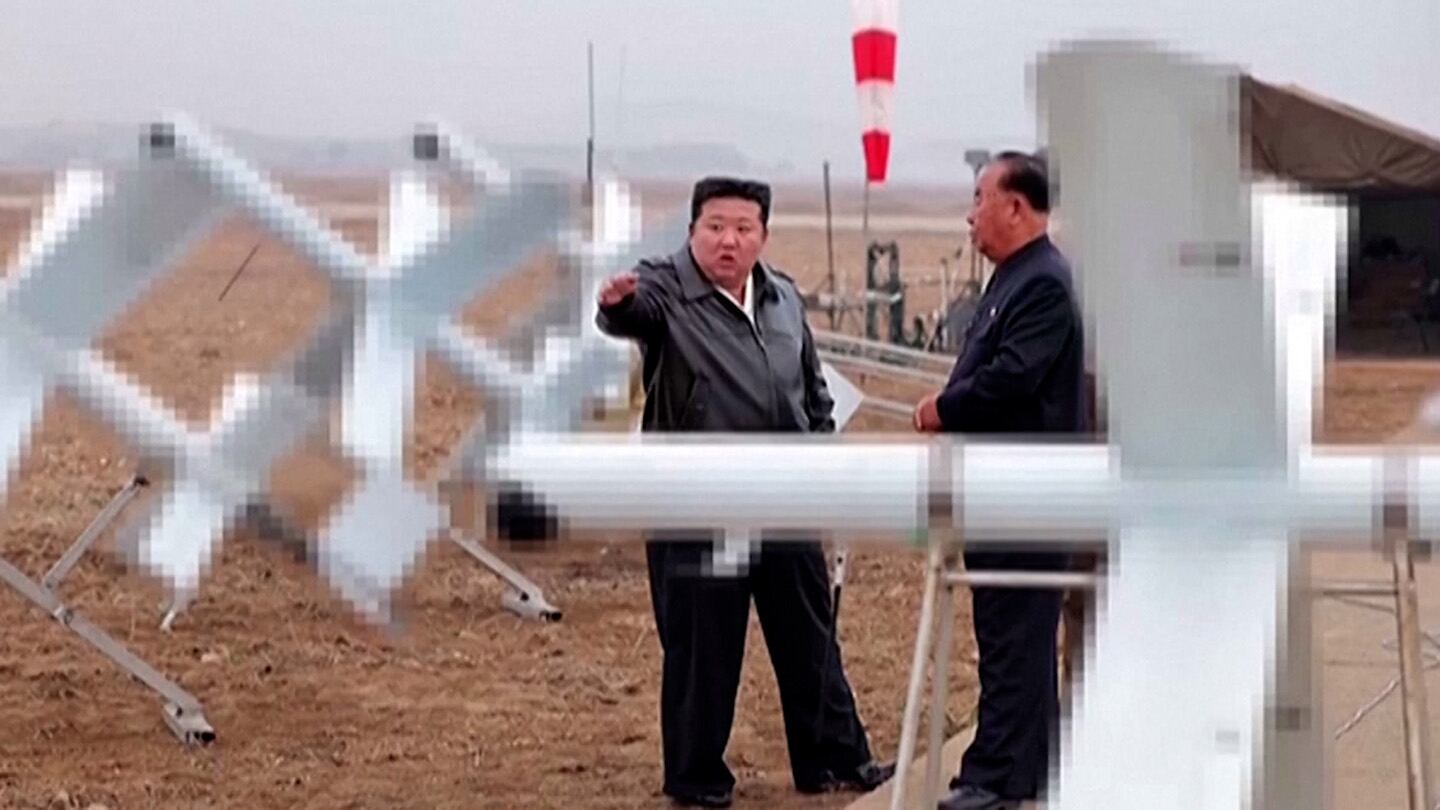
When Taiwan’s military in early June unveiled robot dogs designed to patrol remote South China Sea outposts, it was more than a showcase of a new novelty. It was a signal that militaries around the entire region are shifting towards unmanned technologies, observers told Radio Free Asia.
The four-legged surveillance machines will be able to monitor remote locations in contested waters and maintain a presence around isolated islands, thereby reducing the required manpower to keep an eye on Chinese activities in or near areas claimed by Taiwan, which Beijing considers to be part of its territory.
Lessons learned from recent conflicts have shown that unmanned systems can effectively contribute to defense, Enrico Cau, a Taipei-based independent security researcher, told RFA.
“If we use Ukraine as a comparative context to gauge the relevance of unmanned platforms in a hypothetical Cross-Strait scenario, it appears natural to think that the use of similar platforms in such a scenario will play a key role,” said Cau.
“This is not only because unmanned platforms allow armies to spare human lives but also because their replicability offers the possibility to manufacture and deploy them in shorter time, higher volumes, and at lower cost compared to other platforms,” he said.
Robodog showcase
The three prototype robot dogs on June 2 navigated a test ground during a demonstration by Taiwan’s military-owned National Chung-Shan Institute of Science and Technology.
Built for reconnaissance, surveillance and combat roles, they were equipped with cameras, sensors, and one even carried a mounted weapon.
The robots are intended for potential deployment on Taiwan-controlled islands in the South China Sea, where personnel must maintain a constant watch over vast stretches of sea while operating far from the main island of Taiwan.
“The marines believe that on beaches and the coastline, including for the coast guard in Nansha and Dongsha for patrols and inspection, there is a pressing need,” Jen Kuo-kuang, deputy head of the institute’s missile and rocket systems research division, said at the event, referring to the heavily contested Pratas and Spratly island chains.
But the trend extends well beyond robot dogs.
Taiwan has accelerated development of military drones, drone boats and other autonomous systems in recent years, while China has invested heavily in unmanned surface vessels, underwater drones and surveillance networks. Across the region, unmanned systems are increasingly being viewed as a way to monitor remote maritime areas at lower cost and with fewer personnel.
A matter of scale
These new technologies are only the beginning of drone warfare concepts in the IndoPacific, and it will matter more who can churn them out faster, Jason Wang, a national security researcher and the chief operating officer at ingeniSPACE, a Silicon Valley geo-intelligence analytics firm, told RFA.
“China’s scaling ability is significantly different from Taiwan’s,” said Wang. “They already produce 500-600k per month. Ukraine is 200K per month. Taiwan is only discussing 200k per year.”
He said for Taiwan, it is even more difficult due to geography.
“Everything Taiwan needs to sustain itself must already be on the island.“
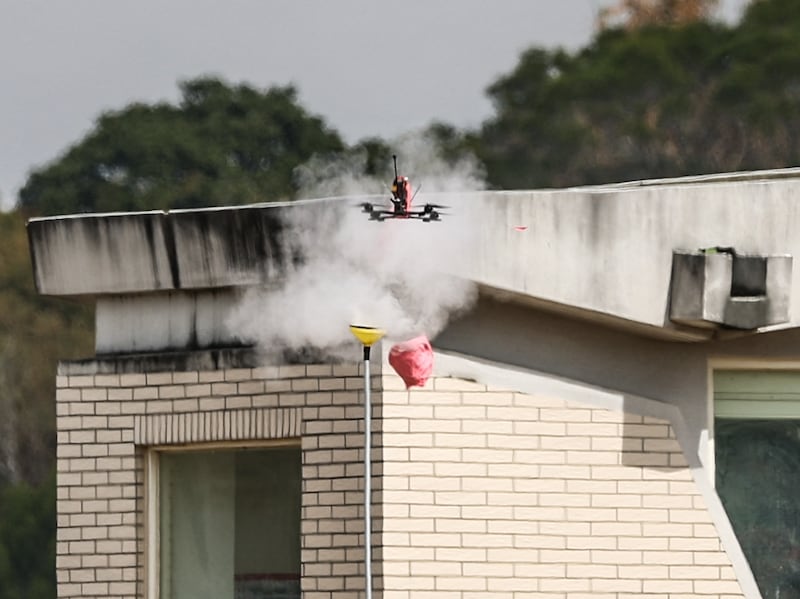
Also limiting Taiwan’s ability to produce vast numbers of drones are the demographic realities of the island, Harun Talha Ayanoglu, a visiting scholar at Taipei’s Institute for National Defense and Security Research, or INDSR, found in a recent study.
“Taiwan’s ability to sustain credible deterrence will depend not on the size of its reserve force alone, but on how effectively it integrates manpower with scalable and operationally relevant unmanned systems under conditions of demographic constraint,” Ayanoglu wrote.
Taiwan entered the category of a super-aged society in 2026, with more than one-fifth of its population aged 65 or above. The shrinking pool of military-age citizens is raising questions about the long-term sustainability of manpower-intensive defense models and adding urgency to efforts to integrate new technologies into the armed forces.
In response to the potential manpower shortage, Taiwan has reintroduced one-year military conscription and begun incorporating drone training into both conscript and reserve force programmes.
According to Ayanoglu, unmanned systems can help smaller and less continuously trained units operate more effectively by extending surveillance, targeting and situational awareness capabilities.
But Cau argues that technology alone is not the decisive factor.
“If we reframe this question on what could matter in a potential cross-Strait scenario and focusing on the situation from Taipei’s perspective, I believe that the real game changer would be Taipei’s ability to continue to manufacture unmanned platforms also in case of conflict or blockade,” Cau said. “In brief, we can talk of ‘economic sustainability, availability, replicability and deployability at scale’ as key factors in a conflict.”
That challenge is particularly significant because China possesses major advantages in manufacturing scale and supply-chain resilience.
“In that regard, China has an edge as it operates the entire supply chain with very little risk of disruptions,” Cau said. Taiwan, by contrast, remains vulnerable to what he described as the “tyranny of insularity combined with proximity to the mainland”.
The manpower problem
The appeal of unmanned systems is particularly evident in maritime environments, where governments must monitor large areas while maintaining a constant presence around isolated islands and outposts.
China, Taiwan, the Philippines and Vietnam all maintain forces around disputed maritime features in the South China Sea, often requiring costly and manpower-intensive patrol operations.
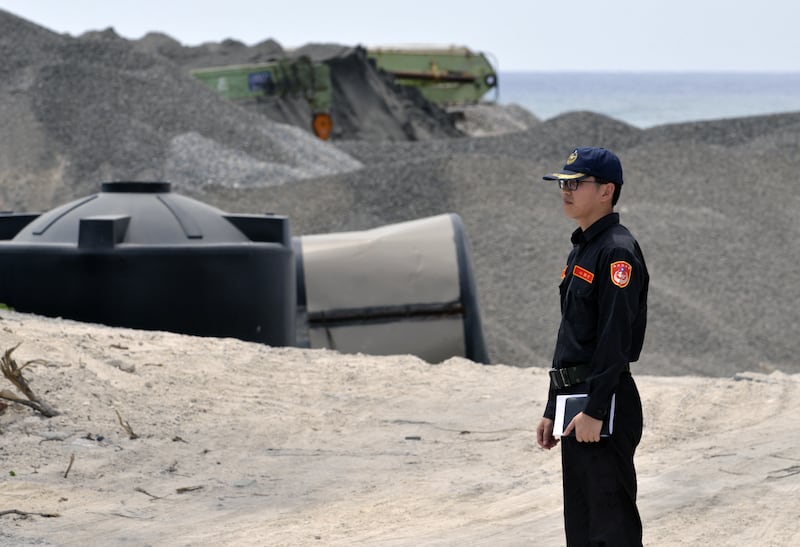
“Active and passive unmanned platforms offer extended monitoring and range capabilities; longer patrol and surveillance times in smaller, more sophisticated packages, without all the logistics and costs associated to manned platforms,” Cau explained.
While China and Taiwan are increasingly investing in autonomous technologies, other regional claimants are developing such capabilities at different speeds.
Cau said that the Philippines cannot compete with China in any aspect of its military, especially where technology is involved, while Vietnam is only starting to develop a homegrown military drone industry with international partners.
As time goes by, technologies will only become more sophisticated.
“The future trends only promise for more of all this,” Cau said, adding that further integration of unmanned systems could evolve beyond monitoring operations, to potentially include offensive capabilities.
Wang said that militaries would likely combine the various unmanned systems and technologies.
“We will see more hybrid platforms, such as robot dogs carrying aerial drones to extend perimeter monitoring,” he said.
Additionally, a drone with mapping technology could tell soldiers what the inside of a building looks like before they enter and engage with the enemy, he said.
“What frightens me is an Operation Spiderweb style attack,” he said, referring to the Ukrainian covert drone strike against Russian air bases in June last year.
“Taiwan’s ports are near many airports/airbases,” he said. “Critical infrastructure will need … to survive an onslaught of not hundreds but thousands at a time. Quantity has a quality all its own.”
Edited by Eugene Whong.