Though China’s first-ever naval exercise with another country’s military in waters east of Taiwan this month was a relatively small operation, it could go a long way toward normalizing Beijing’s presence around the democratic island.
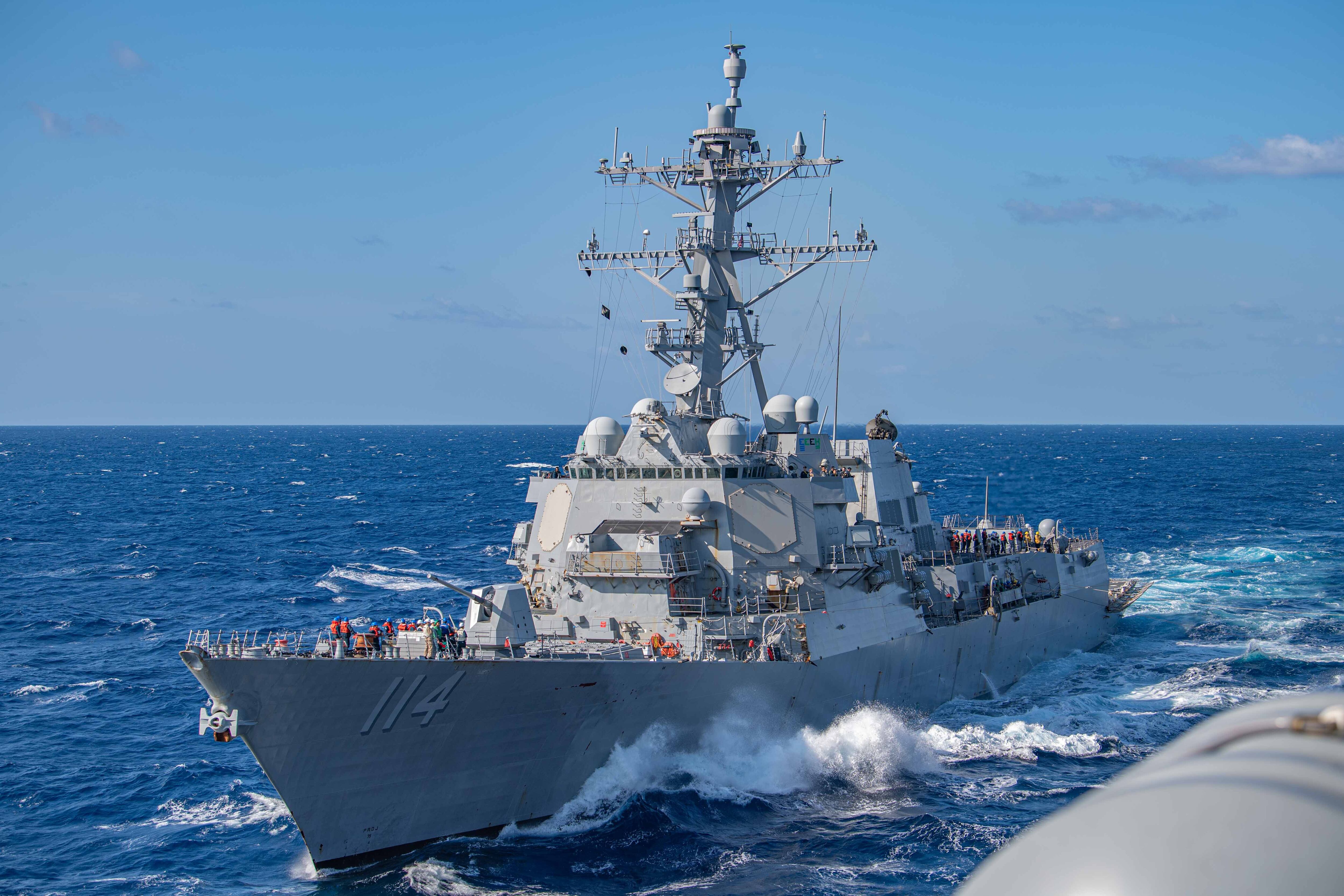
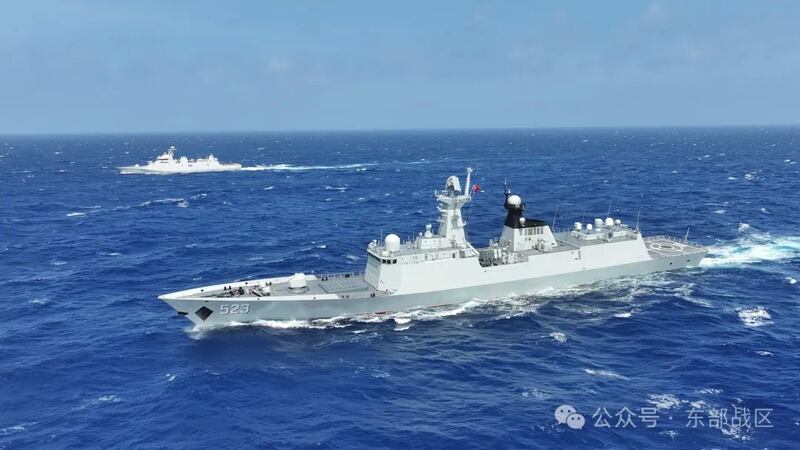
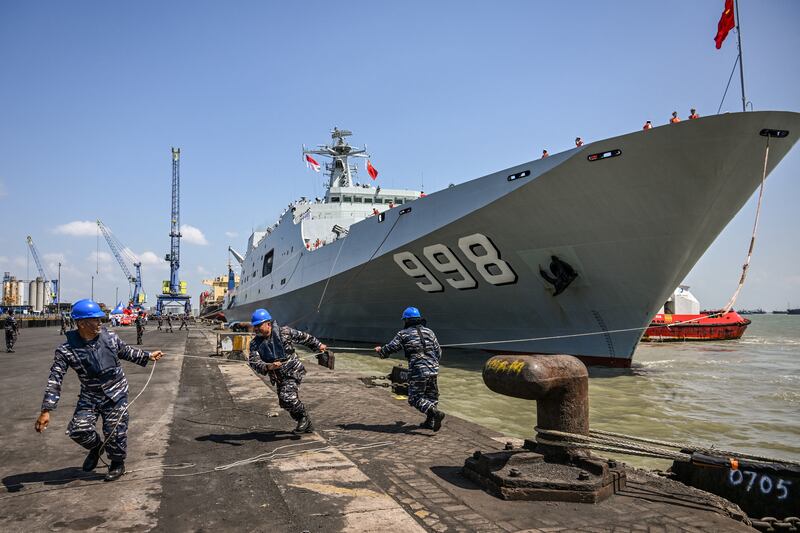
The Chinese frigate Honghe and Indonesia’s KRI I Gusti Ngurah Rai-332 conducted a passing exercise east of Taiwan on Aug. 12, involving maritime communications, formation maneuvers and replenishment of fuel and supplies at sea. Reuters described it as China’s first joint operation with a foreign military in those waters.
China, which considers Taiwan to be part of its own territory, described it as a “navigation exercise.”
Taiwan, however, accused Beijing of using the drill to create the impression that China exercises jurisdiction over waters east of the island.
Though the exercise itself was a brief three-hour meeting of ships which then went their separate ways, the exercise gave Beijing a record of a foreign navy conducting an activity with China in waters that Taipei says Beijing has no authority to police, Aniello Iannone, a lecturer in Indonesian and Southeast Asian politics at Diponegoro University in Indonesia, told RFA.
“Once the Indonesian navy sailed, Beijing acquired something it could not manufacture alone, corroboration, from a state with no stake in the Taiwan question, that the water east of the island is a place where cooperation with China happens normally,” he said.
Taiwan’s military said the exercise did not change much from a security perspective. Wu Tien-jen, assistant deputy chief of the general staff for intelligence, told lawmakers that the Indonesian vessel was already traveling through the area, and that the activity had no direct military impact on Taiwan, though he said it carried geopolitical significance.
Jakarta played down the significance of the exercise, saying its warship was returning from exercises in Vladivostok and that such passing exercises were routine acts of maritime diplomacy.
Normalizing China’s presence
Indonesia has diplomatically transitioned to a Taiwan stance that aligns with China’s position more closely than many other governments—including by issuing a joint statement affirming Beijing’s one-China principle in November 2024.
But its participation in exercises with China east of Taiwan does not mean that it intended to legitimize Beijing’s presence in the area, Joseph Kristanto, a research analyst at Singapore’s S. Rajaratnam School of International Studies, told RFA.
“For Jakarta, it’s just routine defense diplomacy activities. But for Taipei, the concern is the precedent that such an activity could create,” he said. “Jakarta may not intend to lend legitimacy or normalize China’s military presence around Taiwan, but Beijing can still use the participation of a foreign navy to reinforce the impression that its military activities in these waters are increasingly normal.”
The location gives the episode greater significance for Taiwan, according to analysts.
Unlike Taiwan’s western coast, which faces mainland China across the Taiwan Strait, its eastern approaches open onto the Pacific and are regarded as crucial maritime lifelines in the event of a Chinese blockade or conflict, and Taipei has become increasingly concerned about Chinese activity there.
China’s coast guard began patrols east of Taiwan in June, later drawing expressions of concern from the United States, Britain, France and Germany. Taiwan subsequently reported a sharp rise in Chinese government-vessel activity around the island and warned that Beijing could be testing ways to disrupt Pacific supply routes.
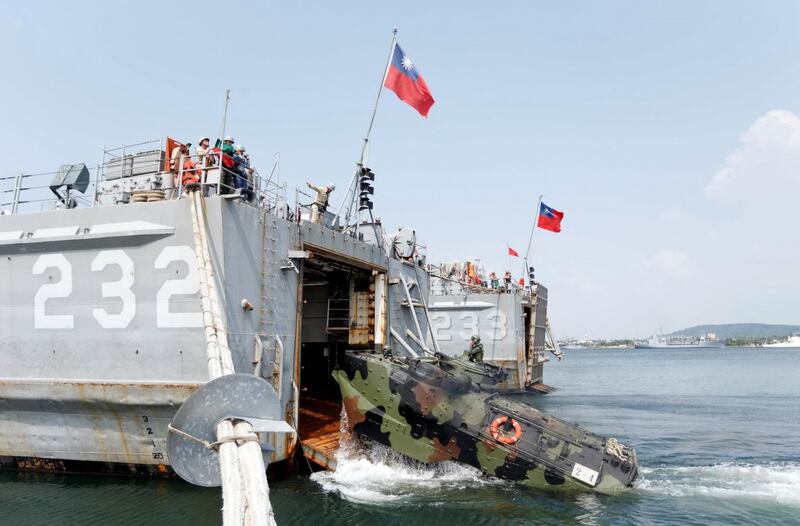
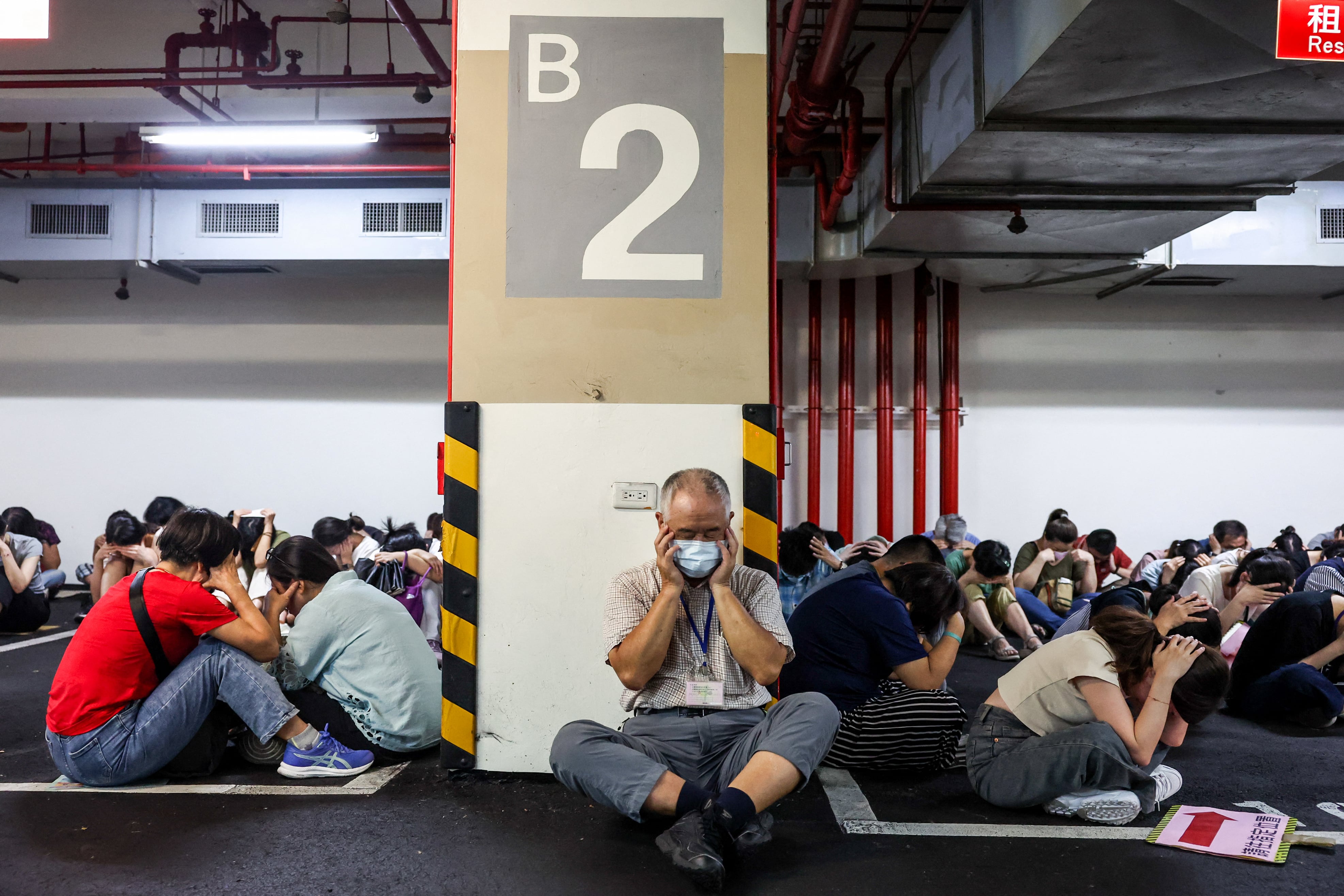
During its annual nationwide Han Kuang military exercises this month, Taiwan’s navy and coast guard also held their first joint anti-blockade drill, including a scenario in which a merchant vessel carrying essential supplies was escorted toward ports in eastern Taiwan.
“The eastern approaches are the only side of Taiwan not overlooked by the Chinese mainland,” Iannone said. “That’s where resupply would come from in a blockade, and where American forces would arrive.”
He argued that Chinese survey ships, coast guard patrols and now the Indonesia exercise could be understood as part of a broader attempt to make Beijing’s presence east of Taiwan appear administrative and routine rather than exceptional.
The more important test will be whether the Indonesia exercise remains an isolated event, Kristanto said.
A single passing exercise, or PASSEX, “is unlikely to change the status quo,” he said. “It would become more strategically meaningful if this develops into a pattern whereby similar exercises occur repeatedly, involve more foreign navies, become operationally more complex, or take place closer to Taiwan.”
Altering geopolitical narratives
The key threshold could come if other countries begin to regard cooperation with China in those waters as politically unremarkable, Kristanto said.
“In that scenario, Beijing would not necessarily need countries like Indonesia to directly endorse its sovereignty claims,” he said, adding that the cumulative effect could still help normalise the PLA’s presence around the island.
Repetition of this exercise with the navies of other countries would shift the burden of the argument, Iannone said.
“Against an event, Taipei can object,” he said. “Against a routine, Taipei has to ask the international system to un-normalize something already normalized, which is a far harder thing to organize.”
Iannone said more complex exercises, participation by additional navies or operations moving closer to Taiwan would strengthen Beijing’s case, but he also pointed to a less visible, but possibly more valuable indicator: whether records of such cooperation are cited as evidence of established practice.
“The one I’d watch hardest is documents,” Iannone said. If records of joint activities east of Taiwan began to appear in notifications from the International Civil Aviation Organization, the International Maritime Organization, or in arguments that attempt to declare the territory part of China’s exclusive economic zone, “that’s the transition from imagery to legal material.”
But there are also limits to how much Beijing can gain from such exercises.
Kristanto said Indonesia retains control over how it describes its military cooperation and has been careful to characterize the Aug. 12 drill as limited and routine. Jakarta also conducts military exercises with a wide range of countries, meaning the China drill alone does not demonstrate a strategic realignment.
Beijing could even undermine its own objective if it attaches too much political meaning to foreign participation, he said.
“If China attaches too much political significance to those interactions, it could make partners who do not want to be entangled in the geopolitical competition between China and the U.S. and its allies more cautious about participating in similar activities in the future,” Kristanto said.
Indonesia and China nevertheless signaled this week that broader defense cooperation is continuing. During high-level “2+2” talks in Jakarta on Aug. 20, their foreign and defense ministers agreed to deepen security ties, including military exercises and defense industry cooperation.
For Taiwan, however, the concern is less whether Indonesia itself moves closer to Beijing than whether similar interactions begin accumulating without attracting much resistance.
“Effective jurisdiction doesn’t arrive through recognition, but it accumulates,” Iannone said. “No sovereignty changes hands at any point, what it shifts is the threshold at which something registers as worth noticing, and that threshold is where the political work happens.”
Edited by Eugene Whong.